Would You Pay Two Bucks to See Toxic Wastewater?

On our way to Missoula from Bozeman, we stopped at two interesting sites, both at my prodding.  The first was the Madison Buffalo Jump State Park and the second was a large mining pit in Butte, Montana.  Alan and Van kindly accompanied me to the first, but Alan couldn’t fathom spending $2 a person to see a copper pit (even if it was one of the largest of its kind when it was in operation), so Van and I braved that ourselves.  Madison Buffalo Jump State Park is one of the locations at which, when bison outnumbered people on our fair continent, Native Americans would attempt to stampede bison to and over the edge of a cliff.  Upon their crashing fall, most of the bison would die, and the ones that remained alive would be put out of their misery by quick-acting hunters.  The bison would then be butchered right there, and the meat, hide, and other important parts would be laboriously carried back to their camp.  I had read about this process as a child and was fascinated.  I always wanted to see one of the jump sites and, though to the naked eye there wasn’t a whole lot to see other than the all-important cliff, it was equal parts fascinating and awe-inspiring to be in a place that extinguished and also supported so much life.
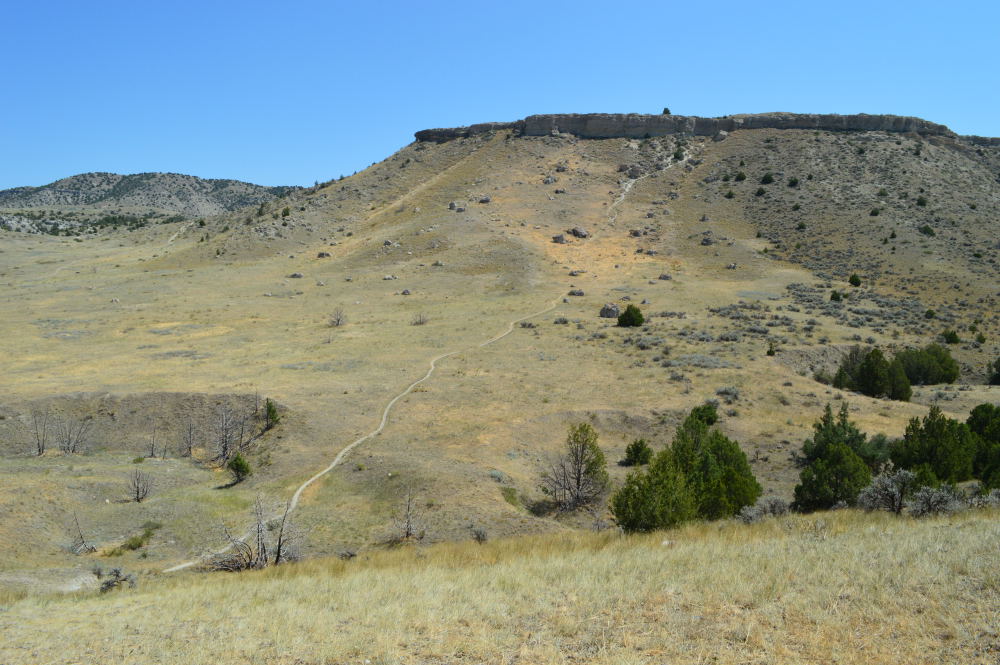
Madison Buffalo Jump State Park, Montana

Madison Buffalo Jump State Park, Montana

Heading northwest towards Missoula, we stopped in Butte, a city clearly dominated by its current and former mining glory.  After picnicking right next to the open copper pit, Van and I paid our admission (it was free for the little guy) and headed through a tunnel to see the pit and the water that is slowly accumulating within.  The water is heavily acidic, with a pH of 2.5 (similar to lemon juice or cola).  The color alone is enough to warn you that this is no swimming hole.  There are major cleanup operations going on, especially to deal with the fact that the water, which is currently below bedrock and not threatening the local groundwater, is slated to reach bedrock in 2018 or thereabouts.  I could go on and on, but I’d bore all of the non-environmental lawyers or professionals out there.  As I’ve bored Alan.  Countless times.  Alan put his foot down and said no to any more mining sites (I clearly have a problem), but without spoiling anything, I was able to get him to go on a search for one more mine.  It came a little later in our trip, but I’ll mention it now so you’re not in suspense.  Ha!

Berkeley Pit in Butte, Montana

Berkeley Pit in Butte, Montana

We went to Libby!  Libby, Montana happens to be the site of a former vermiculite mine, home to the largest environmental removal action in U.S. history under Superfund, as well as the first place that EPA has ever declared a Public Health Emergency, in order to assist victims of asbestos-related diseases .  Libby was on my list of destinations from the get-go, so Alan could hardly deny me the pleasure of seeing this town up close.  The town is ordinary and somewhat nicer than I expected given its sad history.  But driving by the schools and ballfields reminded me that asbestos-contaminated vermiculite was used as fill to help create the ballfields and as a foundation under a school’s ice-skating rink.  A search for the mine itself turned up restricted access roads.  Since we didn’t have the appropriate credentials, no mine gazing for us.  But, the area was beautiful and we didn’t want to let the visit go to waste.  We spotted a picnic and boat launch area along the Kootenai River and got out to eat.  It was absolutely beautiful – deep blue water, evergreens as far as the eye can see, no development, which all lead to make the smell that much more jarring.  I expected it to smell wonderful, piney, and outdoorsy.  If it had smelled like nothing, I probably would have noticed.  Instead, it smelled gross, like chemicals and industry.  We’re not sure why it smelled this way – was it due to the cleanup operations, current industrial operations that were out of sight, or something else entirely?  We stayed to eat, but couldn’t get over the strange juxtaposition between the beauty of the area and the distinctly not natural (or nice) odor.
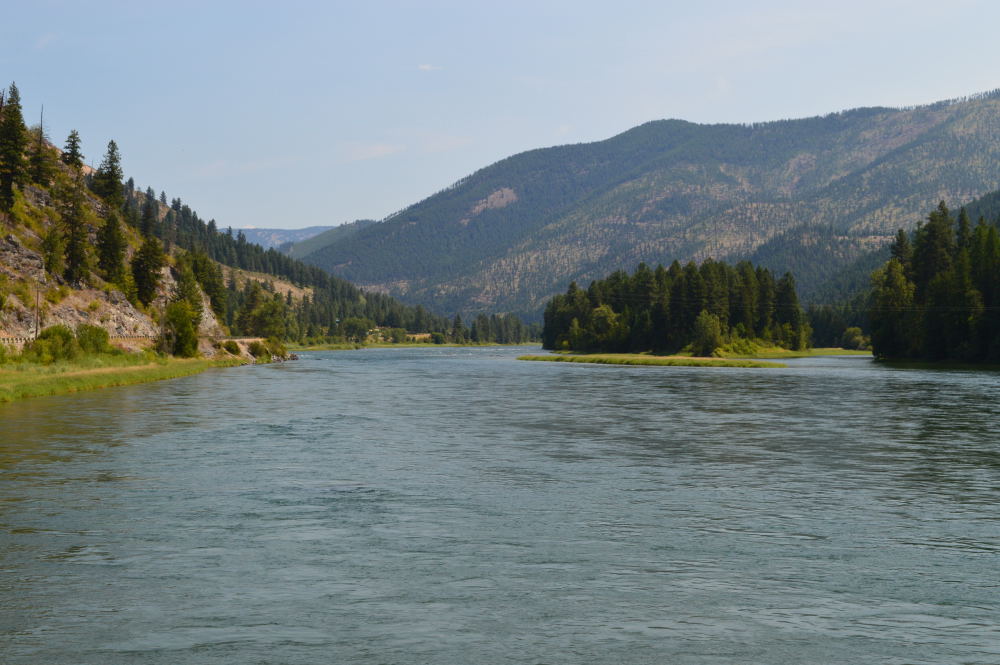
Kootenai River in Libby, Montana

Kootenai River in Libby, Montana

The rest of our stay in Montana consisted of exploring Missoula, which we enjoyed, but not nearly as much as we enjoyed Bozeman, swimming in crystal clear Flathead Lake and at Whitefish Beach, getting a tour of Montana Motel 6s, and visiting Glacier National Park (the subject of a future post).  Most of all, I came away from our visit to this beautiful, rugged, aptly nicknamed big sky country, thinking about the state’s countless contradictions and idiosyncrasies.  A land where you see a traditional town square protest, and then realize that the protestors are armed militia men from the area calling for the impeachment of the president.  A town where, after commenting on how nice, and cute, and tourist-friendly it is, you notice a healthy population of folks who ride the rails on its periphery.  Home to a gigantic mining pit in the center of one of the biggest cities in the state, and you have to pay just to peer down inside.  A state where the preference for guns is only equaled by the surprising number of safety signs seen around the state (“be polite, don’t tailgate”).  A state where spotting three bears (two grizzlies and a black bear) is somehow just as interesting as watching a man drive down main street while eating corn on the cob.  A citizenry whose penchant for casinos (there seems to be at least one in every town, no matter the size) is only outdone by its love of the outdoors.  But regardless of these idiosyncrasies, and in some cases because of them, we both felt a connection to certain parts of the state in a way that we hadn’t in many other places.  It got under our skin, in a good way, and hasn’t left.  I look forward to returning one day – maybe as a visitor or maybe, just maybe, as a resident.

A Warm Montana Welcome

We spent a little too much time running errands the morning we left Twin Falls, which left us with a long afternoon drive to get up to the part of Montana where we were intending to camp.  We enjoyed the empty space on our drive and the striking difference between the landscape in Idaho and southwestern Montana.  As the mountains began, so did our adventure in Montana.  While we intended on staying at a state park (and good thing we didn’t – it turned out to be closed), we spotted a few campsites along a reservoir on our way to find the state park.  We couldn’t find a place to pay, and realized that these were free sites.  It was just us and the wind on our spit of land overlooking the reservoir.  It was a much improved free spot to our first free camping night, in the snow, in a Wal-Mart parking lot.

The View from our Free-Camp at the Clark Canyon Reservoir in Montana

The View from our Free-Camp at the Clark Canyon Reservoir in Montana

After a disappointing morning drive to find out that Bannack State Park was closed, which I recently learned was due to flash flooding, we headed on to find another former gold mining town, Virginia City, and its kin, Nevada City.  We poked around the towns for a couple of hours, especially enjoying the strange taxidermy display of animals from the county we were visiting.  Each specimen was hunted by Mrs. Irene Martin or her husband in the mid-1900s and the taxidermy was all done by that same Mrs. Martin.  Not to worry, the examples of endangered animals that prowl the county were found dead and donated to her so she could work her magic and add them to her collection.  After having our fill of dead animal carcasses, we found a quiet spot near a creek to eat in some shade.  What is this thing called shade?  And grass and big leafy trees?  Oh how I’ve missed you!

Re-Created Interior of a Shop During the Gold Boom

Re-Created Interior of a Shop During the Gold Rush Days (I love these things!)

We headed back into this century and drove up to our next camping spot not too far from Livingston and Bozeman, Montana.  We began our visit with a jaunt to Livingston to escape the hailstorm that was scheduled to arrive momentarily directly over our campground.  This was one of the towns we were most excited to see on this trip and we were not disappointed.  It is fantastic!  We both independently noted the significant number of older men, most sporting plaid and trucker caps (unironically).  We liked the lived-in feel of the town.  Nothing was shiny, but it was all clearly well-loved.  And the museum (The Livingston Depot Center) was killer.  A seriously excellent free museum right in the heart of town, as old depots tend to be.  We had a great time over the next couple of days exploring the town, the nearby rivers (excellent for rock throwing), and one of the local eateries.  I also spied a man tooling down the main street in his car (he was the driver), while eating corn on the cob.  That’s a new one!

Livingston wasn’t the only excellent place we visited while in this part of the world.  Bozeman was my kind of town.  I was trying to think of adjectives to describe it, and vibrant just about captures it.  It was the first place on this trip that really just sang to me as a place to call home.  Can you tell that I loved it?  Once we realized that we really dug this place, we drove around a ton to check out the neighborhoods and some of the surrounding areas.  To make up for boring Van, we spent the good part of a day at the absolutely awesome Museum of the Rockies at Montana State University.  The museum has sections on dinosaurs (the museum has the largest collection of dinosaur remains in the country), space exploration, and regional/Montana history.  Each section is done remarkably well and appeals to both children and adults.  My favorite part was the turn-of-the-century house that was moved to the museum site and is now surrounded by dream flower and vegetable gardens.  Alan looked at me as I was walking around the garden, telling me that he knew I was soaking it all in, thinking about all of the plants that I could grow in this climate.  He was right, of course!  If only I could make a garden that looked even 10% as beautiful as that, I’d be happy.

Costumed interpreters at the house went through their daily chores and meals while visitors could watch.  At most living history exhibits that I’ve attended, costumed interpreters interact freely with the visitors, either acting as if they lived in the time and you came by for an explanation of what they’re up to, or while dressed in period costume, discussing the activities as a modern person would.  Because the interaction at this exhibit was minimal and visitors were left to observe the daily goings-on, I came away with a much stronger grasp of the ways in which ordinary tasks were carried out.  This was a great way to curate a living history exhibit that allowed visitors to focus on more than just how various crafts were conducted.

Sitting on the Front Steps at the Tinsley House

Sitting on the Front Steps at the Tinsley House

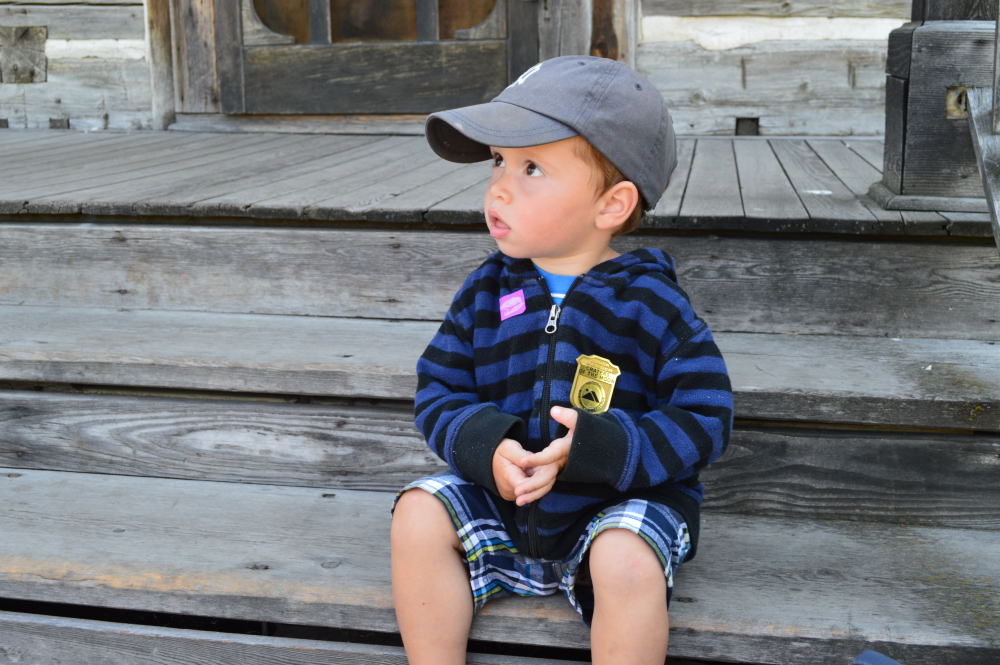
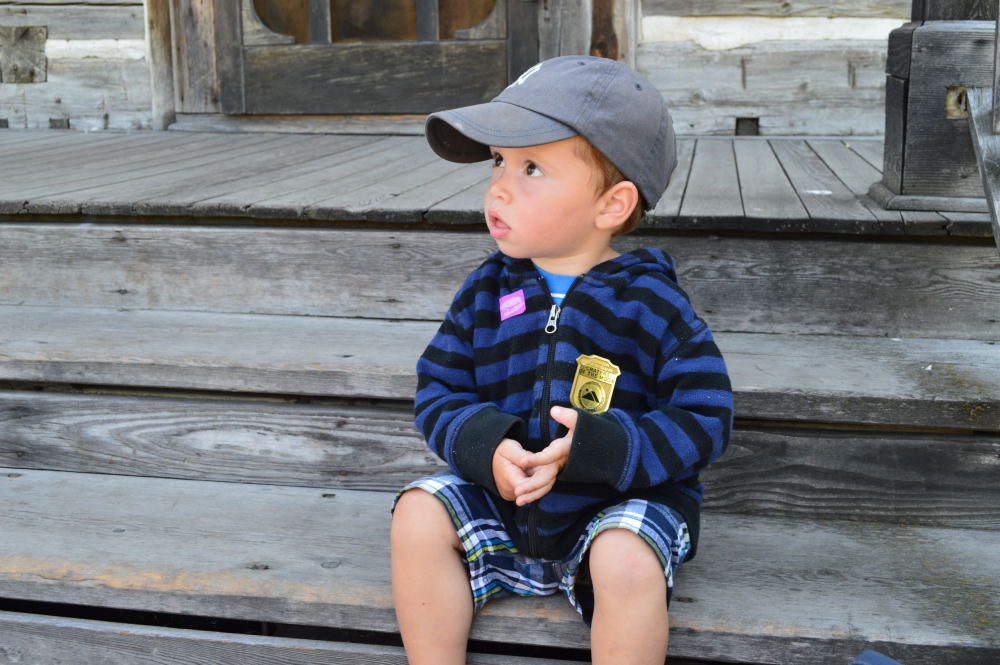
Our last stop at the museum was a children’s area that was expertly decked out to recreate many of the great elements of Yellowstone.  This area was complete with a tent (as if Van hasn’t seen one of those) and camping area, Old Faithful, a fishing stream, a lodge, and much more.  Van had a field day and was a tired little boy when we eventually dragged him from the museum.  Although this area had tons of costumes, Van only wanted to wear one, a park ranger.  A little boy after my own heart!

This. This is Why We Travel!

Van Sporting His Junior Ranger Badge on the Steps of a Cabin at the Museum of the Rockies in Bozeman, Montana

Van Sporting His Junior Ranger Badge on the Steps of a Cabin at the Museum of the Rockies in Bozeman, Montana

As I look back at our last five months on the road, I realize that this has been one of the absolute best experiences of my life.  There are things that can be difficult about living on the road, but it is all so worth it.  And the things that started off as difficult have often become routine and easy.  Some of my favorite aspects of our travels so far:

  • I am learning every day.  And I’m learning new things – about the weather, geology, history, about small towns and different cultures, about my limits and my abilities, about my family and the family of plants and animals that share our home.  This is undeniably one of the best things about this trip and something that I can easily translate into life off the road.  Traveling the way we do makes this automatic, but with enough forethought and the right priorities, this is something we can continue to do once we’ve found a place to call home.
  • Living outside.  Our default is being outside.  On certain days, we do get inside for more than a couple of minutes, but more days than not, we’re outside the entire day and night.  There is no better way to learn about nature and get in touch with the out-of-doors than to simply live in it.
  • Spending time with my family.  I get to spend every day, every single day, with my son and husband.  While there are moments that I’d love to get away and spend an evening by myself or with a friend, this is rare.  I am so, so lucky to have this time to spend with Van and Alan.  And not just any time, but time exploring, learning new things, and discovering our capabilities.  This is so different from what we were used to – brief time together in the evening before I went back to work after Van went to bed and time together on the weekend, often to run errands.  These are the most important people in the world to me – I want more than token moments with them.
  • Living with less.  I’ve mentioned this in past posts, but this bears repeating.  This type of traveling has been a great education in true needs.  We really need so little, and living with less makes life much simpler and frees up time, money, and effort to focus on the important things in life – and not stuff.  Because that is all it really is – stuff.  Stuff that clogs our time and robs us of the energy to devote to the things that would really bring us lasting joy.
  • Freedom.  We have the freedom to see what we want to see, go where we want to go, and stop and stay a while when we’re so inclined.  We’re not on any hard and fast timeline, which makes route planning much more relaxing and enables us to really enjoy the places we are since we don’t have to rush away to something else before a flight, a work day, or another obligation.  This freedom is tempered by finances, but we’re lucky that we tend to prefer the cheap or free things anyways.
  • Hiking frequently.  I love to hike – love it.  We tried to do it as much as we could when we lived in the DC area, but unfortunately, with work and our living locations, it was not nearly as often as we would have liked.  Now we get to hike all the time.  It’s impractical to plan to hike every day given that want to see and do a diversity of things, but hiking frequently is a definite must and makes me feel so much healthier and happier.  I’ve always known that the recipe of a happier Stacey is simple – more time outdoors and more time hiking.  Well, given the amount of both I’ve had lately, it’s no wonder that I’ve been so happy.

But, it’s not all sunshine, rainbows, and kittens.  There are challenges and situations that make me want to pack it in from time to time.  Living outside is awesome – most of the time.  But when it’s wet and chilly for days on in, it’s not so fun.  It’s also not so fun when it’s hot, hot, hot with no shade in sight for days at a time.  It’s in moments like these where I truly understand why shelter is a basic human need and I appreciate the comfort and security of four walls and a roof.  And while living with less has been a great education and something I intend to continue, I am so, so excited to live with a real kitchen again.  And a real bathroom, with running water and a bathtub.

While the vast, vast majority of folks we’ve encountered have been lovely and friendly, one run-in with a creepy guy and his pit bull over which he had zero control was enough to send my mind to all the places it shouldn’t go if we want to continue traveling.  Laying in the tent and focusing on how vulnerable we are is less than productive.  Never mind that with vulnerability comes growth, vulnerability can also breed anxiety, discontent, and sleepless nights.

But even after some sleepless nights, whether caused by the puddle developing under our tent or a creepster, we inevitably find ourselves in a brand new situation, look at each other, and share our most frequent refrain, “This. This is why we travel!”  We say it frequently enough to know that this is the right path for us right now.  Here’s to five months on the road and more to come.  How many more?  Stay tuned…

The Lonely Road

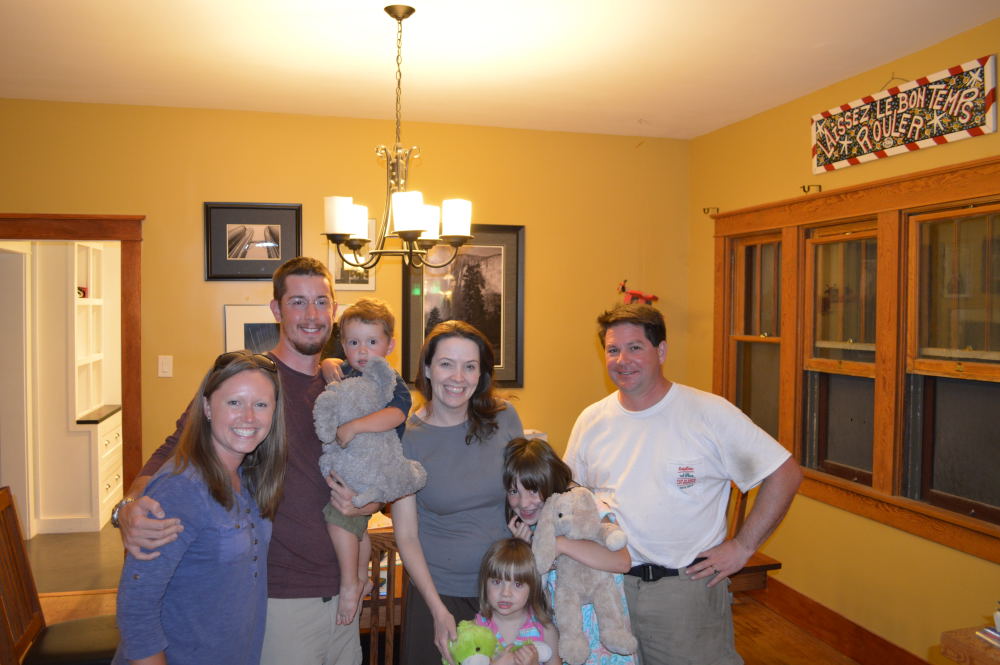
Life on the road can be exciting and full of adventure, but it’s not without its challenges.  For me, the most difficult part of living out of an ever-moving car is not having friends nearby on a regular basis.  I feel so lucky to have the opportunity to spend so much time with Alan and Van, but this trip has reconfirmed the importance of seeing good friends on a regular basis.  It was with this in mind that I eagerly accepted a dinner invitation from a Bottling Moonlight reader in Twin Falls, Idaho whom I had never met.  She and her family instantly made us feel at home and treated us to a delicious breakfast for dinner (one of my faves) and access to laundry machines that don’t require quarters.

I hope to be as awesome as Cheri and Tom once we settle down somewhere and invite travelers to take a break, eat a home cooked meal, and enjoy a little relaxation with us.  Not only would it be great to meet new friends, but it would expose Van to a diversity of people that he many not come across regularly in his ordinary life.  Cheri and Tom’s two daughters are regularly exposed to interesting people from all over the world and it shows.  Tom is a BASE jumping instructor and his students are often invited for dinner (check out his school, the Snake River BASE Academy).  I was really impressed with the girls’ ability to converse with adults, in addition to their immediate desire to take Van under their wing and show him all the cool things in the neighborhood.

Thank you so much for your kindness, generosity, and hospitality, Cheri, Tom, Anna Grace, and Olivia!  We hope to see you again – this time at our dinner table.

Me, Alan, Van, Cheri, Olivia, Anna Grace, and Tom

Me, Alan, Van, Cheri, Olivia, Anna Grace, and Tom

Tom (BASE jumping student), Alan, Van, Cheri, Olivia, Anna Grace, and Tom

Tom (BASE jumping student), Alan, Van, Cheri, Olivia, Anna Grace, and Tom

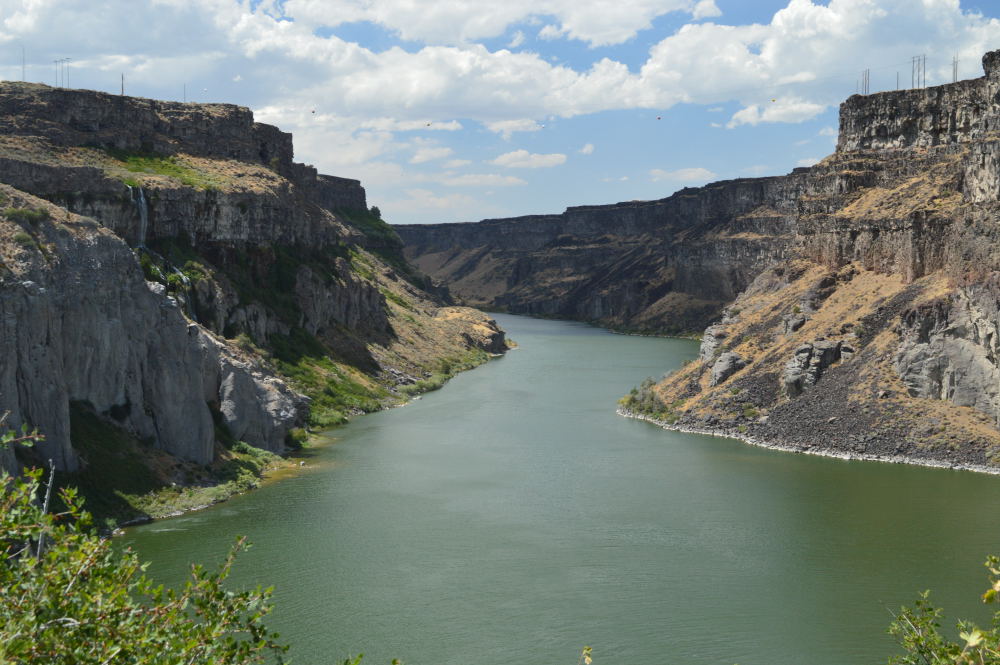
The Snake River Valley

The Snake River Valley

A Base Jumper after Jumping from the Perrine Bridge in Twin Falls, Idaho

A Base Jumper after Jumping from the Perrine Bridge in Twin Falls, Idaho

The Perrine Bridge with a BASE Jumper (if you squint)

The Perrine Bridge with a BASE Jumper (if you squint)

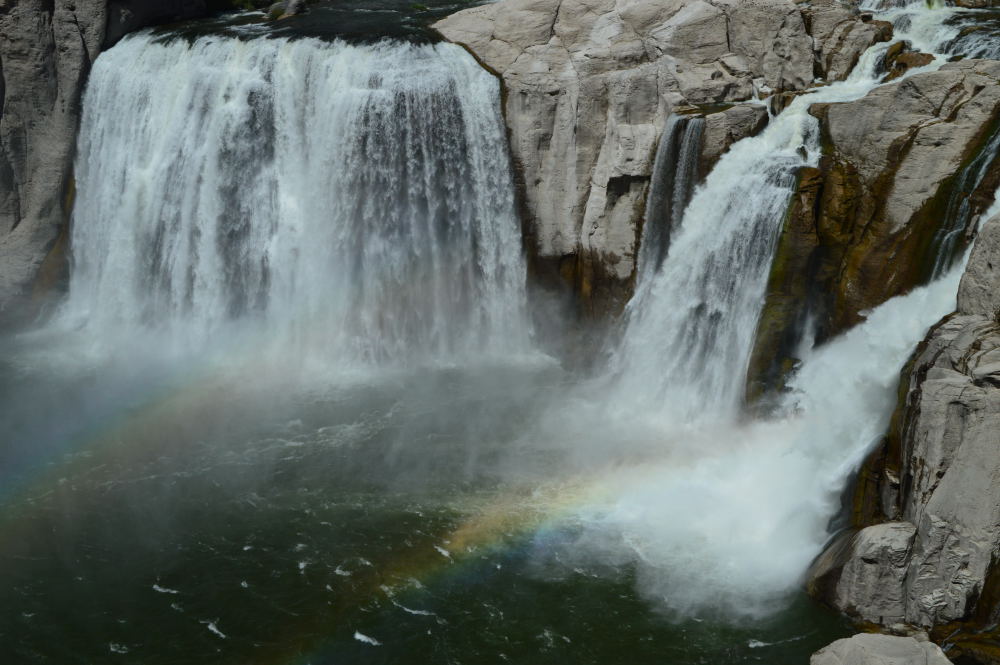
Shoshone Falls in Twin Falls, Idaho

Shoshone Falls in Twin Falls, Idaho

Shoshone Falls in Twin Falls, Idaho

Shoshone Falls in Twin Falls, Idaho

Stay on Trail: Craters of the Moon National Monument

Craters of the Moon, Idaho

Craters of the Moon, Idaho

During law school, aspiring biglaw attorneys usually spend their second summer interning at a law firm they hope to call home.  Although they’re not attorneys, they’re called summer associates and treated quite well.  There are activities aplenty, along with the usual work.  One of the activities during my summer was a family feud-style game for which we had to answer questions beforehand to populate the answers.  One of the questions was, if you could be something other than an attorney, what would you be.  My answer?  A park ranger.   I realize that for many reasons this is not a good fit for me at this point in my life – what with no science degree and no desire to move around frequently during the start of a new career.  Instead, I simply enjoy my time outdoors and in parks, doing and learning as much as possible.  Craters of the Moon National Monument was the perfect place to do this.

Though a National Monument and not a National Park, we found that the facilities, ranger-led activities, maintenance, and services offered at this park were fantastic, the best we’ve seen on this trip.  We stayed for three nights and took advantage of this time to go on a number of great hikes, attend three evening ranger programs (at least I did, while Alan stayed back at the site to watch the sleeping babe), attend a ranger-led walk, and attend a junior ranger program.  We had thought that Van was too young to attend this program, as most of the junior ranger programming in parks is geared to children at least four to six years old.  The traditional junior ranger program (receive a packet, complete a bunch of activities through exploration in the park, and present the packet to a ranger for inspection) at Craters of the Moon is for older children, but a ranger came by our site and invited Van to the evening program, saying that he’d enjoy it even though he’s younger than most who attend.  And enjoy it he did!  He had a blast, sitting up front and raising his hands for lots of activities.  His favorite part was using the magnifying glass to examine items found around the amphitheater.  My favorite part was the induction ceremony for all the junior rangers at the close of the program.  Alan says that using the term “induction ceremony” is a bit too formal, but it was a ceremony and he was inducted as a junior ranger at the park, so I think that’s precisely what it was.  All the children stood up on stage and had to raise their right hand and repeat an oath.  Van didn’t do so well on the repeating, but the ranger made sure that his right hand was raised the entire time.

At the close, each child received a badge, which Van continues to wear.  Whenever we ask him what a junior ranger says, he says proudly: “Stay on Trail.”  He’s now super vigilant about keeping us on trail and often lets us know his motto whenever we’re out hiking – or frankly, even when we’re not out hiking.  Sadly, I didn’t bring my camera to capture the magic, but you can just imagine a squirmy Van on stage, his hand in the ranger’s, beaming proudly amongst a line of older children.  The only thing that would have made it better is if Van’s Uncle Jack was there to see it.  My brother had an infamous experience becoming a junior ranger at Devil’s Tower, showing up to turn in his completed packet with a massively bloody leg that resulted from a top-speed run in the park.  As we were reading aloud the junior ranger rules with the park ranger in hopes that we both qualified for our badges, we quickly learned that one of the important rules was that “Junior Rangers Don’t Run.”  Luckily, they didn’t hold Jack’s accident against him, and we were both sworn in as junior rangers.  Van has illustrious company!

This way.  Stay on trail!

This way. Stay on trail!

No, this way!

No, this way!

All this talk of “ranger this” and “junior ranger that,” and I haven’t said much about the park.  We loved it – absolutely loved it.  It’s not every day that you get to visit massively large lava fields and volcanoes aplenty.  We even slept on lava.  Basically, for three straight days, we were constantly standing, walking, sitting, sleeping, and eating on lava.  The park has two main kinds of lava: áa and pahoehoe.   The áa lava is larger, rockier, and more jagged and the pahoehoe is smoother and looks more like what I think of as a stereotypical lava flow.  In addition, there were large cinder cones in the park, essentially large mountains of cinders, and spatter cones.  These were my favorites, both to see and to hike to and around.  Walking on cinders is a completely different sensation.  They’re pieces of volcanic rock, but they’re fragile and they crunch beneath your feet.  Weirdly, I loved the sound and feel of walking on the cinders and can’t relate it to anything else I’ve ever walked upon.   Luckily, the parks has many great trails, because without well maintained trails (almost all surfaced with cinders), your shoes would quickly get eaten up by the lava.  The lava, which looks black at first glance, has a thin glass coating on the outside, which both makes it sharp and colorful.  Good thing we also had the little guy eager to repeat his new mantra, Stay on Trail!  Most intriguing to me was the various textures and surprising colors in this charcoal-looking landscape.  I tried to capture a few examples in the photos below.  I like to refer to the photo of brightly colored lichen as nature’s graffiti.

Craters of the Moon may be out-of-the-way in south-central Idaho, but it is well worth a visit.  Though many folks come through for the day, if you have the time, spend a few days there to explore all the different types of volcanic formations, including the lava tubes.  Unfortunately, we weren’t able to go inside any of the lava tubes because we were wearing the same hiking shoes we had worn on our visit to Mammoth Cave in Kentucky earlier this year.  Given the rapid spread of white nose syndrome, which has a very high fatality rate for bats, you could only explore the lava tubes if you were wearing clothing and shoes that had not been in any caves since 2005 or if these clothes or shoes were properly decontaminated.  I never did get a full understanding of what proper decontamination would entail, but we knew that whatever it was, we certainly didn’t meet the standard.