Coyotes, Cacti, and Church: Tucson, Arizona

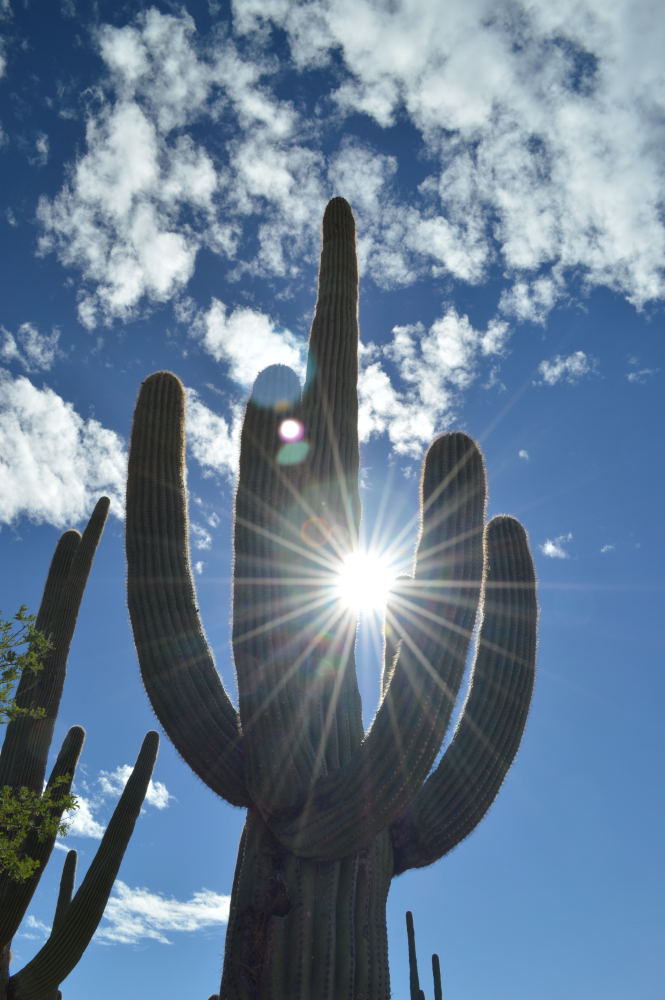
Saguaro National Park, Arizona

Saguaro National Park, Arizona

We spent a warm and sunny week in Arizona in early November, relishing the last days of wearing shorts and the last nights of sitting outside under the stars reading without shivering and diving into our sleeping bags as soon as the sun went down.  We spent the first couple of nights at a very nice (and very inexpensive) hotel in Phoenix while we ran errands.  We continued south to Tuscon, and spent the rest of our week camping in Tuscon Mountain Park just west of the city.

Our first night of camping was less than ideal.  I wouldn’t call it our worst night of camping (that was the night of the never-ending trains just south of Bellingham, Washington), but it was a close second.  The setting was picturesque, but our neighbors were less than ideal.  To one side of us was a couple that believed they could only communicate by shouting.  Their shouts continued into the night and were only drowned out by the deafening sounds of a concert celebrating the Day of the Dead.  It seemed like we were off in the wilderness when we set up camp.  We weren’t.  Though it was out of sight, our tent was not too far from an old-west theme park, complete with live (and loud) entertainment.  When the music finally stopped a couple of hours past midnight, we thought we could finally catch a few zzzzs before daybreak.  Hahaha!  Shortly after the music stopped, our tent was illuminated by headlights from the cars of concert-goers as they parked, partied, and then crashed for the night in the site on the other side of us.  Alan awoke to one man asleep on the ground, whiskey bottle to one side, Budweiser cans on the other side.  Watching them awake one-by-one made me so happy that it has been a very long while since I’ve drunk enough to earn a morning hangover.

The second, third, and fourth nights were better, but no less interesting.  Once all of our neighbors cleared out, new ones moved in.  Replacing the drunk and passed out concertgoers was an older man and his dog.  They had no car, no bike, and did not appear to have a backpack.  They never left the site for the three remaining days we were there, and we’re still not sure how they arrived.  There was a bit of muttering and full-on conversations with the dog, but things got interesting at the first sounds of the coyotes.  One coyote started, then a second, a sixth, and a twenty-sixth.  And then the older man joined in, howling right along with the coyotes for a few minutes until they all quieted down.  Alan and I looked at each other, whispering that we were in for a long night.  Though our human neighbors changed, one thing that did not change was the very regular sounds of coyotes near (sometimes very near) and far.  Luckily for us, our neighbor did not choose to join in every chorus of the canines.  Phew!  Sleep was much better during the rest of our stay.

When we weren’t listening to neighbors, concerts, or coyotes, we were out enjoying the desert and the tree-like cacti that dotted the landscape.  We went to both the western and eastern sections of Saguaro National Park (pronounced Sawaro) and both prefered the landscapes and the hiking trails of the western half of the park.  The eastern portion is more easily accessible from the city, which also means that large portions of it have wide views of the urban area.  The western portion is set further off from the city and gives you the feel of being in a more isolated locale.  Regardless, the cacti, and particularly the Saguaro, were fascinating.
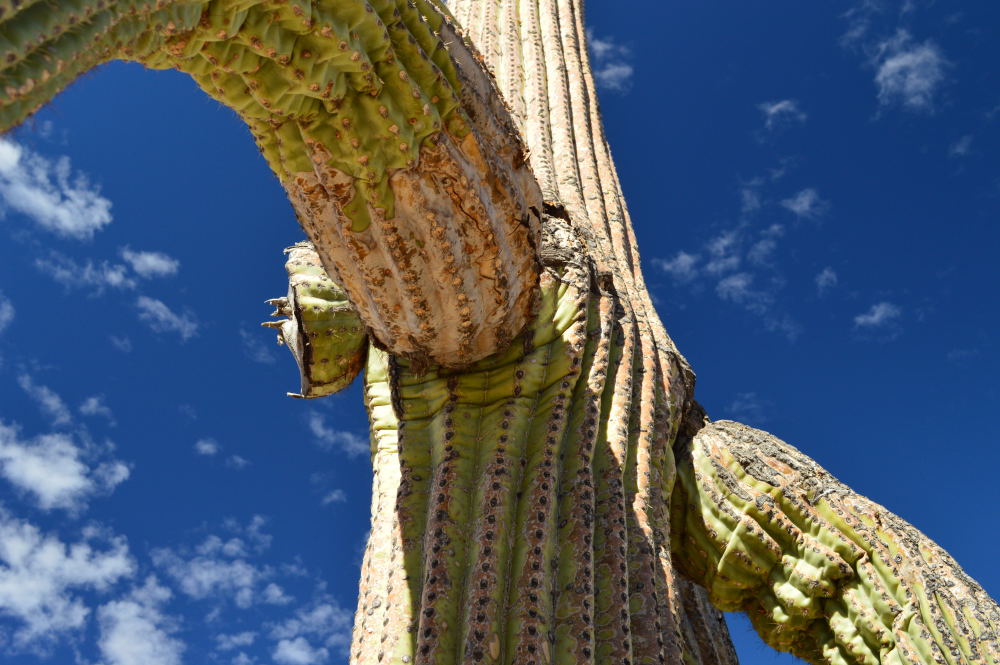
Saguaro Cactus, Arizona

Saguaro Cactus, Arizona

Saguaro National Park, Arizona

Saguaro National Park, Arizona

I always thought of cacti as something apart from other plants, but as I get to know cacti better during this trip, I begin to see the many similarities.  Saguaros are very much like a tree, from their height and girth to their woody stems.  The decaying Saguaro allowed us to see the similarities most closely.

We spent our time hiking, taking photographs, and helping Van earn his fourth Junior Ranger badge.

Hiking in Saguaro National Park, Arizona

Hiking in Saguaro National Park, Arizona

In between our forays into the desert, we spent a morning at the International Wildlife Museum, run by Safari Club International.  As one might expect, there were many taxidermied animals – big game and small game – as well as a stunning collection of butterflies, moths, beetles, and other insects.  The exhibits were very well done and, except for a cavernous trophy room (which was interesting and educational in its own right), were focused on wildlife conservation.  They even had a display on famous hunter/conservationists, including none other than Aldo Leopold, and a quote from an author and individual I greatly admire, Wendell Berry.

Though we spent most of our time in the Tuscon area exploring its natural wonders, we did make time for a few man-made wonders.  The highlight was our visit to Mission San Xavier del Back, which was constructed in the late 1700s.  It’s hard to overstate the magnificence of the bright white walls against the deep, blue, afternoon sky.

But most of all, our week in Arizona will bring back memories of late night howls and the tree like cacti recoiling from any attempt at an embrace.

Joshua Tree National Park

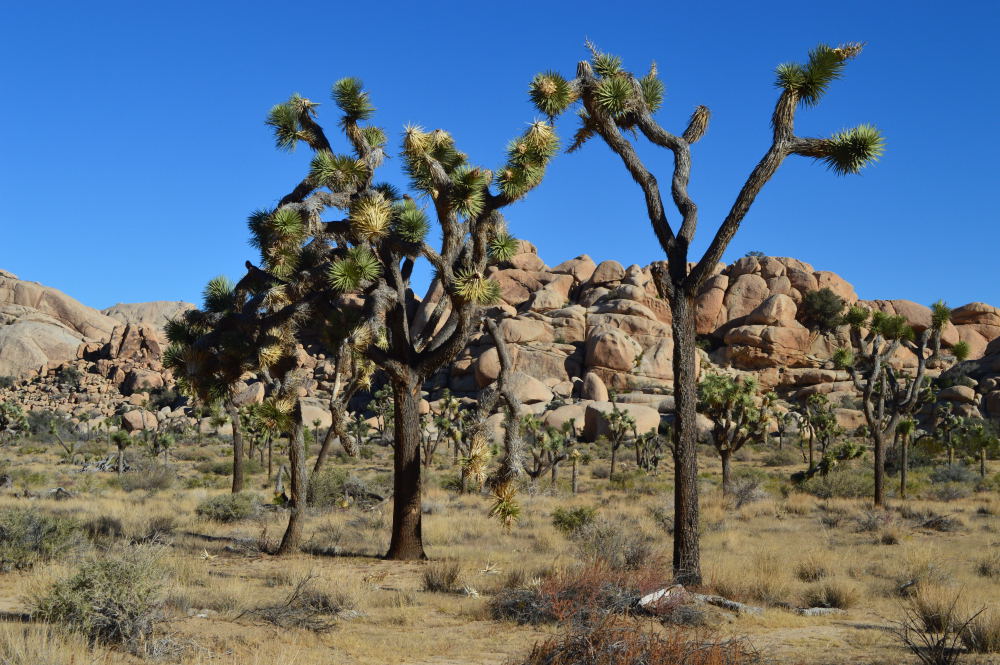
Joshua Tree National Park, California

Joshua Tree National Park, California

Ever since I was a kid, I’ve wanted to visit Joshua Tree National Park.   The name always conjured up images of a strange desert landscape full of alien trees transplanted by fairytale characters.  Naturally, I had high expectations.  They were blown out of the water! This park was incredible for so many reasons that have nothing to do with the fantastical plant that gives the park its name.  Although seeing forests of Joshua Trees is reason enough to visit this southern California park.

We visited at a great time of year – the very end of October (yes, that means I’m a month behind on my posts).  The weather was warm enough during the day that light fleeces were all that was needed, except when they were tied around our waists while we were hiking.  As soon as the sun went down, it got cold.  It was in the low thirties at night, so we didn’t spend a lot of time out of our tent in the evening hours.  But, when we did spend some time in the cold night air, we were rewarded with the most brilliant sky I’ve seen on this trip.  We’ve been camping for eight months.  Without a doubt, Joshua Tree takes the prize for the most brilliant stars and inky skies we’ve seen.  It was not lost on me that the lack of moonlight added to this effect.  Like the Joshua Trees themselves, the night sky is reason enough to visit.

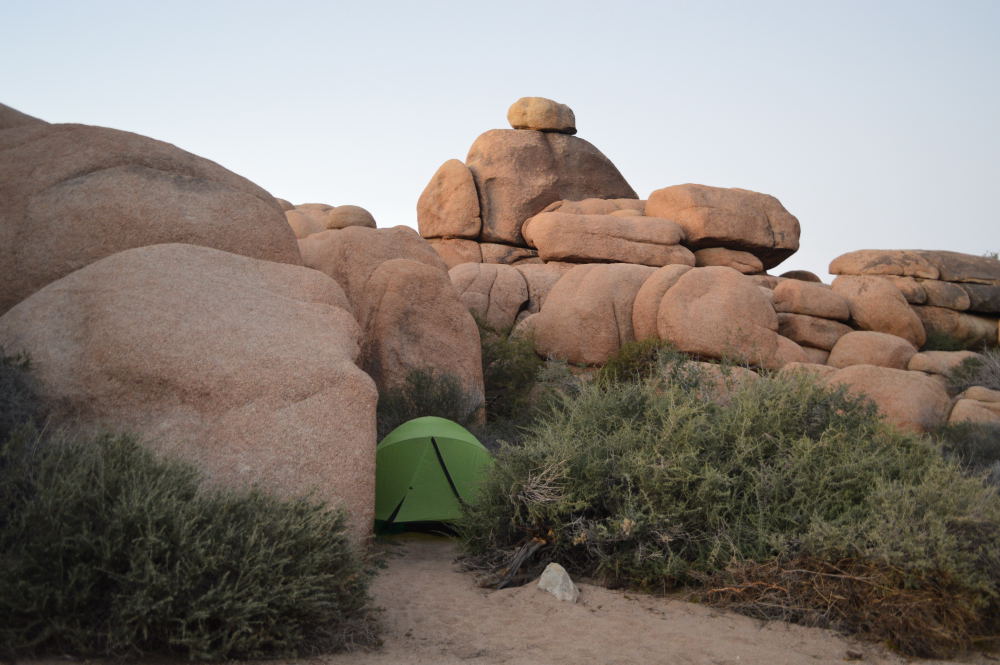
We expected to have our choice of campsites, given that the park has a generous number of sites and we were visiting in the middle of the week in the middle of the school year.  We were wrong!  Yes, there were plenty of spots from which we could choose, but many of the sites were already taken.  Some of the spots were filled with retired travelers, a few with families who appeared to be on long-term pilgrimages like us, but most of the campers were rock climbers.  Had I known more about the camel-colored rock formations pushing up from the desert floor like large drops of liquid not subject to gravity, this would not have been a surprise.  We set out to find a campsite that would protect us from the 60+ mile an hour winds that were predicted at night and found a site where we could set up our tent in a crevice between rocks and shrubs.  The wind may have howled, but we were snug and warmish all night long.

Campsite Success!

Campsite Success!

Alan’s ankle was beginning to feel better, so we were able to go on a number of small nature trails and a few proper hikes.  Van loves the nature trails, mainly because he loves running from sign to sign or number to number.  He was a little boy in heaven.  My favorite of the nature trails was our amble through the Cholla Cactus Garden.  The garden is situated in a part of the park where the Colorado Desert meets the higher, Mojave Desert.  There are many types of Cholla Cacti throughout the southwest, but these particular Cholla, the Teddy Bear Cholla, get their name for obvious reasons.

Teddy Bear Cholla, Johua Tree National Park

Teddy Bear Cholla, Johua Tree National Park

Just don’t cuddle them, or even get close to them.  If you brush against one with the slightest amount of skin or clothing, spines will jump off the plant and on to you.  This gives the cute but unfriendly plant its nickname, Jumping Cholla.  This was a case of making sure that our little Junior Ranger really stayed on trail.  Thankfully that’s the one rule about hiking in sensitive habitat that Van has really embraced.  Especially since he was working on obtaining yet another Junior Ranger badge.

We also took several hikes and nature walks through the Joshua Tree forests, in and around the magnificent rock formations, to see a small dam (a remnant from when this area received twice as much rain just a short century ago), and to see hypercolor Disneyified petroglyphs.  Shocking to think that this area, which receives so little rain, received twice as much a mere century ago.  It makes me wonder what this area will look like in another century, after climate change has an even more significant impact on the temperatures and rainfall in this area.

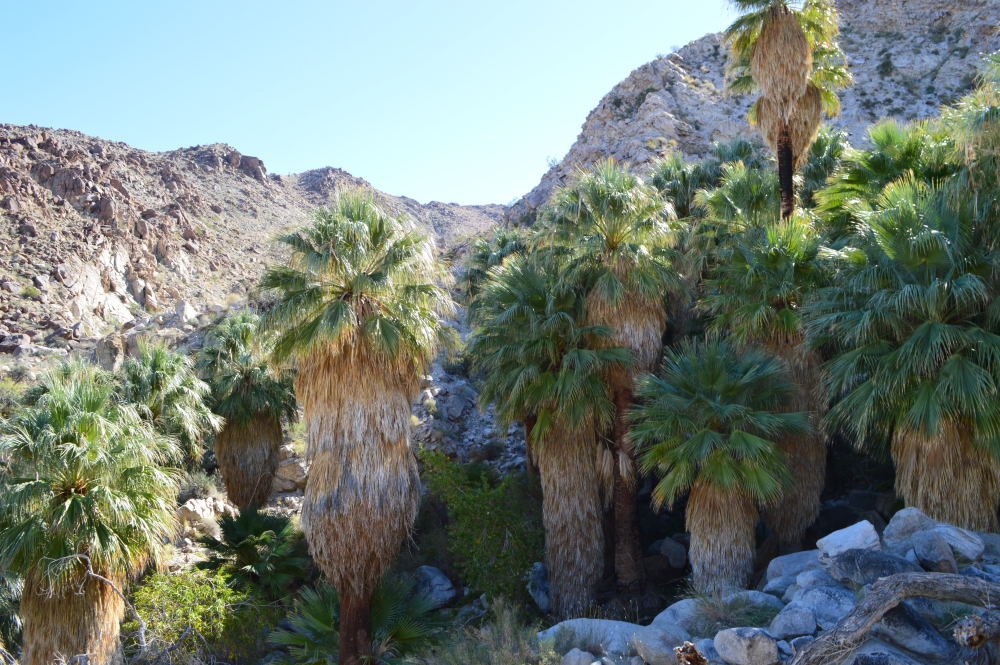
The most fascinating hike we took was to 49 Palms Oasis.  We hiked up and over a ridge through a dry desert landscape dotted with barrel cacti.  As we headed down into a valley, in the distance was a striking site.  A small cluster of green.  Palm trees in the middle of the desert!  Yes, I’ve seen plenty of palm trees in the middle of the desert before.  Typically in straight lines along streets, golf courses, and resorts.  But to see a natural palm oasis was something else.  What appeared to be a tiny cluster was actually quite large once we were hiking amongst the palms.  I can imagine how hikers in the hot summer must feel such relief in the shade of the fan palms.  And so I repeat myself, hiking to a true palm oasis is reason enough to come to Joshua Tree National Park.

49 Palm Oasis, Joshua Tree National Park

49 Palm Oasis, Joshua Tree National Park

My biggest lesson from visiting Joshua Tree is that the layperson’s view that a desert is devoid of life is categorically untrue.  Joshua Tree is an incredibly diverse biological environment.  Many of the plants were new to me, and I had such a blast learning about the myriad of plants we were living, hiking, and eating around and what each plant did to conserve water and thrive in this environment.  More surprising to me was the richness of color found in the plants.  I expected that the plants would mimic the colors of the rock and soil.  Instead, many of these plants stood out for their saturated colors against the tans and browns of the desert floor.

Deep Reds of a Barrel Cactus, Joshua Tree National Park

Deep Reds of a Barrel Cactus, Joshua Tree National Park

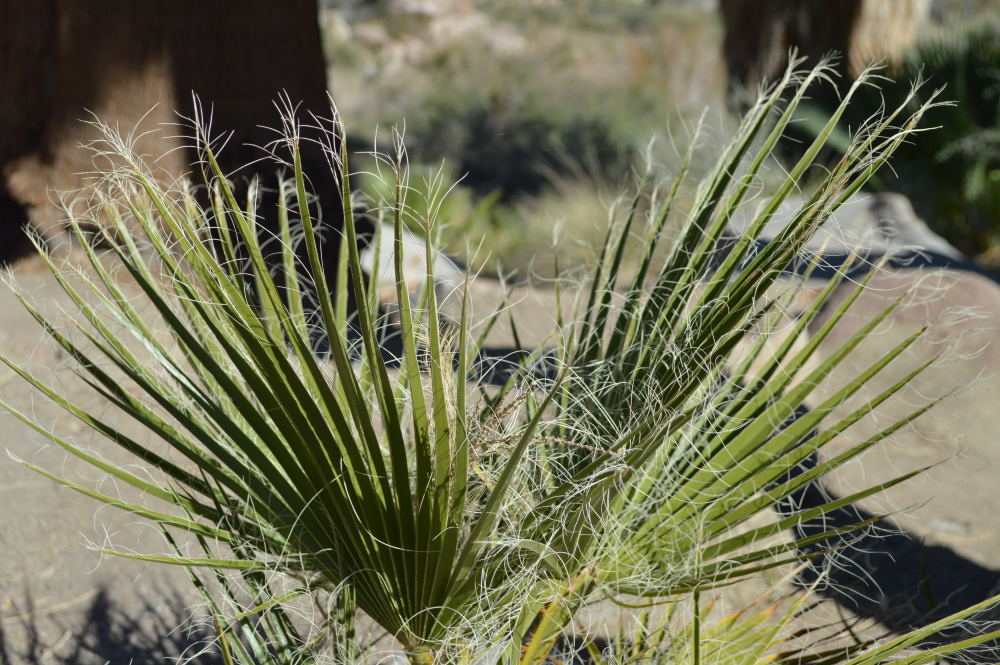
Greens of a Fan Palm, Joshua Tree National Park

Greens of a Fan Palm, Joshua Tree National Park

Our last day in the park coincided with Halloween.  We were not about to go trick or treating in the campground, so instead we celebrated by taking Van to Skull Rock.  Aptly named, indeed!

Skull Rock, Joshua Tree National Park

Skull Rock, Joshua Tree National Park

Given the government shut-down, this was the first national park we had visited since the Pacific Northwest.  It was great to spend a few solid days in the outdoors – no traffic, smog, or crowds.  And since Van is growing up before our very eyes, he’s finally at the age that he can participate in the Junior Ranger activities with more understanding.  Although he had received two junior rangers badges at previous parks, this was the first park where he completed the activity booklet in order to earn a badge, bragging rights, and a fabulous book that he continues to read about Lilly the Joshua Tree.  The rangers were incredibly supportive and friendly with Van, which just added to how much we enjoyed Joshua Tree.  If you’re traveling to Southern California, spending a few nights camping and exploring this park should be very high on your agenda.  Aside from seeing friends, Joshua Tree was my clear favorite during our time in California.

Butterflies, Pelicans, Elephant Seals, Museums, and Smog: We Must Be in California!

To Beautiful to Bottle It!

To Beautiful to Bottle It!

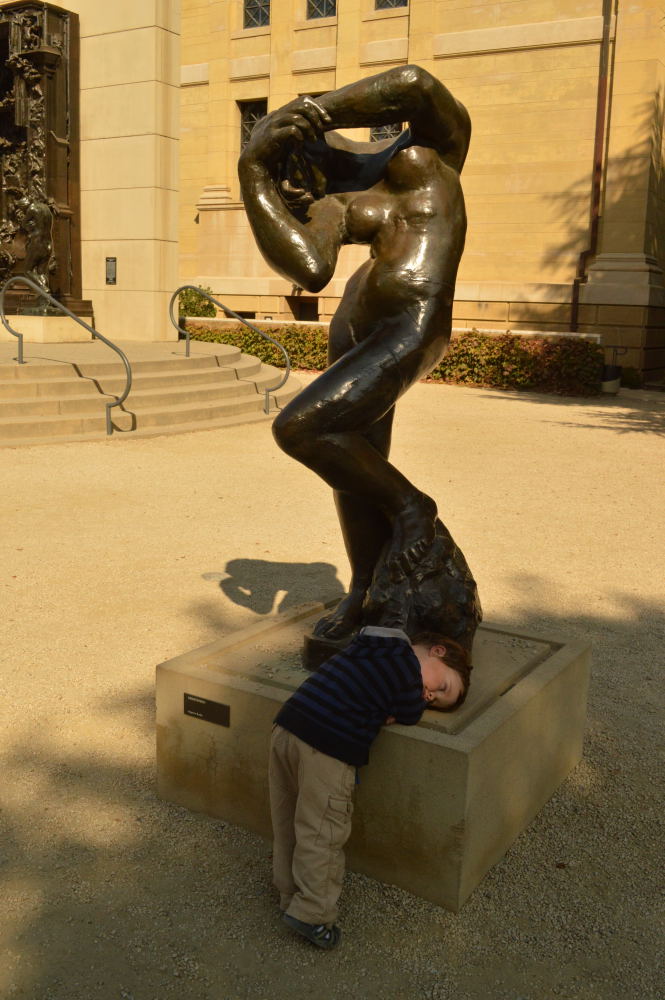
After a fantastic week in the San Francisco area, we slowly made our way south along the coast.  Our first stop was at a truly luxurious resort-like campground just south of the city (Costanoa KOA).  From there we enjoyed the beach, played lawn games, washed dishes in warm water (a true luxury), and spent a day in Palo Alto having our car serviced while we frolicked around Stanford’s campus.  This was my first time seeing Stanford and…wow!  What an incredible campus.  I felt like I was visiting a cross between a university and a resort.  I know there are a few of you Stanford grads reading this blog – what a beautiful place you called home for a few years!  This is definitely a place to visit if you’re ever in the area.  Unfortunately for us, the museum was closed the day we swung by, but that didn’t stop us from enjoying the Rodin Garden.  Van especially enjoyed posing with the sculptures.

Was Van a Muse for Rodin?

Was Van a Muse for Rodin?

Strong Like the Sculpture

Strong Like the Sculpture

Stanford

Stanford

The theme of our time on the Central California Coast was wildlife.  Beautiful, sea-loving wildlife – from human wildlife to feathered and flippered friends.  We spent an enjoyable afternoon watching the pelicans soar above the ocean and getting our toes sandy while we watched men and women in wetsuits fly across the water.

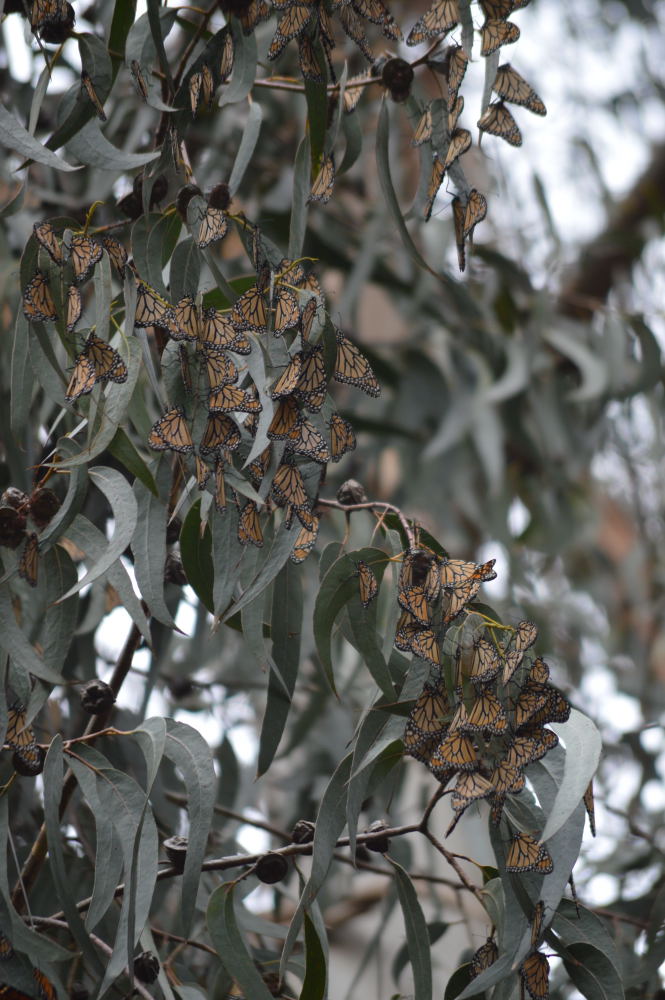
We also ambled through the Pacific Grove Monarch Sanctuary, spying the beautiful winged creatures hanging like dead leaves from the branches of eucalyptus trees.  It reminded me of Barbara Kingsolver’s recent novel, Flight Behavior, except not quite that overwhelming.

Monarchs

Monarchs in Pacific Grove

From Costanoa, we headed south along the coast through Big Sur.  Big Sur is the name of a town along the coast, but it’s used more commonly to refer to the entire stretch of coast between Carmel and San Simeon.  The views were stunning, but my favorite was the walk to the cliff’s edge to spy a waterfall crashing into the surf below at Julia Pfeiffer Burns State Park.  McWay Falls and the horseshoe-shaped cliffs with a beautiful sandy beach tucked into its embrace was paradise.  Not a paradise where you can get your toes sandy, but a view of paradise to enjoy from above.  There are signs warning you not to climb down the cliff face to the beach below, and I think we’re all better for that.

McWay Falls, Julia Pfeiffer Burns State Park

McWay Falls, Julia Pfeiffer Burns State Park

Big Sur, California

Big Sur, California

Big Sur, California

Big Sur, California

As beautiful as the views were, the highlight of our day was easily our stop in San Simeon.  No, not Hearst Castle (we figured that Van wouldn’t appreciate it and we wouldn’t appreciate his whines on a guided tour), but the elephant seals!  We were given good advice to stop and see the seals.  While the smell was a little overwhelming at times, it didn’t stop us from spending a long time just watching these awkward creatures sunbathe, play, fight, and amble across the sand to the sea.  None of us could get enough of it, but Van was particularly enamored by their antics.  Below are a few of the dozens of photos we took while we were captivated.

After we pried ourselves away, we headed down to our lovely little motel in Morro Bay for a couple of days of errands and exploration.  Unfortunately, the only decent photo I have of our time there was of Morro Rock, a very large (and very cool) rock erupting from the bay.

Morro Rock in Morro Bay, California

Morro Rock in Morro Bay, California

And from there we went south.  We checked out a few towns along the way, but our main goal was Los Angeles.  We spent several nights at a very over-priced and not tent-friendly KOA.  I’ll save you the details except to tell you that we were the lucky attendees of two loud and competing concerts, all while in our pjs in the tent.  Sigh…

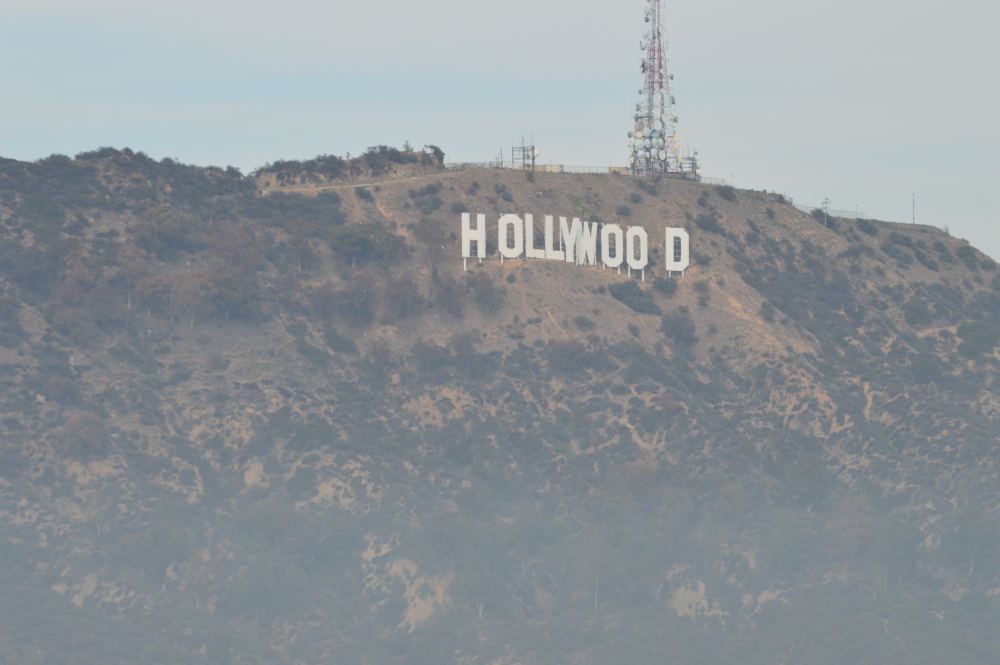
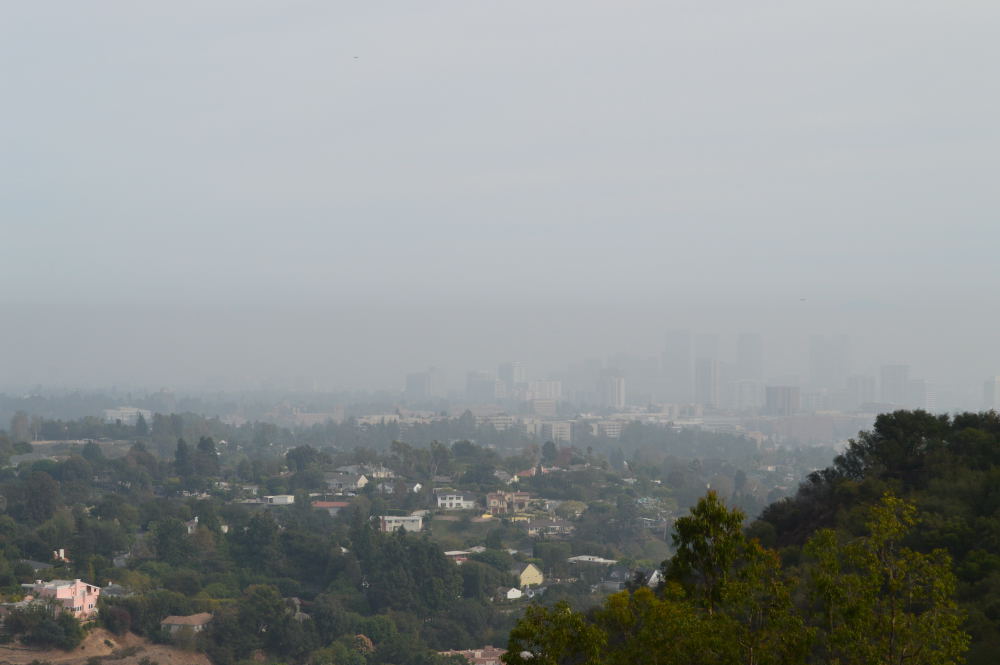
I was excited to visit Los Angeles with Alan and Van since I’ve always been a fan when I’ve visited in the past.  Though we had some great times on this visit, I realize that between camping far from any of the things we wanted to do (tent camping in the state parks was either booked solid or insanely priced – $45 to $60, no thank you) and the high level of smog, it was not an ideal visit.

Proof We Were In Los Angeles!

Proof We Were In Los Angeles!

Smog, Thank You Very Much!

View of Los Angeles

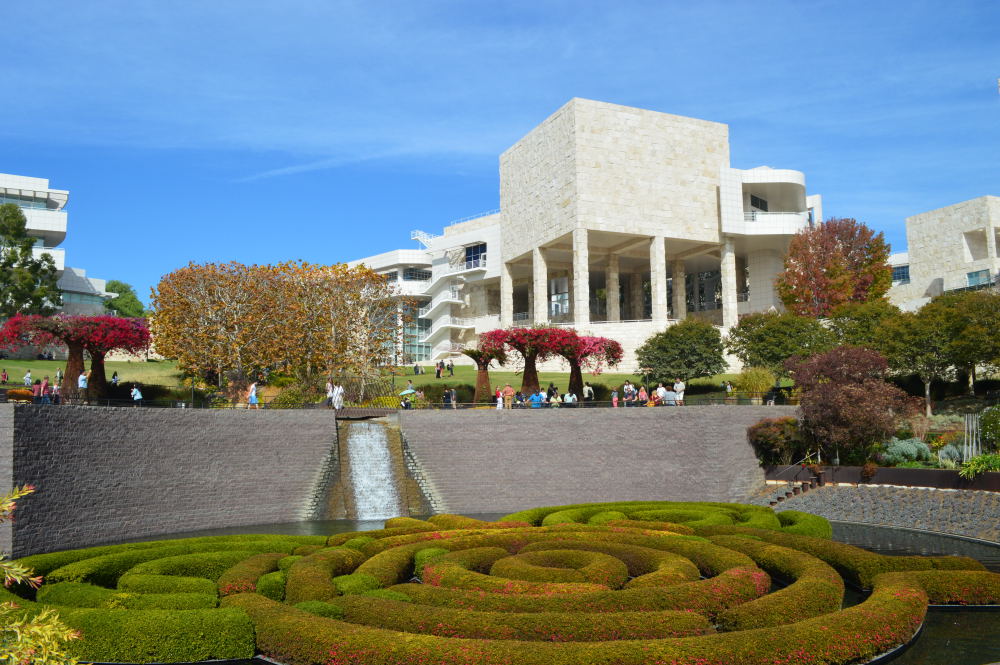
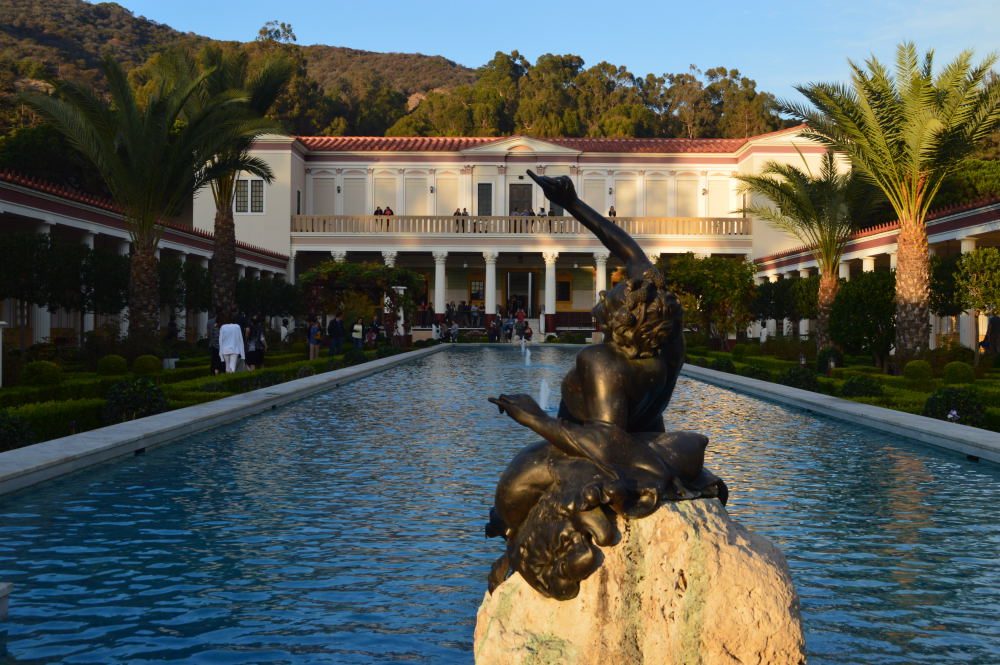
That being said, the highlights were an afternoon in Santa Monica spent with Alan’s college friend, Tyler, and a day full of art at The Getty Center and The Getty Villa.  Pro tip: if you’re planning to go to one of these and you have a full day, go to both on the same day.  As long as you make reservations in advance to visit the villa (this is required for the villa, not for the center), you only pay for parking once ($15) and the fee is good for both places.  There is no entrance fee, so the $15 parking fee is all that is needed to visit these gems.

The Getty Center, Los Angeles, California

The Getty Center, Los Angeles, California

The Getty Villa, Malibu, California

The Getty Villa, Malibu, California

My favorites at The Getty Center were the architecture, the gardens, and a stunning temporary exhibit of Abelardo Morell’s photographs.  From a past visit, just days after it first opened, I remembered that the views were stunning, as well.  Alas, the smog got in the way of that during this visit.  Van’s highlight was rolling down the hill.  Over and over.  He was in heaven!

These gorgeous flowers reminded me so much of dancers.  Any leads on what type of flowers these are?

DSC_0443_01

DSC_0446_01

My parting observation about Los Angeles: there are a lot of Persians in this city!  Given the current exhibition at The Getty Villa (The Cyrus Cylinder and Ancient Persia), we weren’t surprised to be in a sea of Persians, but that wasn’t the only place where I noted a high volume of my lovely husband’s kinfolk.  Sadly, we didn’t partake in any kebab or ghormeh sabzi while were there.  We’ll just have to wait until we get back to Colorado.

Time Capsules

Since Stacey has been writing so much I figured I should write another post.  One every 3 to 4 months may seem relatively pathetic, but I have Congress to thank for setting the productivity bar so low that my pace makes me look like a superstar blogger.  I also have Congress to thank for finally opening the National Parks again so I could write about Joshua Tree National Park.

I’m not going to write about Joshua Tree the way Stacey would.  She can write a more extensive narrative of the park if she wants but what I am going to write about is time capsules.  Not the grade school projects where you stuff a box with notes to yourself, lists of ambitions, newspaper clippings, et cetera.  Rather, the type of time capsules that serve as reminders for me and everyone reading this blog of the importance of being mindful of how we live our lives and why we protect public spaces for future enjoyment and education.

Time Capsule #1: A Mountain Dew Can

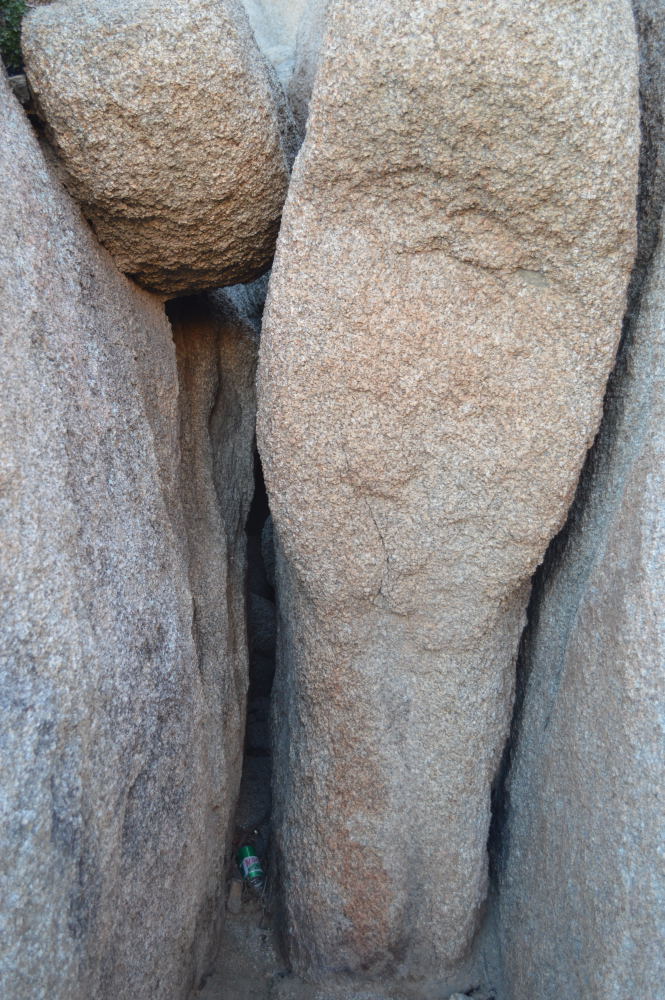
The first time capsule is a very old Mountain Dew can I found at our campsite at Jumbo Rock.  To give some background, when we got to Joshua Tree the wind was whipping at 40-60 mph and given the elevation and time of year, that meant we would be facing brutal wind chills and sleepless nights with an angry 2 1/2 year old.  In order to make our stay more hospitable (really to make it even possible) we had to find a site that would protect our tent from the wind on all sides.  Given how the sites were positioned, this was not an easy task and we ended up putting the tent in a space so far back from the road, so squeezed in between giant boulders and bush that it was not remotely close to the normal tent space/picnic table area established for the campground.  In other words, no one had probably been back there for years.

I happened upon the can (pop where I’m from, soda for Stacey) as I was setting up the tent.  It was wedged deep between two very tall and skinny boulders.

DSC_0603_01

At first I thought it was just normal litter as we’ve been enough places and seen enough abuse of campsites in one form or another that I was about to pick it up and throw it in the recycling.  As I am a sucker for noticing details, immediately I could tell this can had a very old design (the diameter of the aluminum top was much larger than cans of today, and the size of the spout was much smaller than today, not a wide-mouth) and I estimated the Mountain Dew logo was something I had not seen since my early childhood.  Given that the color was somewhat faded but in relatively good condition, and given the area where it was sitting received almost no direct sunlight, I was struck by the fact that most likely what I was staring at was a pop can that had been tossed aside by some camper 25-30 years ago never to be disturbed until I visited the park in late October 2013.

DSC_0597_01

Rather than move the can I decided that it had been there so long and had been preserved so well that I would rather not disturb it.  It had become part of the park, a time capsule that illustrates how much damage can be done by such routine and unconscious actions as tossing a can aside.  I will not forget that can for the rest of my life; how it is still there, will still be there tomorrow, the next day, and probably until I die.

I hope that everyone reading this blog will remember that can, as well, and carry it with them when they are making decisions that if made without thinking could have serious long-term consequences even though on the surface they seem innocuous.  Because so many of that can’s brethren are invisibly living a similar life below ground; they are still there, will still be there tomorrow, and the next day…

Time Capsule #2: The Disneyfication of Ancient Petroglyphs

My little joke at the beginning of this post was in part driven by the fact that what has been politically dividing D.C. and dividing this country has been ideologically driven by people’s views about private versus public functions.  I do not want to take up an exhaustive debate of the issue here because I think it would be inappropriate given the tone and subject matter of Stacey’s blog to date (yes, I consider it her blog, I’m just along for the ride).  But, I think examining the question of public space (specifically parks and recreation space) and whether the private sector could improve upon it is best answered through the lens of Joshua Tree and what Disney did to it in the 1960s.

Simple question – can Disney enhance a National Park?   Joshua Tree National Park has proven that to be a resounding no.

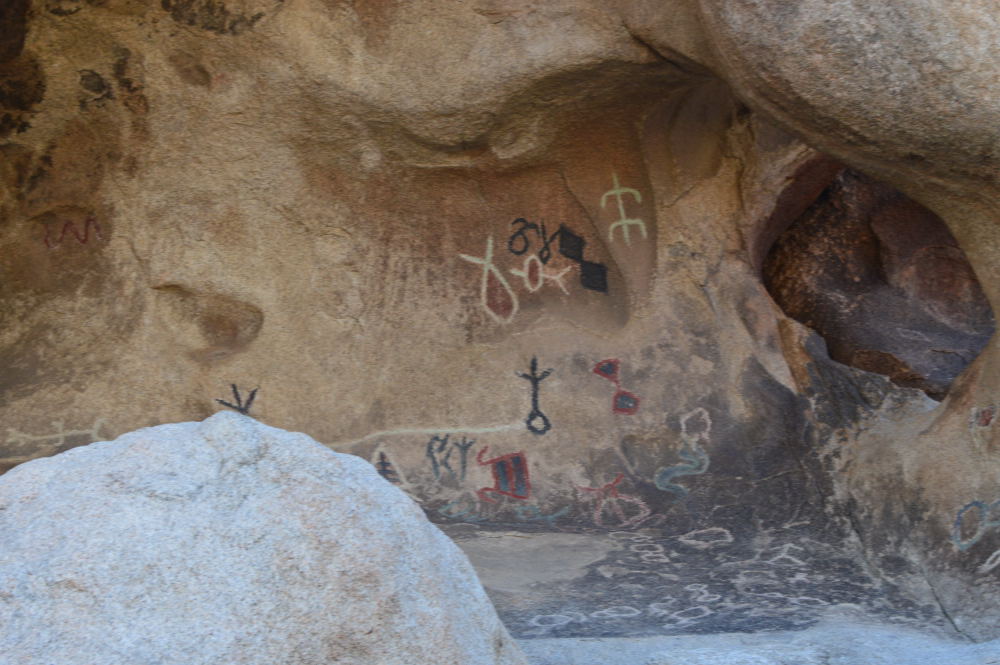
As the story goes, as explained to us by a ranger at the park, Disney wanted to shoot a movie, and they wanted to specifically feature the petroglyphs that make up part of the Barker Dam trail in Hidden Valley in Joshua Tree.  However, Disney being Disney, didn’t think the natural petroglyphs were appealing/photogenic enough for their audience so they wanted to paint over them with washable paint.  After filming, the paint would be removed and, of course, everything would go back to normal.

I didn’t live in the 1960s so I am only speculating here, but I imagine things must have been a bit different in the National Parks Service then to even consider such a proposal, and I assume Disney was offering to pay quite a large bit of money to film.  From Disney’s perspective I imagine the impetus for painting was the same bit of “magic” that makes things like “Pleasantville” appealing to some people.  But, this of course is what Disney does.

And what Disney does is Orlando, not National Parks.  They do semi-real, sanitized, cushy versions of the real world (and charge quite a premium for taking the edge off).  That is all well and good and I am not being critical of that market, but Joshua Tree proves quite definitively in my opinion that Disney should not do National Parks.  Because, and you’ve already guessed it, the washable paint was not what it was cracked up to be.  Although it could be “washed off” in some fashion, what also happened was that the petroglyphs were being completely destroyed at the same time.

So, what we are now left with is a Barker Dam trail with petroglyphs that have Disney paint on them.  In some cases you can actually see where Disney began to wash off the paint and where they stopped once it was determined that this historical site was being destroyed.  From top to bottom the color goes from full to faded/semi-washed to absent with the exposed petroglyphs almost totally removed from the face of the rock.

DSC_0678_01

DSC_0681_01

DSC_0683_01

These Disneyfied Petroglyphs, like the Mountain Dew can, have become part of the park now.  Another time capsule that illustrates how much damage can be done when action is not directed with a view to the long term.

Thank you John Muir, Teddy Roosevelt, et al who decided creating and preserving public space was a good idea.  Now next time Disney or anybody else decides it wants to mess around with what I believe is one of the most successful government functions of all time, the National Park System, one that has been replicated throughout the world; or next time someone spouts off about how the private sector could do it better, I have only one piece of advice.  Politely, but sternly, directly them to the Disneyfication time capsule when you are showing them out the door.

Walking Amongst the Great Ones

DSC_0969_01

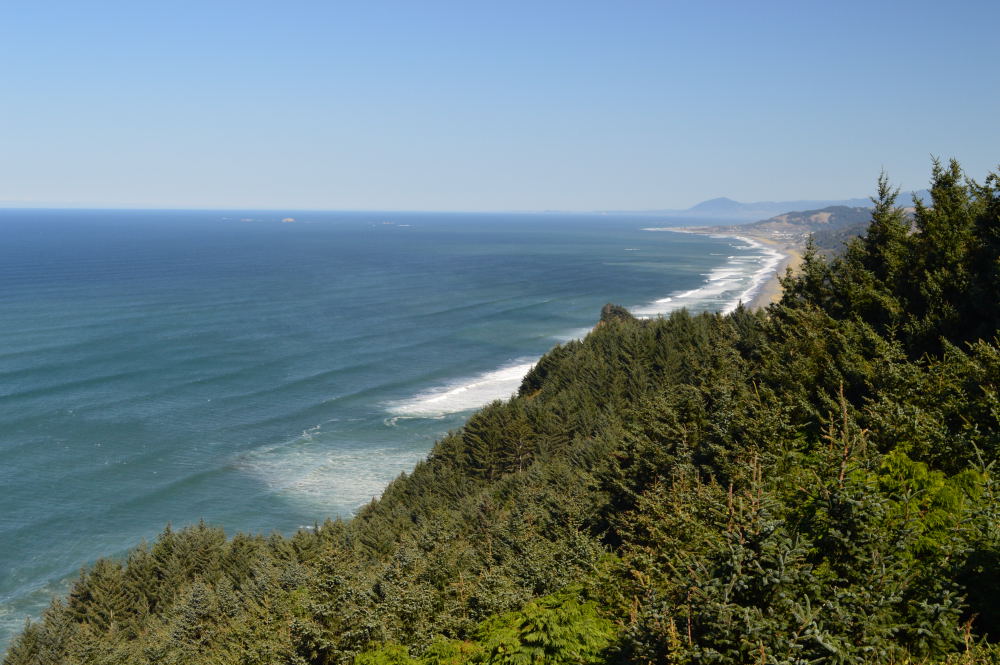
One thing that we’ve noticed on this trip is how much can change when you cross a border.  Again and again we’ve commented on how the landscape, the people, or the development changes dramatically as you cross a border.  There’s a lot in common between southern Oregon and Northern California, but they’re still two completely different states.  Most notable among the differences was the significant increase in the cost of camping, gas, food, and well…everything!  We really enjoyed exploring the beaches and redwoods of the Northern California coast, but the $35+ a night tent campsites (often without a shower) were a bit hard to stomach.  We’ve never seen public camping cost so much!  In fact, this was the first state where we began camping at private campgrounds because the cost was comparable, but the amenities were better (hot water and showers for the win!).  All of this was exacerbated by the government shut down, which meant that camping at federal campgrounds was out of the question.

Welcome to the Northern California Coast!

Welcome to the Northern California Coast!

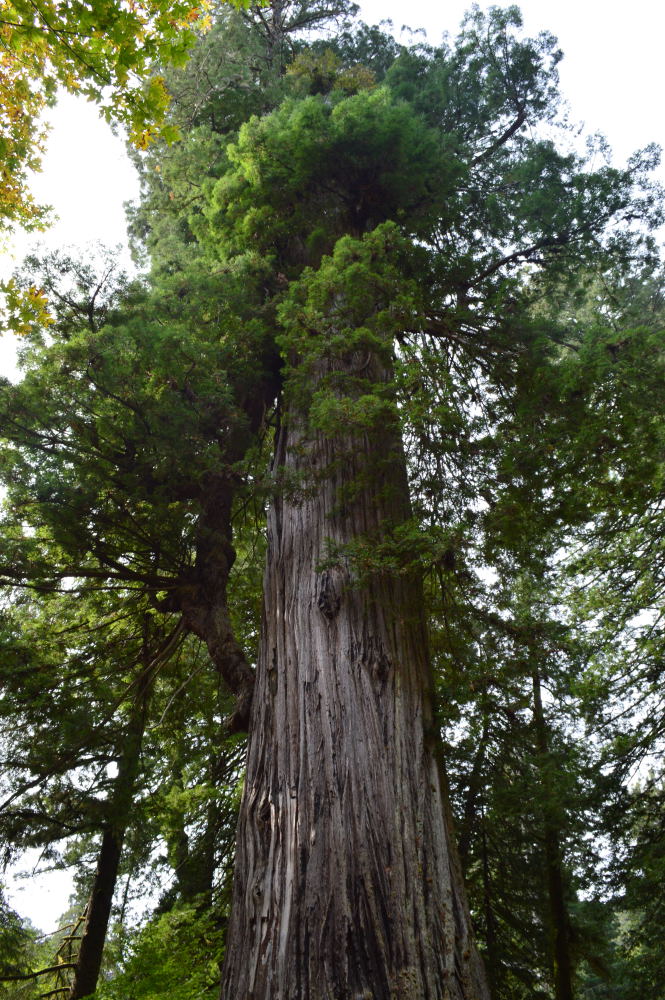
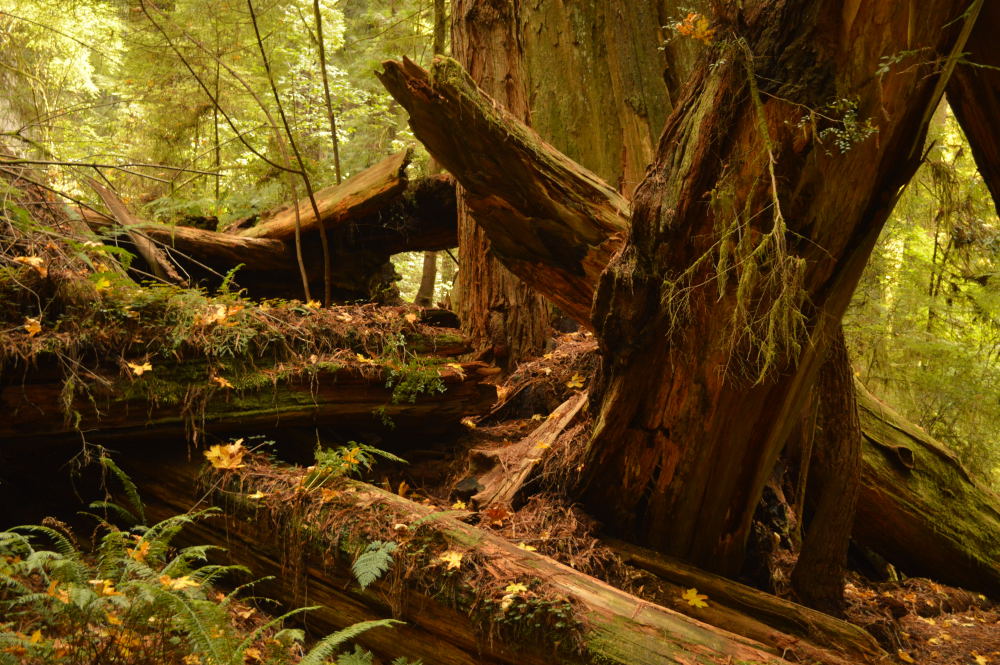
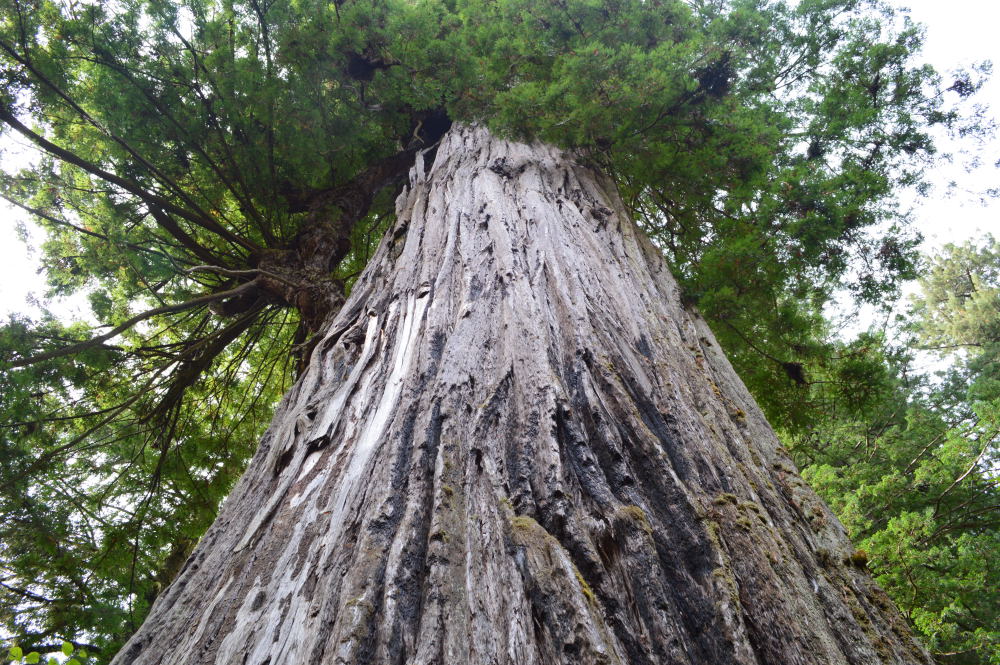
Although visiting and camping in the parks can be costly, there are many mighty fine California state parks.  Since we were barred from entering Redwood National Park (government shut down, grrrr), we were happy to discover that the California state park system preserves many of the finest Redwood groves that are still standing.  We spent our first days in California exploring Jedediah Smith Redwood State Park and Prairie Creek Redwood State Park.  Although long hikes were out of the question, we took many short jaunts to stand in the cathedral of redwoods.  The air just feels different in a forest of redwood trees.  Breathing in deeply, I felt transported to a place where the trees are more powerful than the people.
The Magnificence of the Redwoods

The Magnificence of the Redwoods

Helloooooo up there!

Helloooooo up there!

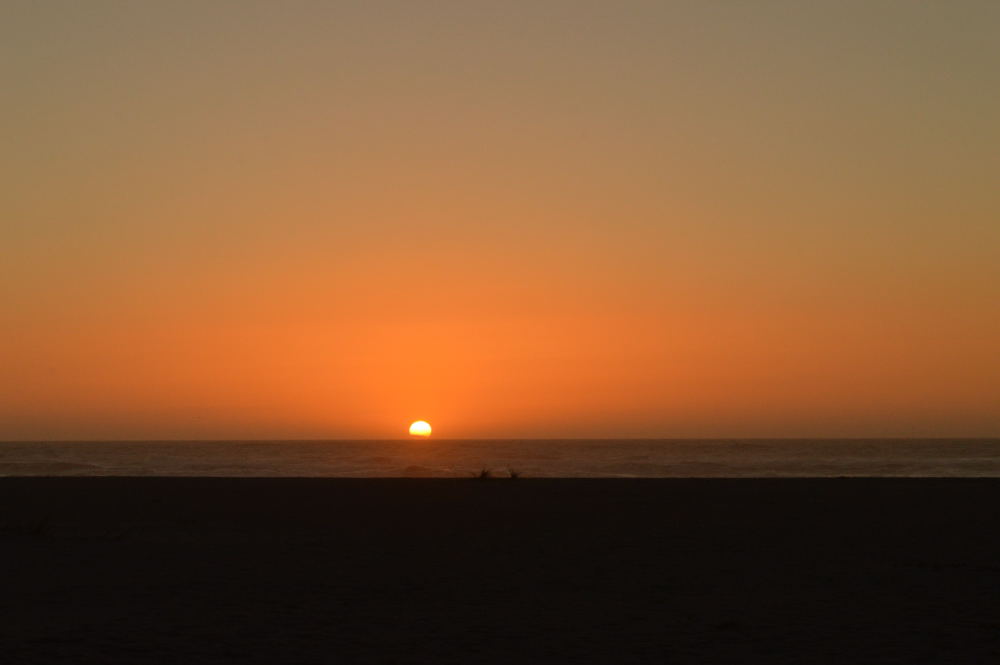
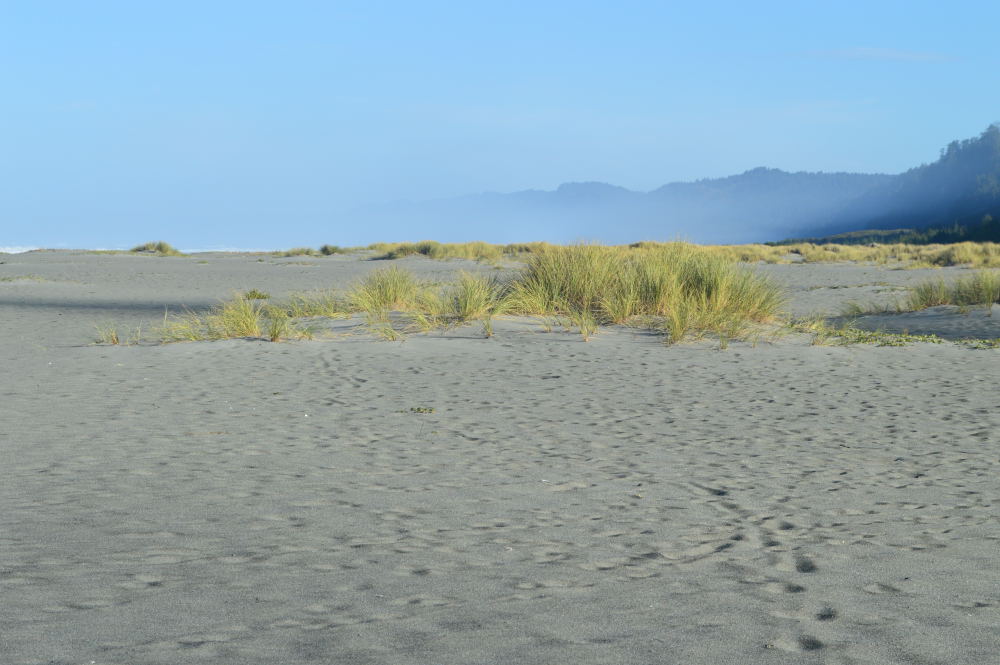
We were lucky enough to get a spot at Gold Bluffs campground in Prairie Creek Redwoods State Park – our first night camping at the beach.  Yes, we’d camped along the coast, but falling asleep to the sound of the waves and walking from our site right down to the water was a first for us on this trip.  It reminded us of our annual camping trip with our friends Sandra and Bryan to Assateague.

The Sunset from Gold Bluffs Campground

The Sunset from Gold Bluffs Campground

The Morning Mist

The Morning Mist

Playing With His New Fish - A Gift From a Neighboring Camper

Playing With His New Fish – A Gift From a Neighboring Camper

We spent the next day driving some seriously narrow dirt roads and roads that were paved at some point long ago but to call them “paved” would certainly be a misnomer.  We began by heading to Fern Canyon, just a couple of miles past our campsite.  Since Alan was still in a lot of pain from his sprained ankle, I took a solo walk to and through the canyon.  It was the kind of place I could imagine a group of kids spending hours or days exploring and making it into their own private kingdom.  Or maybe that’s just me…

Fern Canyon

Fern Canyon

After driving on some dirt roads through several of the Redwoods State Parks, we decided to check out the Lost Coast.  The Lost Coast is a stretch of Northern California coast that Highway 1 and 101 avoid.  We received recommendations from a couple of people to check it out.  None of them had done it, but they had always heard it was beautiful.  It was remote, stunning, and much more slow-going than we had expected.  Clearly our friends who recommended it had never traveled on these roads or they would have warned us.  The paved portions were the worst maintained paved roads we’ve been on during this trip.  It was SLOW going.  The stretch right along the coast (which was only five miles or so) was beautiful, but we’re not sure it was worth the all-afternoon and -evening trip along roads on which we could go barely more than 20 miles per hour – sometimes much less.  If we were one of the locals in a big truck, we would have traveled much more quickly, but driving a car weighted down with all of our possessions, open range cattle in the middle of the road multiple times, numerous hairpin turns, and deceptive signage slowed us even further.  We noticed that there were signs warning of curves ahead, but unlike other places we’ve been, the shape of the curve on the sign was in no way related to the curve or direction of the road.  It’s as if the state knew they needed to put a sign before a curve, so they just threw up whatever they had available.  It became a game for us.  What way do you think the curve will go?

After a fruitless search for a campground down a narrow, dark, dirt road, we eventually found our way to another state park and set up camp under the redwoods in the pitch black night.  I was expecting to crawl into the tent once it was set up, exhausted from a long day, but instead Alan cooked up a delicious dinner of steak and beans.  It was one of our tastiest dinners of the trip!

We awoke amongst the redwoods and spent another full day exploring their home.  It is hard to overstate the beauty and grandeur of these trees.

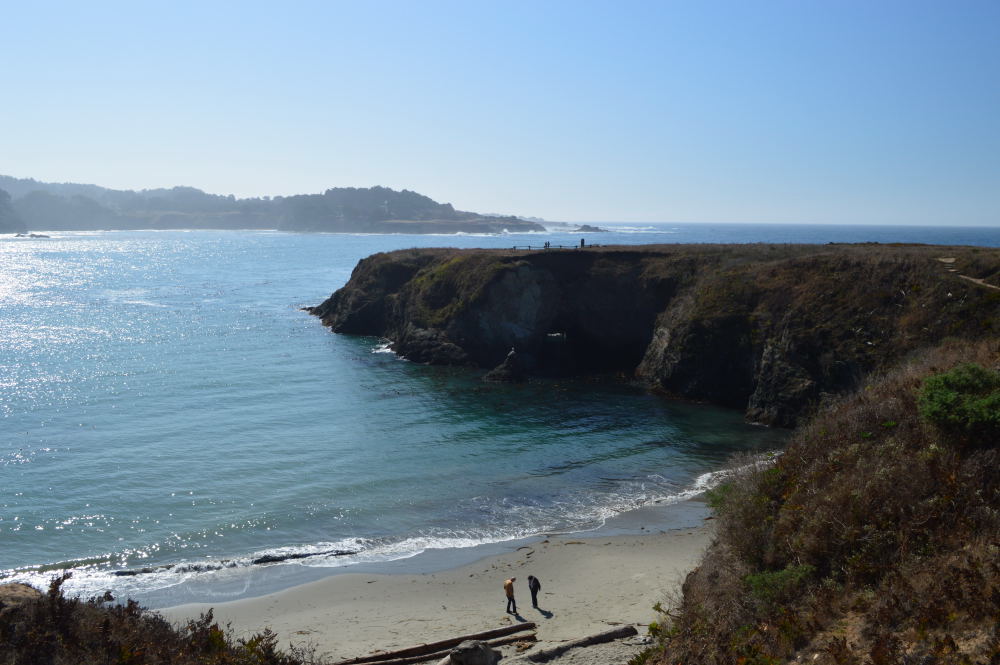
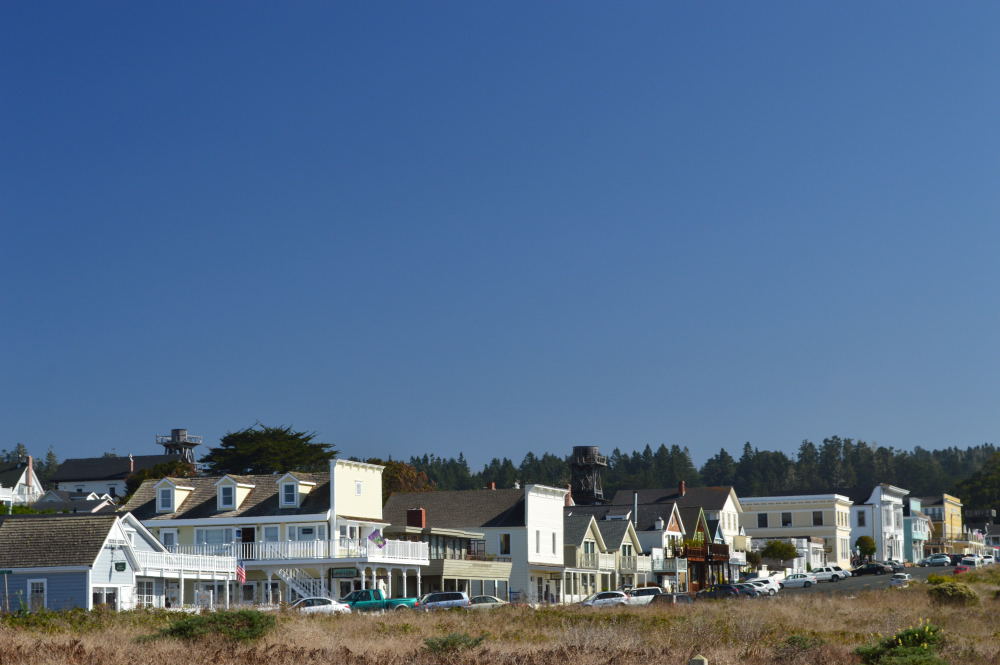
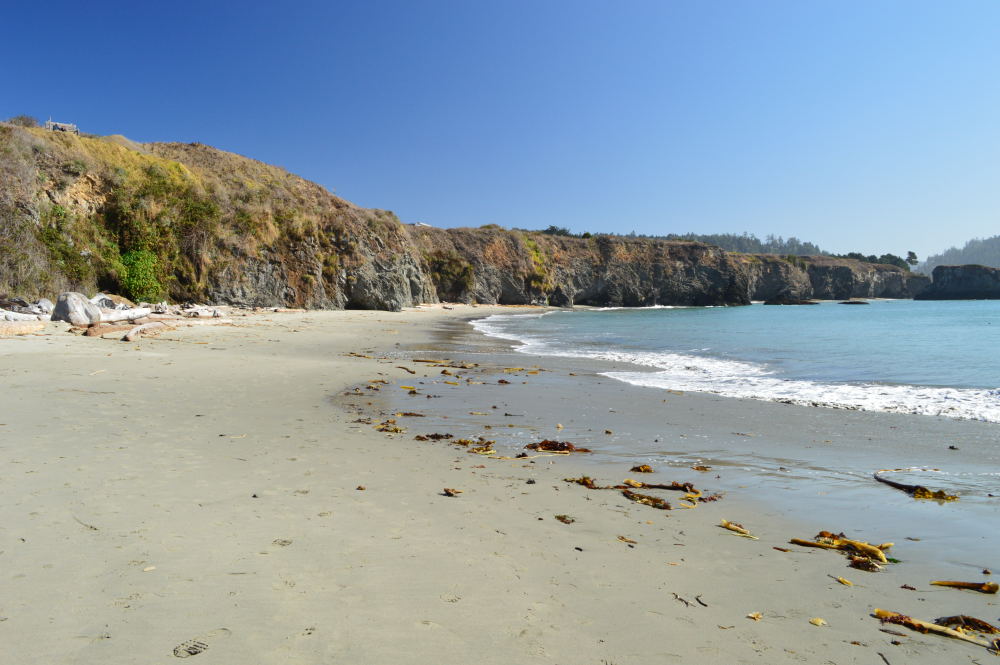
We bid goodbye to the redwoods and headed back to the coast.  We spent the next couple of days in Fort Bragg and Menocino, soaking up the perfect weather, the warm sun, and the incredible views.  I could have stayed and stayed…

Views from Mendocino

Views from Mendocino

Mendocino, CA

Mendocino, CA

The Mendocino Coast

The Mendocino Coast

If there’s one thing that made the Northern California coast even more beautiful than I expected, it was the light.  There was a magical quality to the light that made everything sparkle and shine.

This was a place I could imagine coming back to over and over again if I lived anywhere nearby.  It is the kind of place best experienced over long stretches of time, not just hours or days.

DSC_0920_01