Where There’s Smoke…

What began as a short camping trip to explore the Great Sand Dunes National Park and nearby Alamosa, quickly turned into a lesson on the impacts of wildfire.  It goes without saying that wildfires have been a huge problem in the western United States yet again this year.  After last year’s disastrous fire in Colorado Springs, another, even more destructive fire broke out, known as the Black Forest Fire.  That fire, along with several others in the state, garnered a fair amount of attention on the local news.  With this in the back of our minds, we set out to drive southwest to one of our nation’s newer national parks, Great Sand Dunes National Park.  It is the home of the tallest dunes in North America and one of the strangest natural sites I’ve ever witnessed.  The dunes seem to arise mysteriously out of the valley against a backdrop of the Sangre de Cristo mountains.

Since we didn’t have reservations (we never do), we opted to head straight to the park campground and claim a spot.  After battling the wind to set up our tent, we decided to check out Alamosa that afternoon and then explore the sand dunes early in the morning when they wouldn’t have absorbed as much heat.  As we were heading down the long straight road that would take us toward Alamosa, we drove right by a bush that was on fire.  Just one bush, completely engulfed in flames.  Given its proximity to the road, we concluded that it was likely the result of a careless and inconsiderate driver who threw a cigarette out of the window.  Luckily we had cellphone reception and were able to speak with a 911 operator to let them know about the fire.  As we continued on down the road, we eventually saw a water truck and then a fire truck coming towards us, about fifteen minutes after we made the call.  They got there pretty quickly considering how far the burning bush was from a town.  When we drove back by the spot to reach our campsite later in the day, we were completely shocked at how large of an area had burned in the short time between the single burning bush that we saw and the arrival of the water truck and firefighters.  It just goes to show how quickly a wildfire can spread with the right weather conditions and plentiful fuel.

A portion of the burned road-side just south of the Great Sand Dunes National Park

A portion of the burned road-side just south of the Great Sand Dunes National Park

After our burning bush sighting, we had a relaxing afternoon in Alamosa playing on the playground and grabbing an early dinner at a local brew pub with, what seemed like, everyone else in town.  But, the whole time we were there, we kept eyeing the smoke coming over the mountains from the southwest, surprised with how imposing it was.  We didn’t realize that the largest wildfire in the state was burning right over the mountain range, the West Fork Complex Fire.  We would be much more acquainted with the fire as the evening progressed.  Just as the winds blew the sand over the San Luis Valley to a natural pocket in the Sangre de Cristo mountains to create the Sand Dunes, the winds blew the smoke from the West Fork Fire to the same pocket, right where we were camping.  Breathing in fairly thick smoke all night did not make for a relaxing night, but with no alternatives, we toughed it out and i thought of all the folks who have to breathe in this smoke on a regular basis.

By the time we awoke, the smoke had begun to clear and we packed up our campsite, ready to explore the dunes.  Alan and I had very different reactions to the dunes.  He thought they were cool, but nothing worth going out-of-the-way for.  I cried the first time I saw them up close.  Yes, very different reactions.
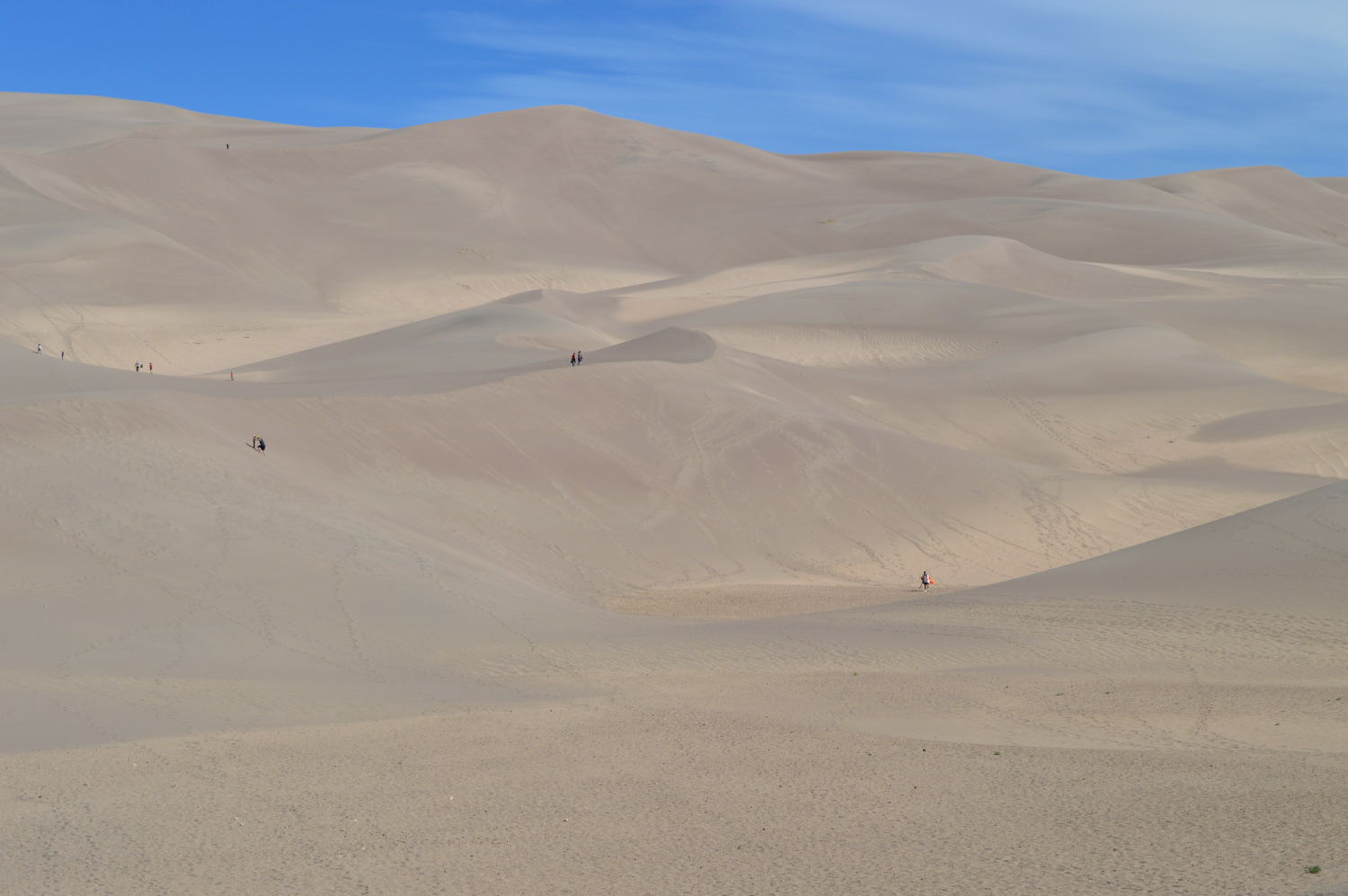
Great Sand Dunes National Park

Great Sand Dunes National Park

We had a great morning walking across the sand to begin climbing up the closest dunes.  Van and Alan loved running down the dunes and I gave sliding down on my butt a try.

After we were tired and ready to head on, we drove east, puzzling at the smoke coming from the southeast, an area that was perfectly clear when we had driven through it yesterday.  Again, unbeknownst to us, a new wildfire had begun overnight, now known as the East Peak Fire.  We passed a number of TV crews setting up to get shots of the smoke coming over the Spanish Peaks as we passed through La Veta and felt like we were in a game of pin the tail on the donkey.  Blindfold us, spin us around, and whichever direction we walk in, there will be smoke.

Smoke coming over the Spanish Peaks from the East Peak fire

Smoke coming over the Spanish Peaks from the East Peak fire

As of July 4th, over two weeks after we visited the Sand Dunes and a month after it began, the West Fork Complex Fire has burned over 110,000 acres and is only 20% contained.  Also as of July 4th, the East Peak Fire has burned over 13,500 acres and is 95% contained.  These are only two of the many wildfires that have raged (and continue to rage) in the west this summer.  Please keep the brave firefighters and local residents in your thoughts as they continue to live with the threats and discomfort of these destructive fires.
From the Mountains to the Semi-Desert

The only thing that made me excited to leave Rocky Mountain National Park was our plans to visit our friends in the Breckenridge area (Silverthorne to be exact).  We had seen Rebekah and her son Rhyer this past Thanksgiving, but before that she and I had not seen each other since college!  Even though it had been so long since we’d spent any meaningful time together, within minutes it felt as if no time had passed.  Those are the best kinds of friendships!  Van had a blast playing with Rhyer.  He basically became a parrot, mimicking everything that Rhyer (who is a couple of years older) would do.  This was a huge benefit when it came to eating.  Van was keen to skip breakfast so that he could get extra time with the toys, but after seeing Rhyer eating a nectarine, it took no convincing to get Van to follow suit.  Healthy eating for the win!

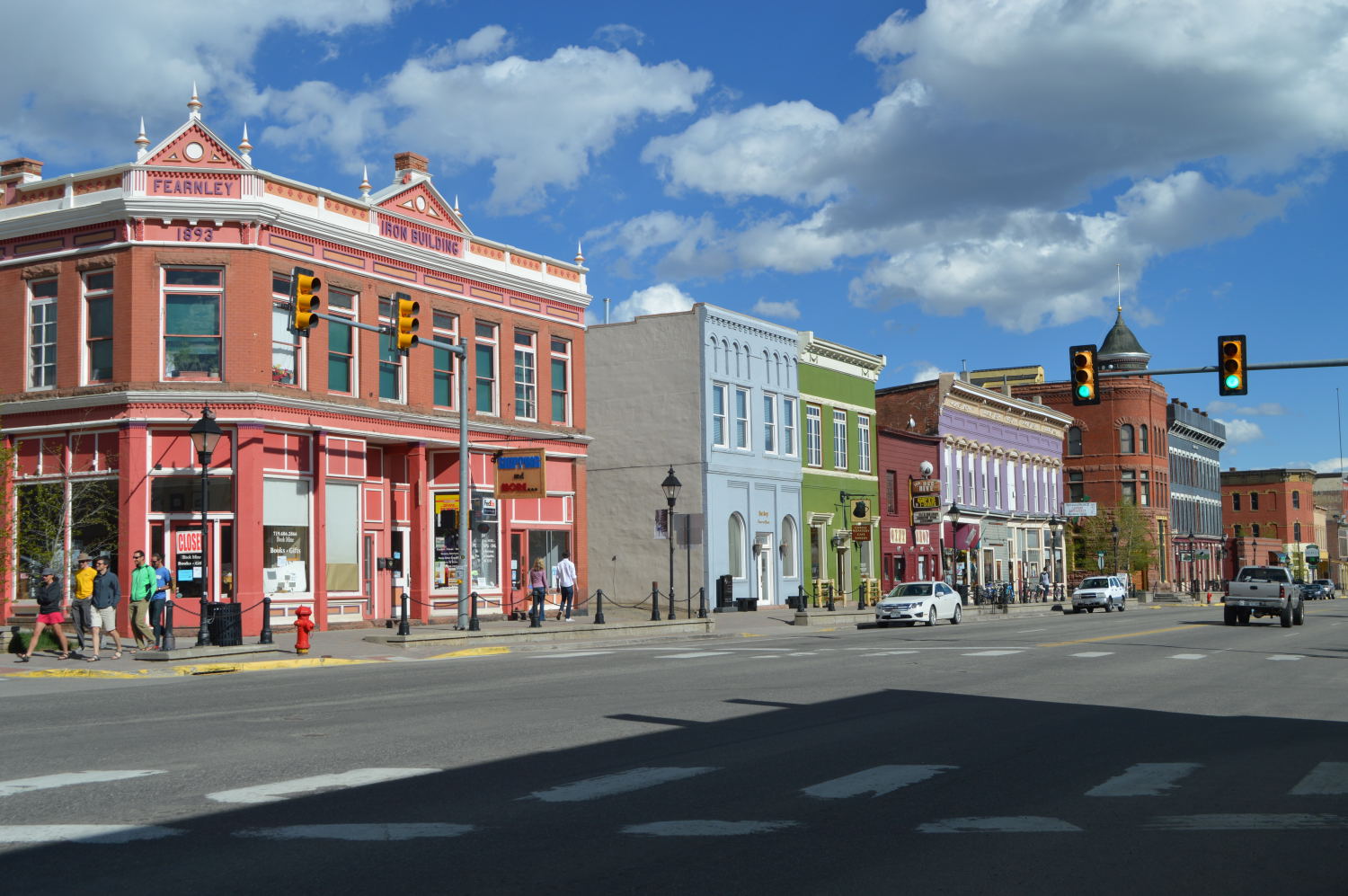
On our first afternoon with Rebekah, we headed up to the nearby town of Leadville, which just so happens to be the highest incorporated town in the country.  As we were wandering around town and checking out her old stomping grounds, she thought it’d be a treat for Van to see the fire station.  Since she knows several of the local firefighters, we were able to take Van on a grand tour of all of the fire and rescue trucks.  And these are no ordinary fire trucks.  These firefighters cover a huge, mountainous area and face building as well as forest fires.   Their trucks were massive!  We finished the day feeding fish at the fish hatchery, grabbing a great dinner in Leadville, and staying up late and chatting over glasses of wine.  A perfect day!

Downtown Leadville

Downtown Leadville

Manning the Leadville firetrucks

Manning the Leadville firetrucks

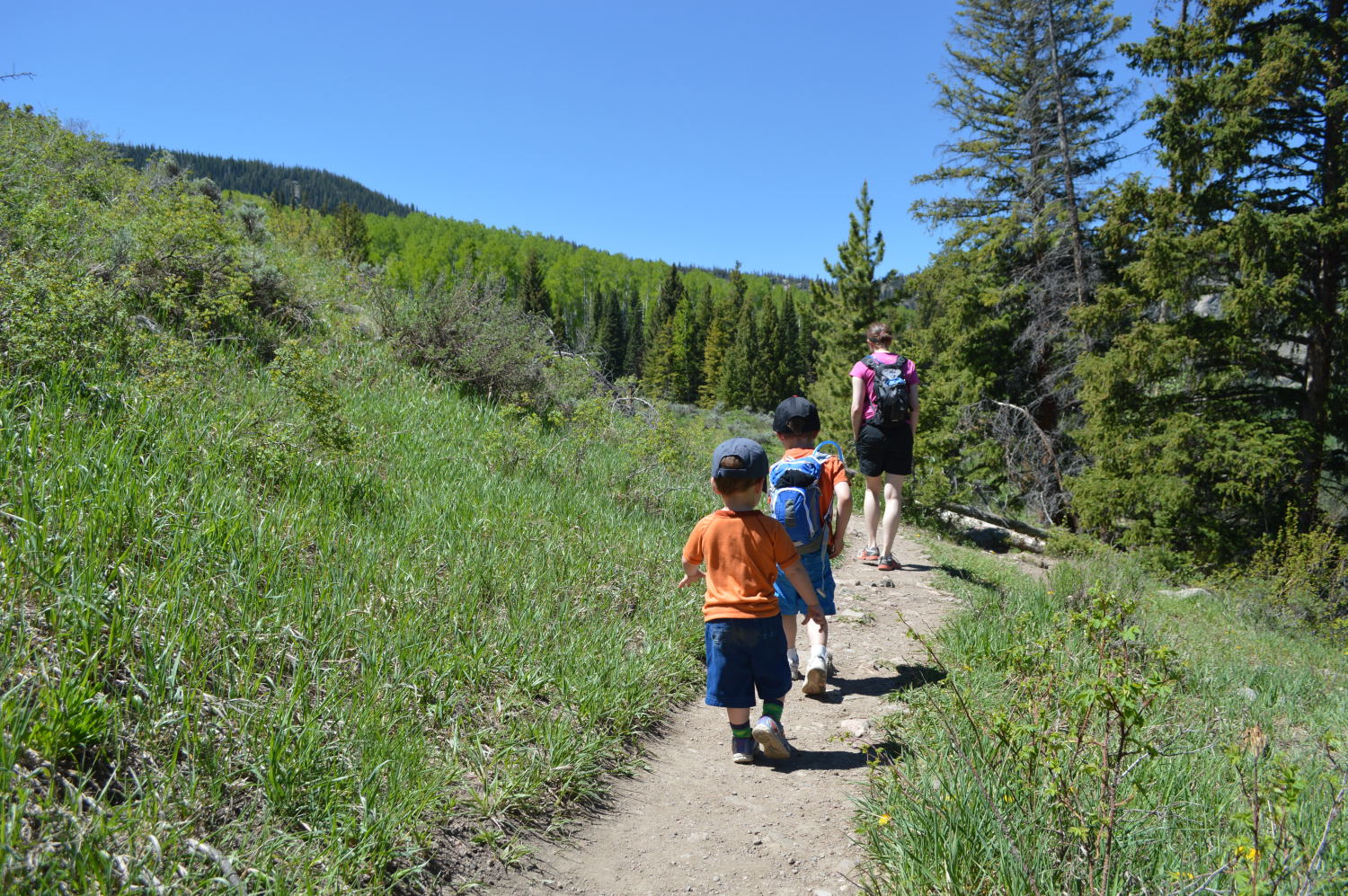
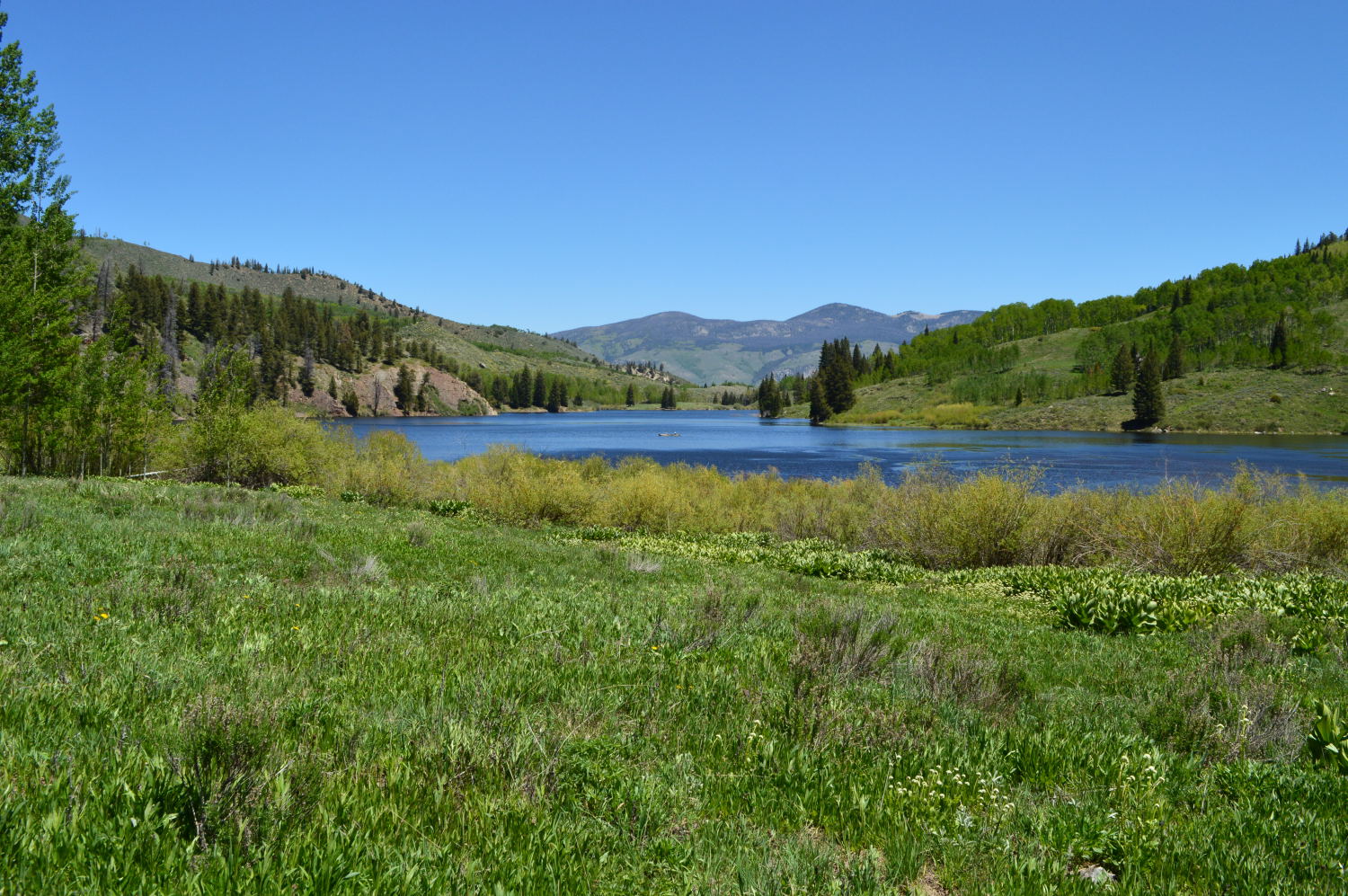
The next morning, Rebekah and Rhyer took us to Cataract Lake, a fantastic hiking spot in the Eagles Nest Wilderness Area.  It was a perfect hike for kids – not too difficult but not too easy.  Van wound up walking about half of it and being carried the rest of the way on Alan’s back.  The hike was around a lake and to an impressive waterfall with a small wooden bridge over the rushing water.  The views were insane (no filters or adjustments of the photos below – it was that beautiful), but the coolest part was how the trail passed through several different types of environments.  The number of changes in scenery, plant life, smells, and colors were pretty remarkable for a trail less than three miles long.  This would be the kind of trail you could keep coming back to during different seasons and not get bored.

Hiking with Rhyer and Rebekah

Hiking with Rhyer and Rebekah

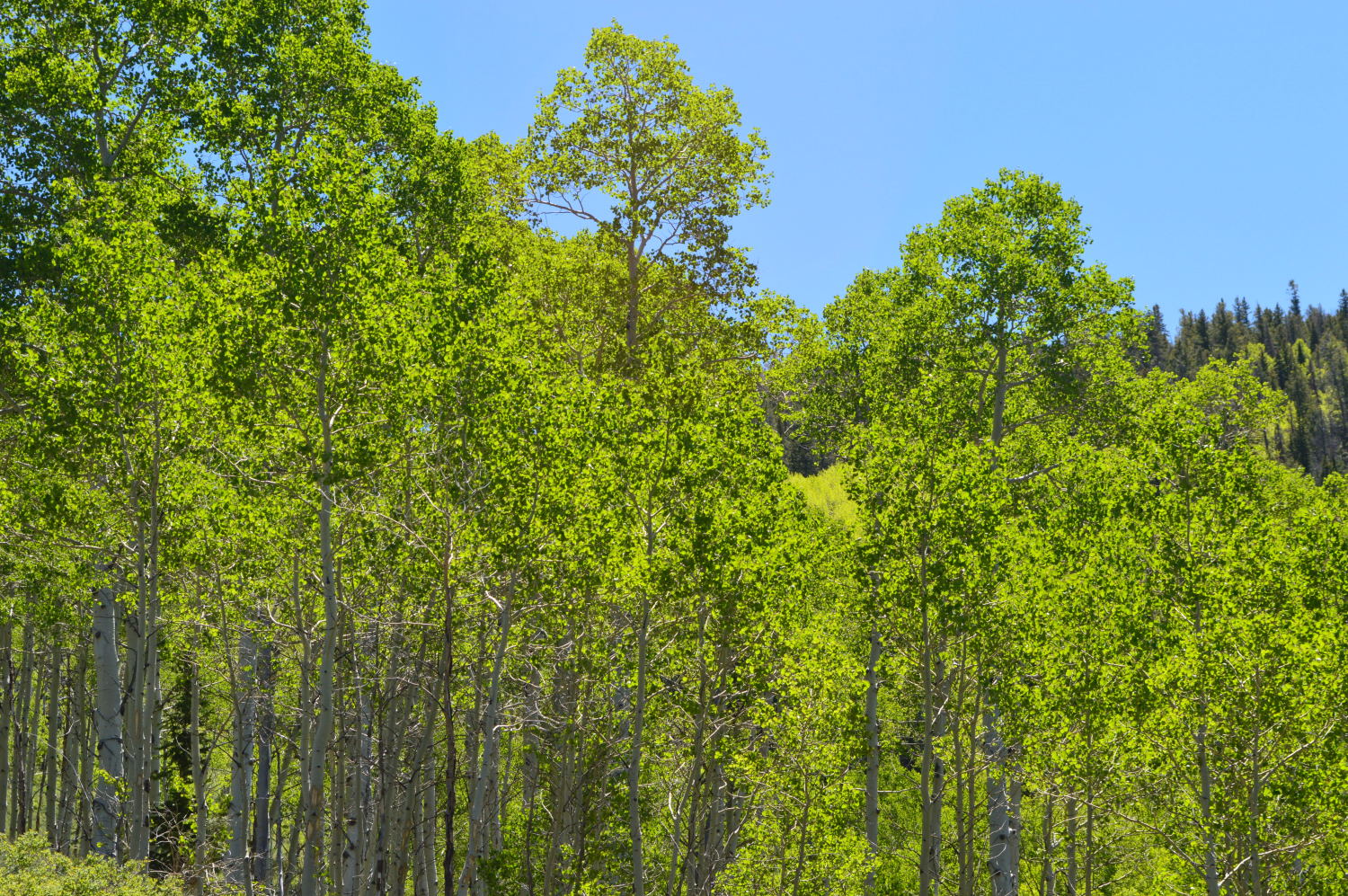
Aspens

Aspens

Cataract Lake

Cataract Lake

After an afternoon and evening of more fun, great food, and even better conversation, we woke up and struck out for Breckenridge.  We spent the morning wandering around, eating crepes, and stocking up on food for the next few days before saying our goodbyes.  THANK YOU FOR EVERYTHING REBEKAH AND RHYER!!!
We continued westward, headed for Colorado National Monument.  We decided to overshoot the park and first check out Rabbit Valley, a beautiful and completely deserted area along the Utah border.  We could have camped there for free, but we decided to opt for a campground with water where we wouldn’t be so far away from anyone else.  We made our way to Colorado National Monument and set up camp for the next couple of days in a beautiful spot up on a cliff overlooking the town of Fruita.

Rabbit Valley, near the Colorado/Utah border

Rabbit Valley, near the Colorado/Utah border

Colorado National Monument

Colorado National Monument

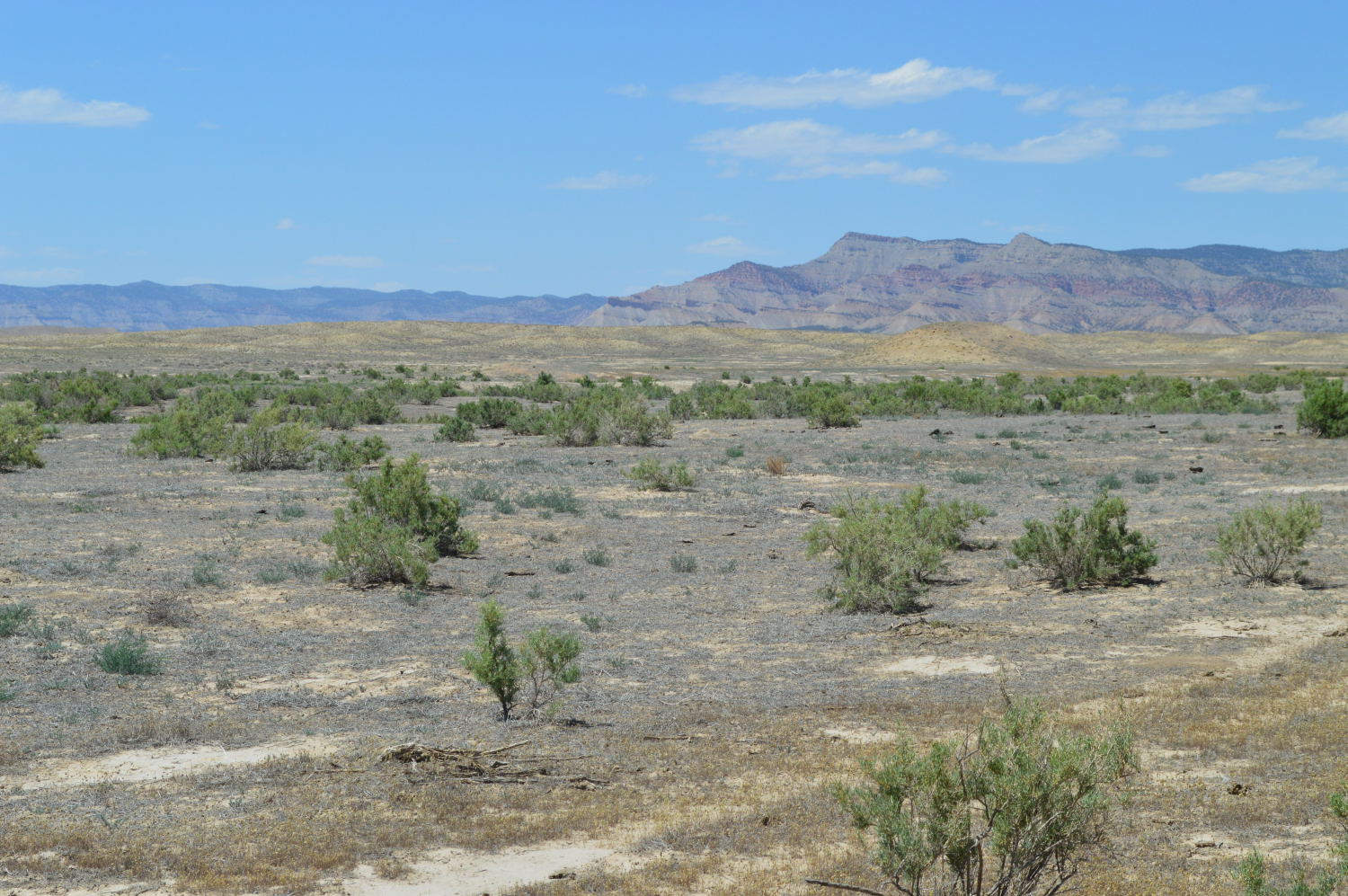
Now that we are out of the mountains and into the semi-desert, the weather has changed dramatically.  The sun had us up and out of the tent by 6am and on the hiking trails by 7.  We were able to get some beautiful hikes in each day before it got too hot, and then proceeded to do some exploration by car in the middle of the day with stops for water play and ice cream in Grand Junction and a shaded picnic in Palisade.  Across the valley from CNM were the Book Cliffs, so named because the edges of the buttes appear similar to a shelf of books.   Though they lacked the punch of the rock formations in Colorado National Monument, I found them strange, beautiful, and all the more compelling.
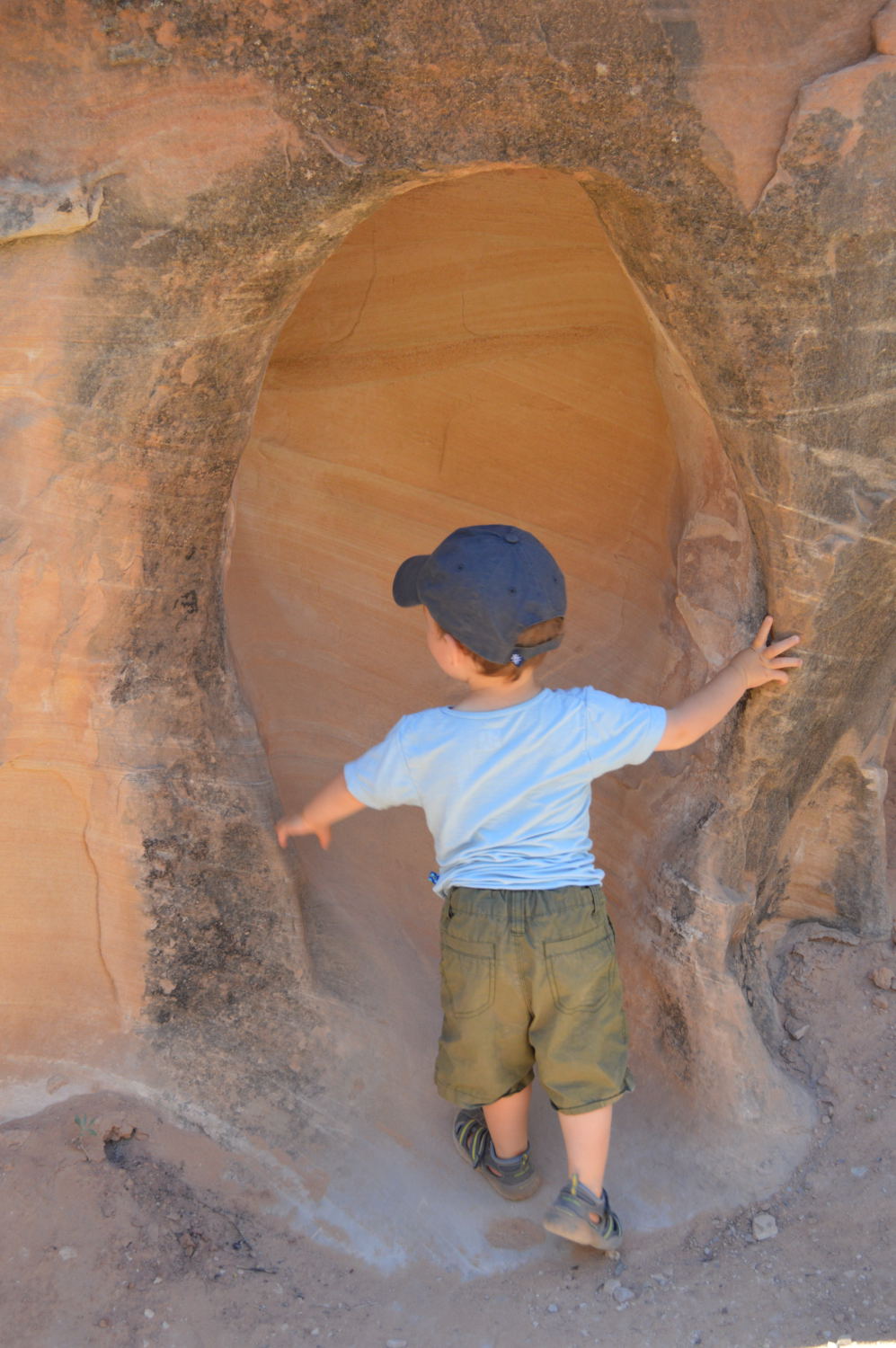
Exploring

Exploring

Posing

Posing

The Book Cliffs

The Book Cliffs

The Book Cliffs

The Book Cliffs

We capped off our trip with an afternoon wandering around and picnicking in Glenwood Springs on our way back to the Denver area.  We also swung through Carbondale during Van’s nap and vowed to come back and check it out again when we’d have time to explore.  I was instantly taken by how it was situated, between towering mountains still covered in snow in one direction and red rock cliffs in another.  Those are views I could get used to!

The Bottling Process: Traveling with a Toddler (part 1)

Over the past several months, several of you have asked me for more details about the logistics of our travels.  This is the second post in an ongoing series about how we travel.  If there’s something you want to know more about, feel free to leave me a comment and perhaps it will be a topic for a future Bottling Process post.

When I read about other folks traveling around the country like us, most of them don’t have children.  Don’t get me wrong, there are tons of families on the road (just check out www.familiesontheroad.com for a taste), but it seems the vast majority are traveling either before having children or after their children are grown and have flown the coop.  And sometimes I get jealous when I read about all of the exciting things these childless travelers are getting to experience.  Traveling with a child, a toddler no less, changes things.  But for all of the things that we’re missing out on, we gain so much by experiencing this journey with a two-year old child full of wonder and silliness (even with his unending poo and periodic tantrums).  Here are a few things that have made living on the road with a toddler a little easier and a lot more fun:

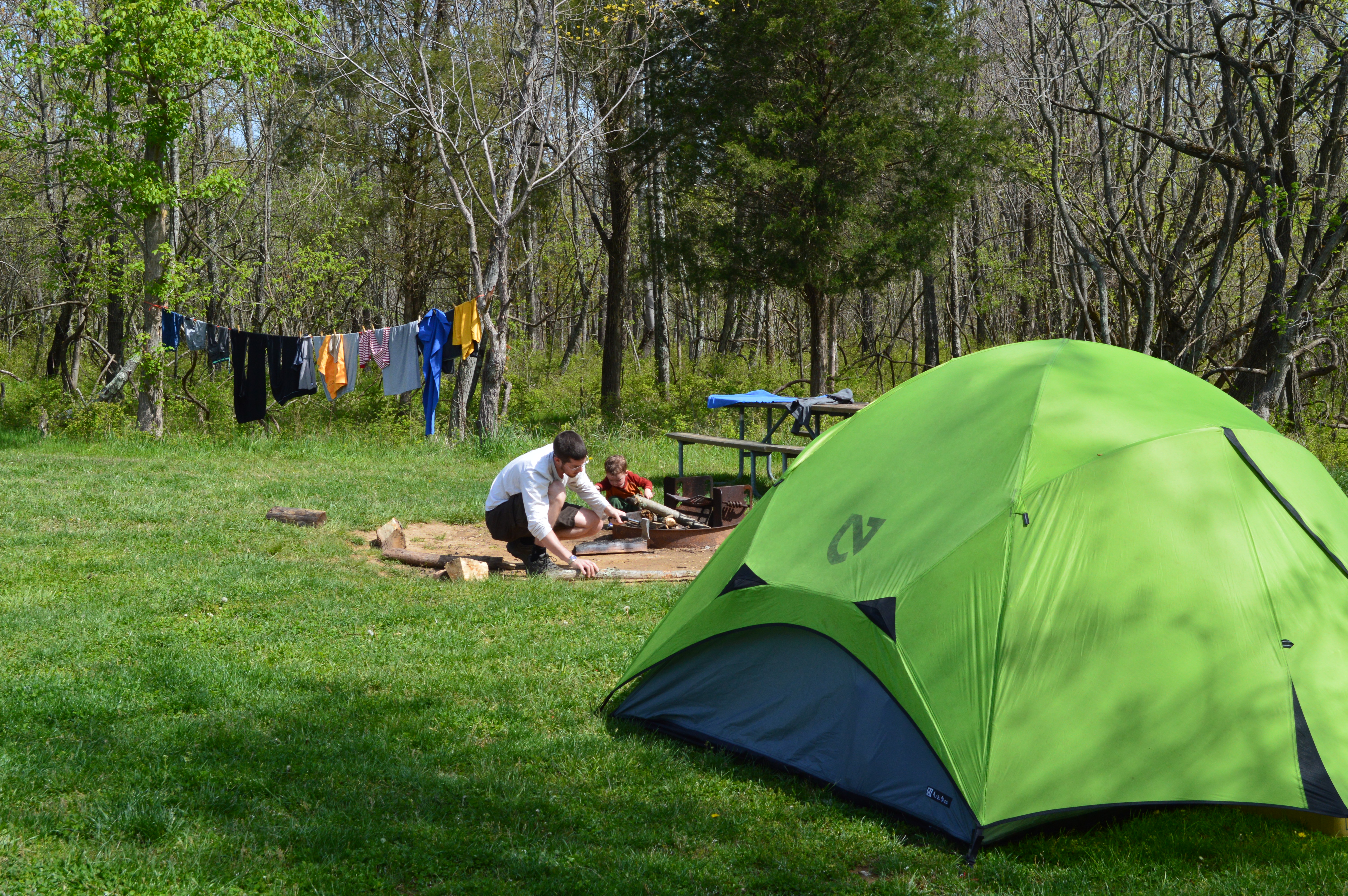
  • Giving him a job at the campsite.  We inadvertently stumbled into the best tactic for giving us the time to set up the campsite while Van is not underfoot and also not getting into trouble. At one of our earliest camping spots on this trip, we asked Van to collect sticks and put them in the fire ring. Little did we know that he’d be such a committed gatherer that he’d amass a serious amount of wood for our fire. And he keeps doing it – every single night we camp – without being asked. He’s busy, we can set up the tent and make dinner, and we can have a nice fire after dinner. It’s a win, win, win!
  • Membership to a science or children’s museum.  When my mother was asking for birthday gift suggestions for Van, knowing that we’d be traveling and not wanting to get him something large or unnecessary for our travels, I suggested that she get him (and us) a membership to a children’s or science museum.  Many science and children’s museums provide reciprocity at other museums around the country, allowing members to get in for half price or even for free.  Since we are not going to be in one place this year, there was not an obvious museum at which we should become members.  I did some research and found a museum (The Boonshoft Museum of Discovery in Dayton, Ohio) that not only provided reciprocity for one of these types of museums, it provided reciprocity at over 300 science and technology museums, almost 200 children’s museums, and almost 200 zoos and aquariums.  Amazing!  We’ve had the opportunity to visit the Explorium in Lexington, Kentucky, the Adventure Science Center in Nashville, Tennessee, the Children’s Museum of Denver, and the Denver Museum of Nature and Science.  And we have a long list of museums we’re excited to check out in the months to come.  In addition to giving us the opportunity to visit a number of museums of interest to us at a reduced cost or for free, visiting these types of museums is great for rainy days, hot and humid days, or days when Van desperately needs some kid time after too many activities that are more exciting to his mommy and daddy.
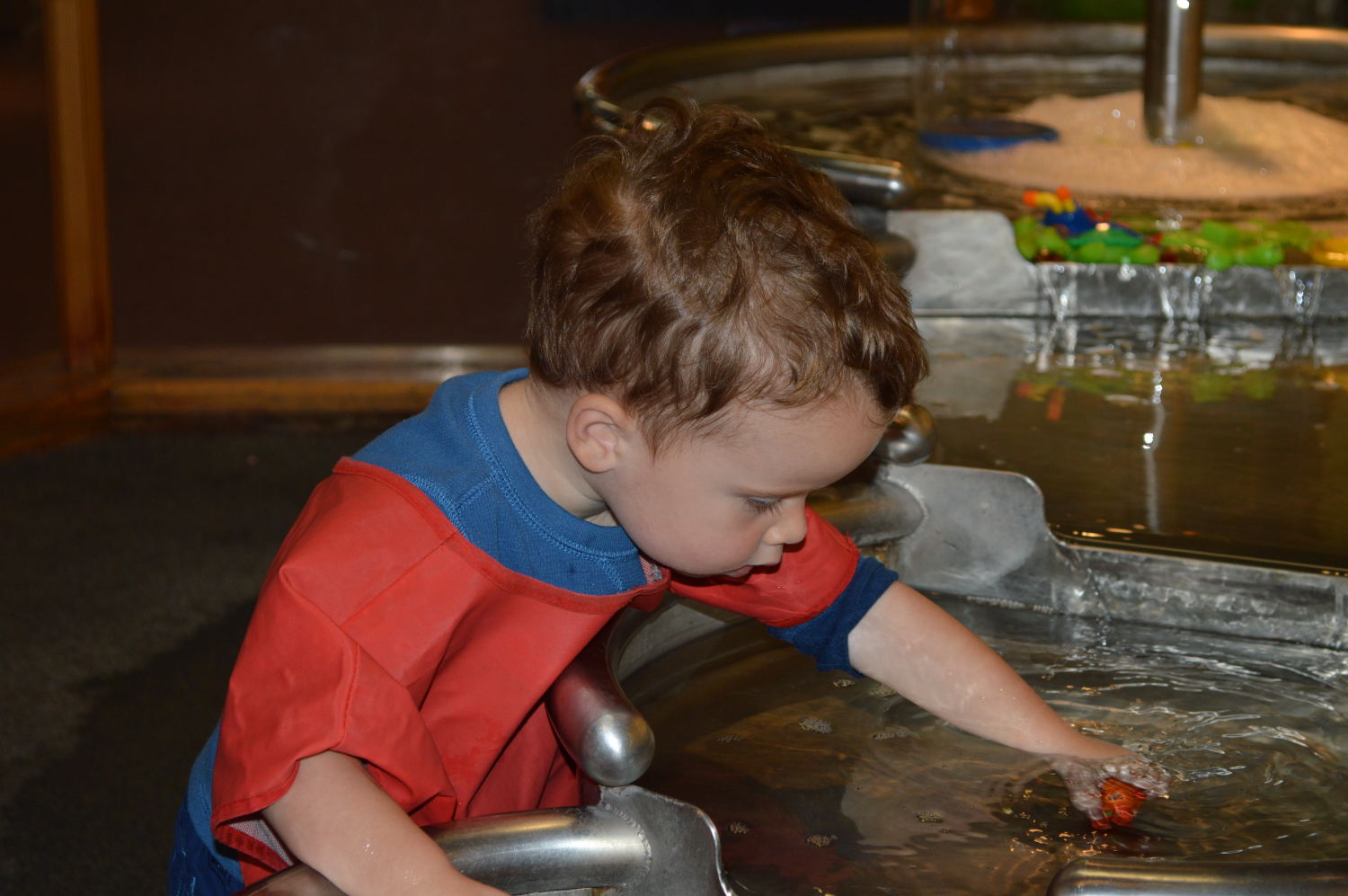
Water Fun at the Explorium in Lexington, Kentucky

Water Fun at the Explorium in Lexington, Kentucky

  • Libraries.  I am a huge fan of libraries – I worked at a library all through high school, we’ve planned this journey largely from library books, and we regularly frequented our local library before we began traveling.  But, as great as libraries are for local residents, they are just as great (if not better) for traveling families.  Van LOVES books, but we can’t bring too many with us given our lack of space.  Solution? Regular trips to the library!  But, not only do many libraries have a great selection of children’s books, more and more libraries also have a play area stocked with different toys – puppets, blocks, magnets, coloring pages and crayons, kitchens, play theaters, you name it!  And while Van’s busy playing and reading, we can check our email and our update the blog thanks to free wi-fi in many (but not all) libraries.  And you can’t take the clean bathrooms and running water for granted, either.
  • Making our own meals.  I imagine most folks traveling the country on a long-term basis make most of their own meals for cost and comfort reasons, but there are additional benefits when it comes to traveling with kids.  Kids can only sit still for so long and so often.  By making most of our meals on the road, in addition to minimizing cost, we minimize the time Van is stuck in a high chair at a restaurant and save those times for local places we’re itching to try (like hot chicken in Nashville or bbq in Memphis).  We’ve yet to eat out for breakfast and we rarely eat out for dinner.  That tends to happen when it’s been a long day, it’s getting late, and we’re famished, usually with no groceries to our name.  While we also make the vast majority of lunches (picnics across America should be our trip’s tagline), lunch is our meal of choice to go out.  When we’re not eating out for lunch (which is most of the time) we also get to see a different side of a place, since we typically eat our picnic lunch in a town square or other downtown green space when we’re not out on a trail.  Since he spends a bit more time in the car, this additional outdoor time is always welcome and lunch almost always concludes with time to explore. Plus, if you haven’t noticed, kids’ menus pretty much stink.  Seriously stink.  It’s a rare day when we order off of it.  He’s still got a small enough tummy that he can usually just share with us, or we’ll order him a small plate of something similar to what we’re eating.  I refuse to order him chicken strips and fries every single time we take him to a restaurant.  Once in a while, fine.  But why is every single kids’ menu the exact same, no matter where you go?  But I digress…  Even though we’re on a long-term trip, I’ve found that making most of our own meals is a great money and time saver on shorter trips, as well.  However, ignore this advice if you travel to Charleston, South Carolina, in which case you should eat out at least four times a day, every day, and mail me your leftovers.
Our trusty camp stove, the source of most of our yummy dinners

Our trusty camp stove, the source of most of our yummy dinners

No, this is not what I mean by picnic, cheerios do not make a meal (said no child, ever)

No, this is not what I mean by picnic, cheerios do not make a meal (said no child, ever)

Heaven

Up in the clouds in Rocky Mountain National Park

Up in the clouds in Rocky Mountain National Park

No, we weren’t in heaven, but it certainly felt that way.  I’ve been to Rocky Mountain National Park before on two occasions, but I’d never had the opportunity to spend more than a day in its embrace.  For a million and three reasons it was my absolute favorite place we’ve visited thus far on this trip, and definitely in the top five of places I’ve ever visited.  Everything, from the wildlife to the heart-swelling views to the camping to the hiking to the peacefulness, contributed to me declaring that I was ready to stay forever.

We chose to arrive on a weekday, knowing that the campgrounds fill up quickly on the weekends.  We were lucky enough to secure a home for three nights in the beautiful Moraine Park Campground near the east entrance to the park.  As we began the process of choosing a campsite, Alan asked whether I’d prefer to be closer to other campers or further away.  Hahahaha!  We laughed about that question during the rest of our stay.  While the campground may not fill up before noon on weekdays, it does fill up!  But, the sites are well situated so that you’re not on top of your neighbors and there are plenty of places to amble off to explore right from your site.

Our home base in Moraine Park Campground

Our home base in Moraine Park Campground

On a walk from our campsite in Rocky Mountain National Park

On a walk from our campsite in Rocky Mountain National Park

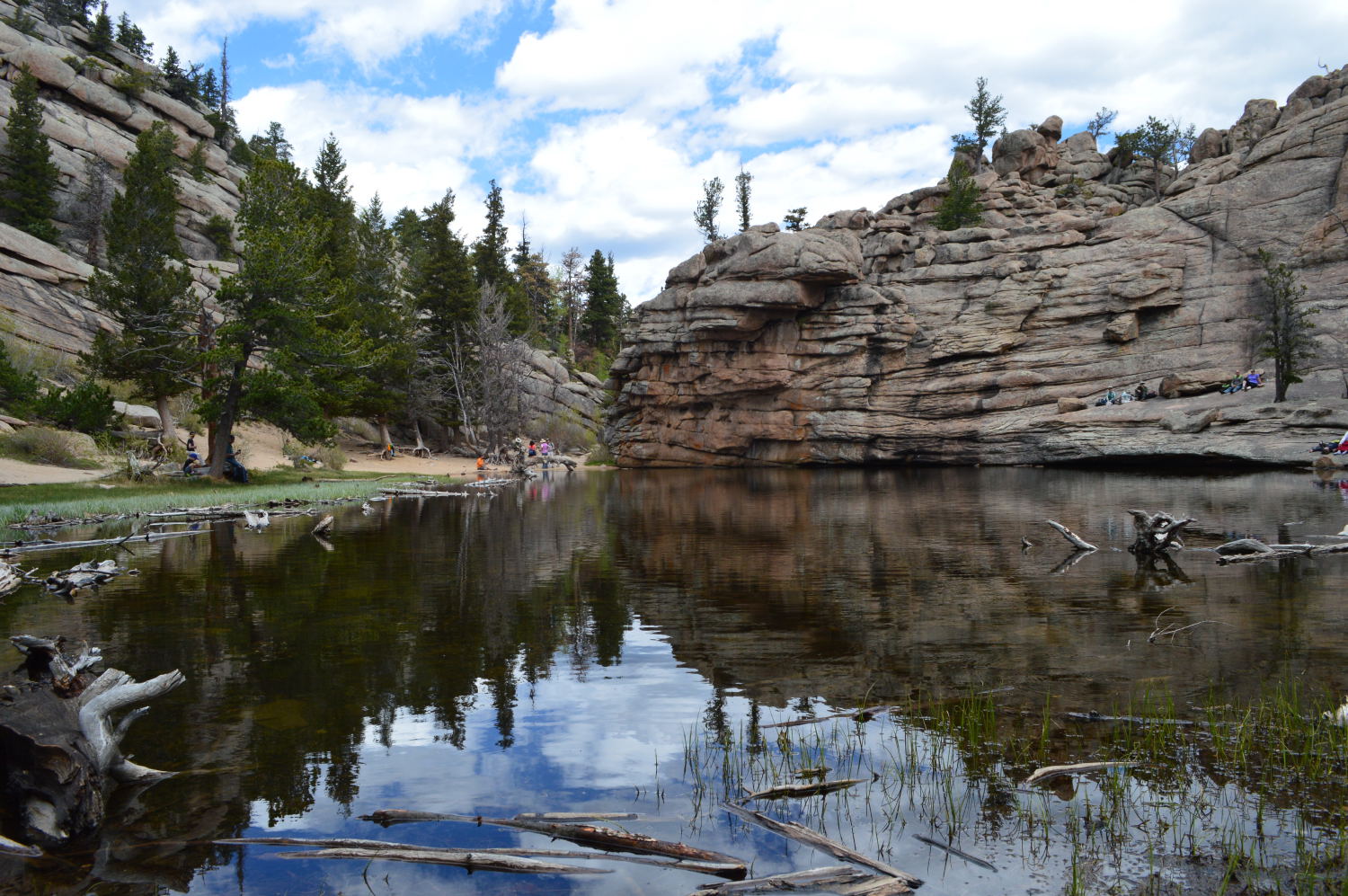
On our first full day in the park, we spent the morning hiking up to Gem Lake, a great spot for a picnic.  The hike itself provided fantastic panoramic views of Estes Park and the surrounding area, but Gem Lake was definitely the highlight.  The hike was about 3 1/2 miles round trip, with about a 1,000 foot elevation gain on the way up.  A pretty short hike by our normal standards, but with a two-year old (who spent most of the time riding on dad’s back), this was a great length.  Once we returned to the car, Van quickly fell asleep and we decided to drive up towards (and past) the Continental Divide to see some of the towering views the park has to offer.  We made a decision to return the next day when Van was awake so that we could leave the car behind and do more exploring.

Gem Lake

Gem Lake

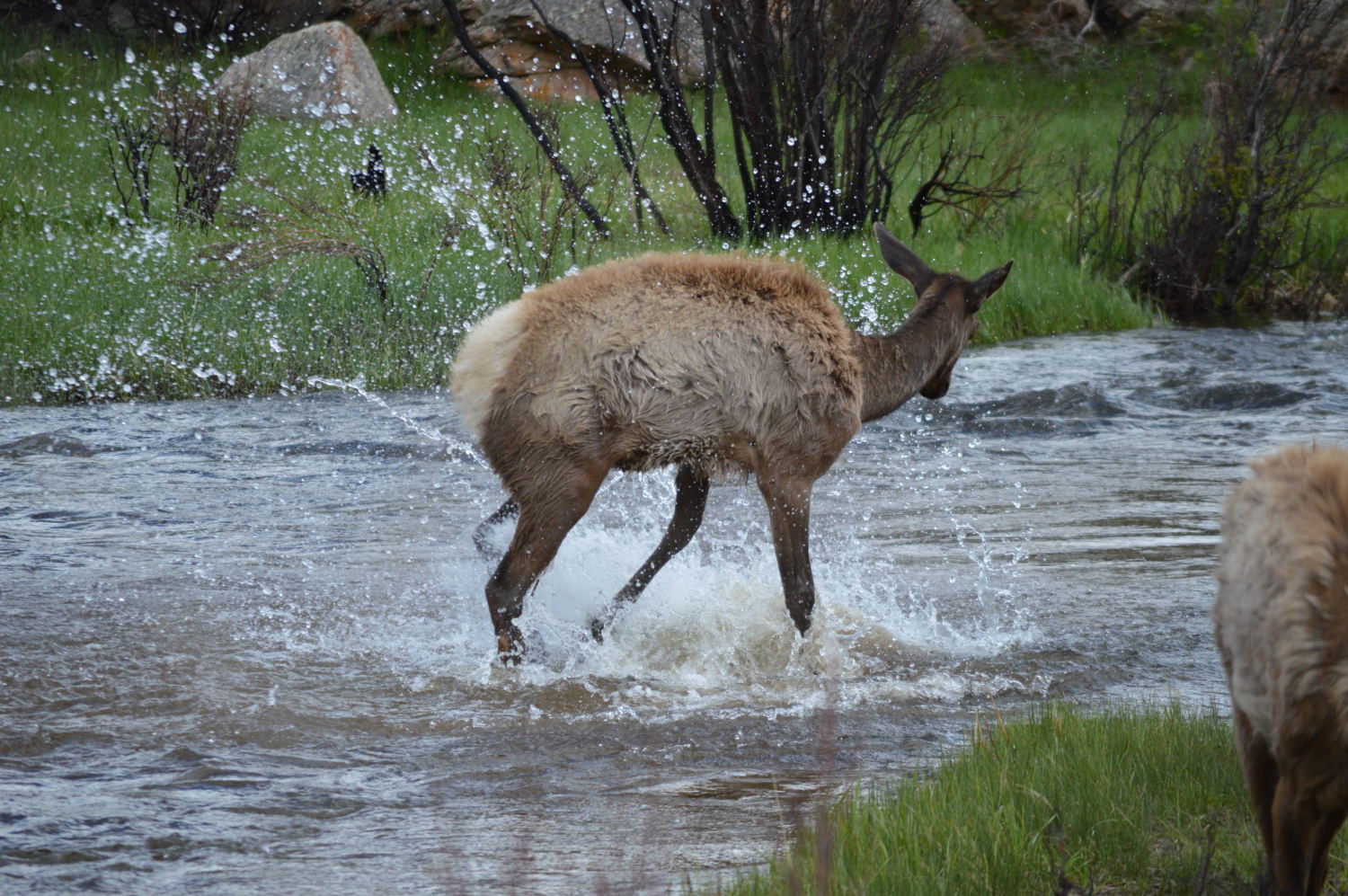
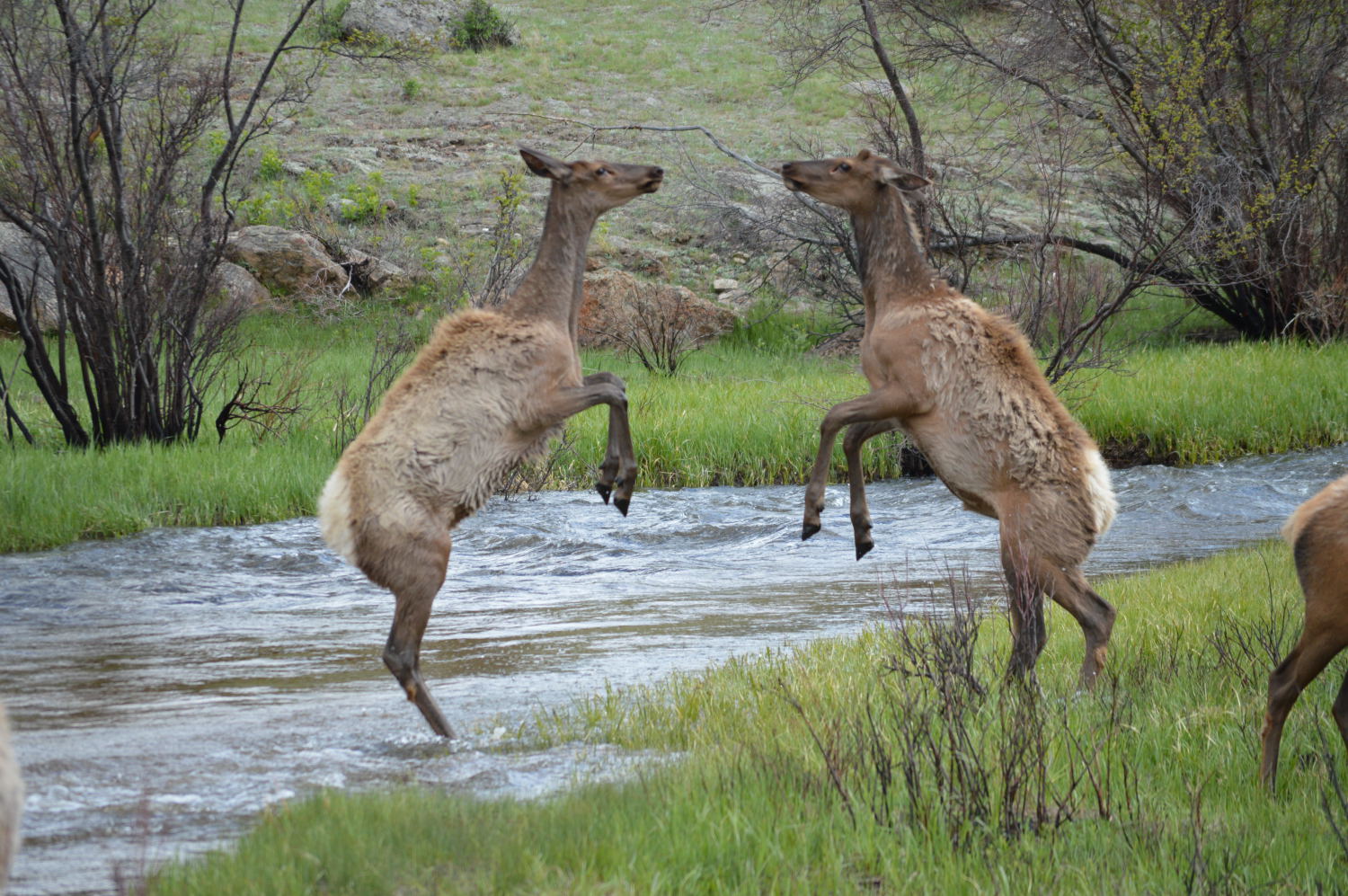
Before heading back to our site, we headed to one of the trails where Alan and I had previously hiked so we could take Van on a walk before dinner.  He was getting pretty feisty around water, so we decided to turn around.  That turned out to be a pretty great idea because we would have missed this…

An elk staking out his territory

An elk staking out his territory

Two elk in a minor tussle

Two elk in a minor tussle

Peaceful elk

Peaceful elk

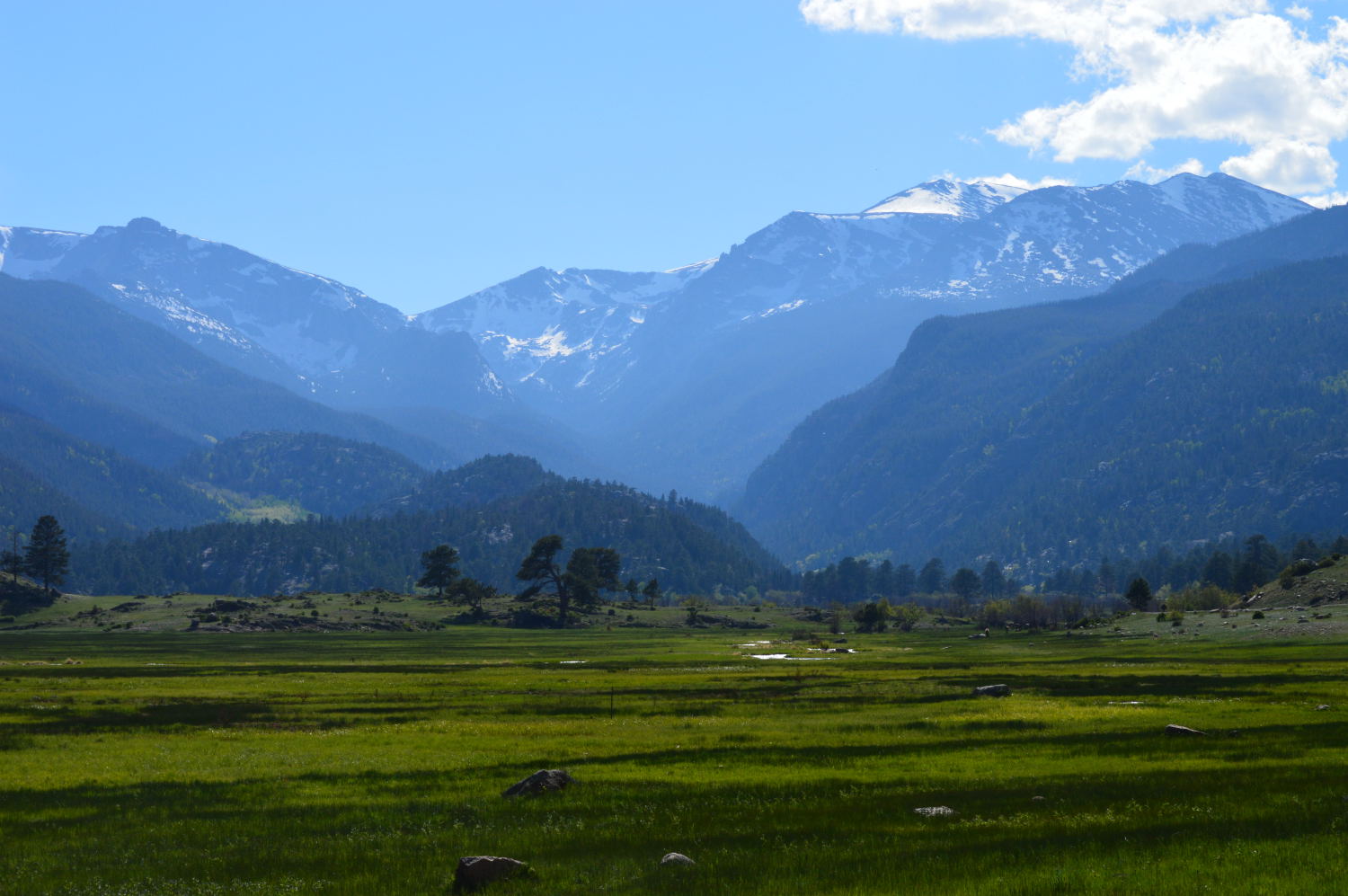
After a great second night in the park, we headed back up to some of the higher elevations in the park so we could do some exploring while Van was awake.  The views were amazing.  I simply don’t have the words to describe them.  This is definitely a place that everyone should come and explore if they have the ability and opportunity to travel to Colorado.  I have vowed to make regular camping trips up to the park when we visit our family in the Denver area.

The Rockies

The Rockies

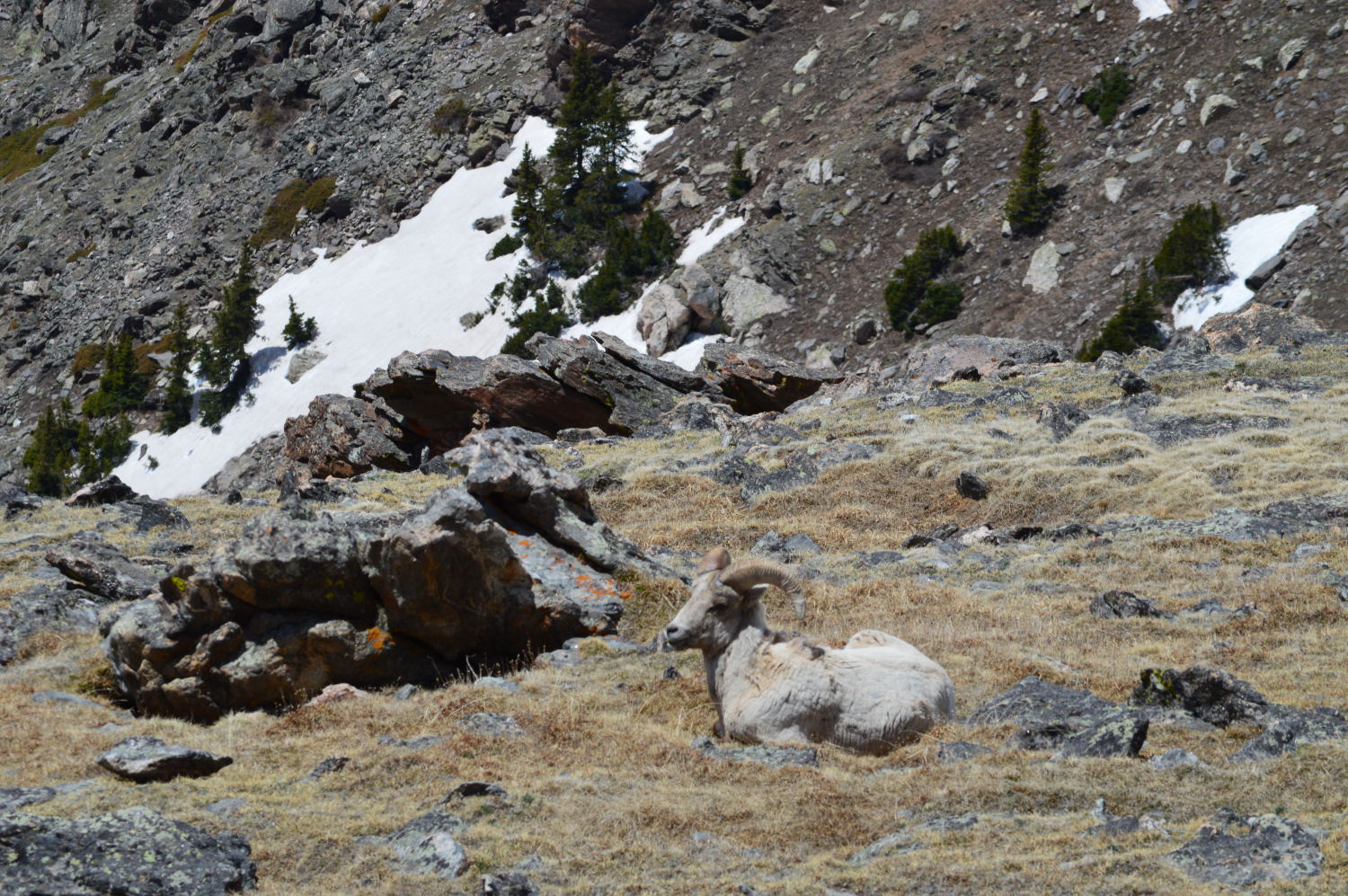
Bighorn sheep

Bighorn sheep

Alan in the snow!

Alan in the snow!

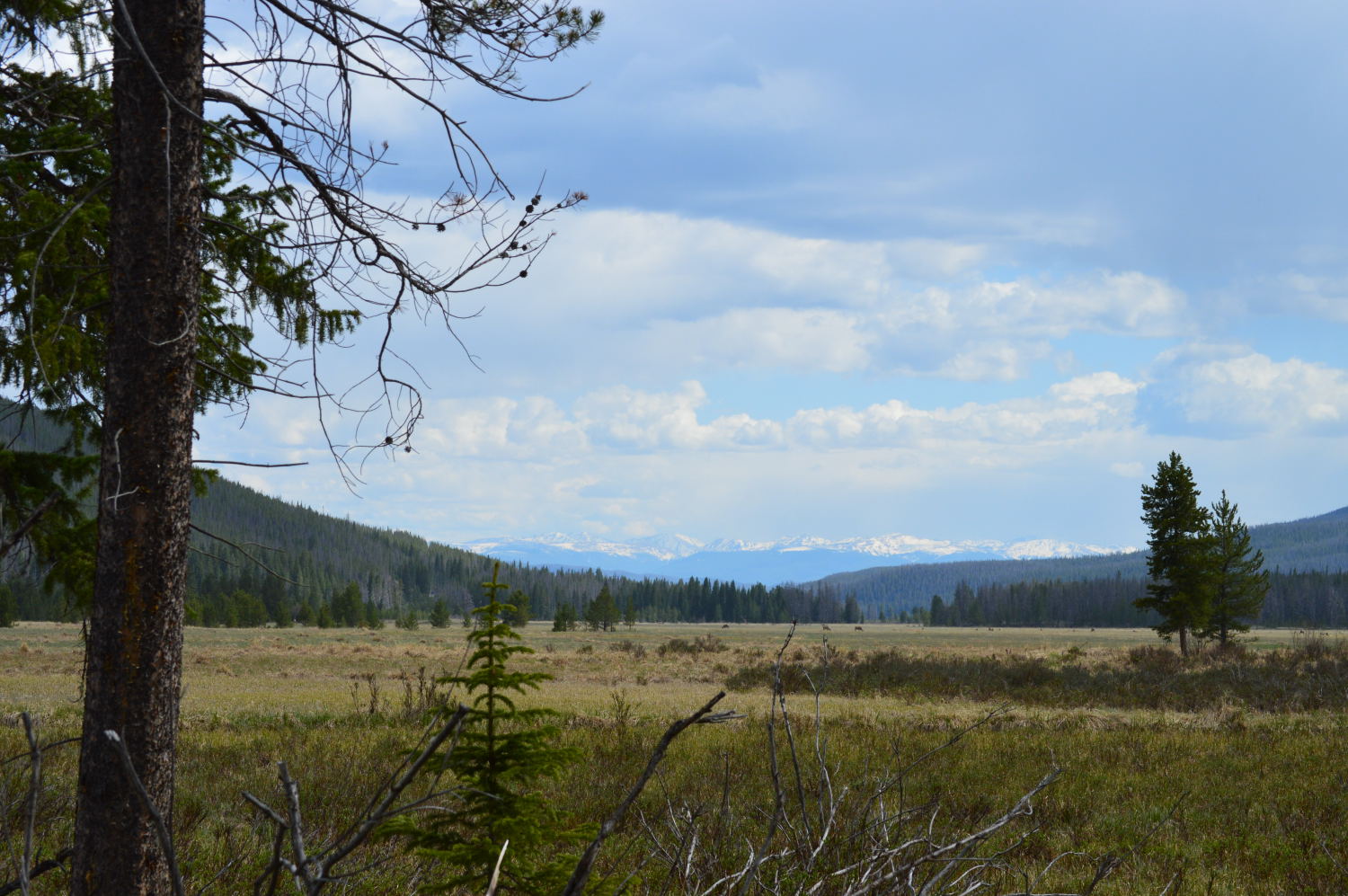
Views from the western side of Rocky Mountain National Park

Views from the western side of Rocky Mountain National Park

Mountain Views

Mountain Views

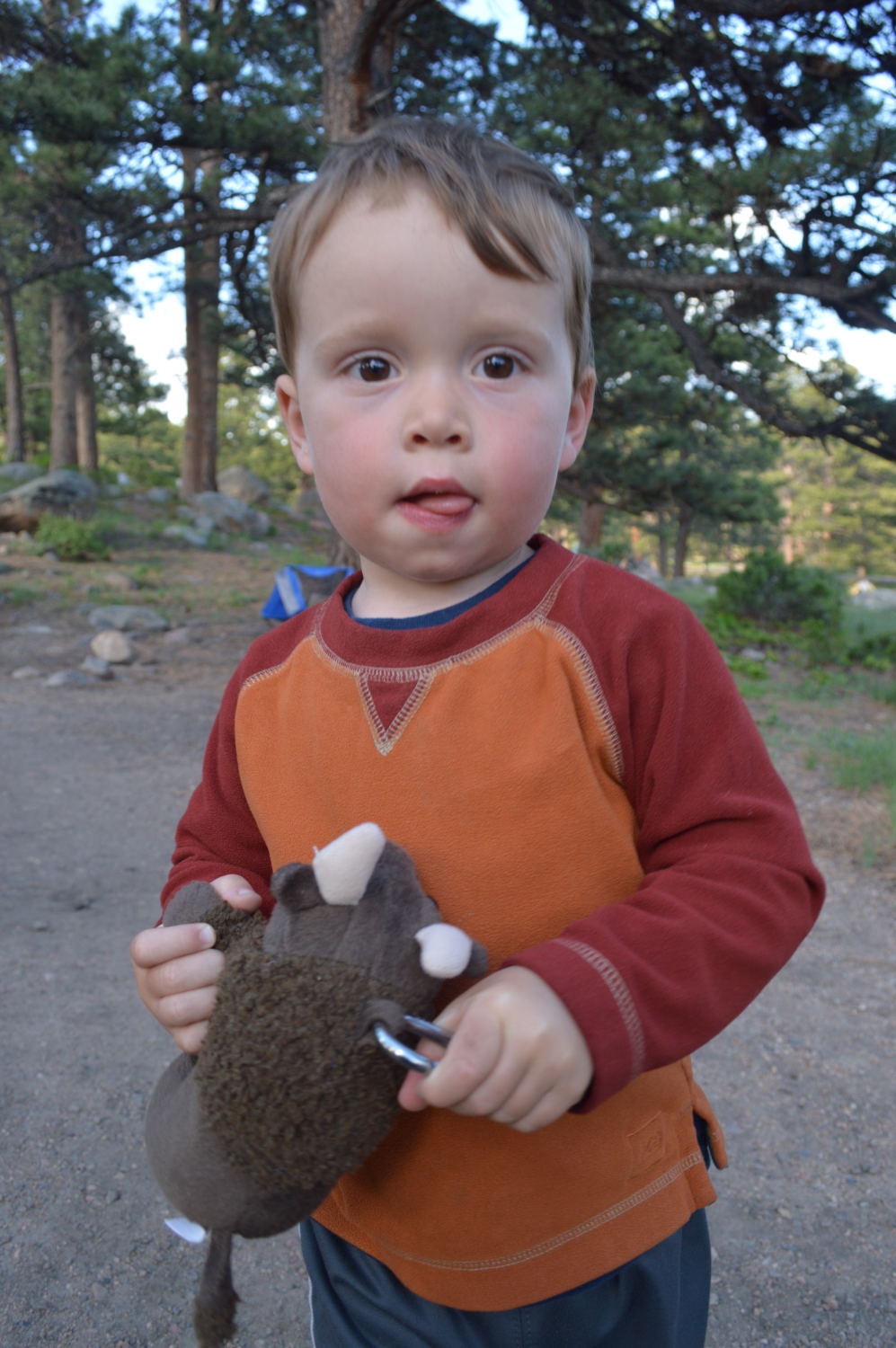
In addition to the bighorn sheep (one example in a photo above), countless elk, and Van’s Buddy the Bison (photo below), we were also lucky enough to cross paths with three moose.  Alan served as photographer extraordinaire while I tried to keep Van from making too much noise that might spook the moose.  This proved to be much more difficult than expected as Van just wanted to keep shouting MOOSE loudly and repeatedly in their direction.

Van and Buddy the Bison

Van and Buddy the Bison

Moose in Rocky Mountain National Park

Moose in Rocky Mountain National Park

Moose in Rocky Mountain National Park

Moose in Rocky Mountain National Park

The only downside to our visit to Rocky Mountain National Park was that we had to leave.  But, now I can just get excited about our next trip to this little slice of heaven.

Kentucky, where have you been my whole life?

About a month ago, and before we had van troubles, we had an amazing week in Kentucky.  We didn’t have too many preconceived notions about the state, but we were blown away again and again.  The beauty, the kindness, the sheer number of interesting things to do and see, the work ethic, we could go on and on.  It’s become a bit of a joke between us.  Every time we go somewhere and find that someone is not that friendly or that service is not that good, we look at each other and say that we’re not in Kentucky anymore.  A week was barely enough to scrape the surface.  We’re both looking forward to going back in the future and spending much more time so that we can further explore some of the areas we visited and check out the many areas we weren’t able to see.

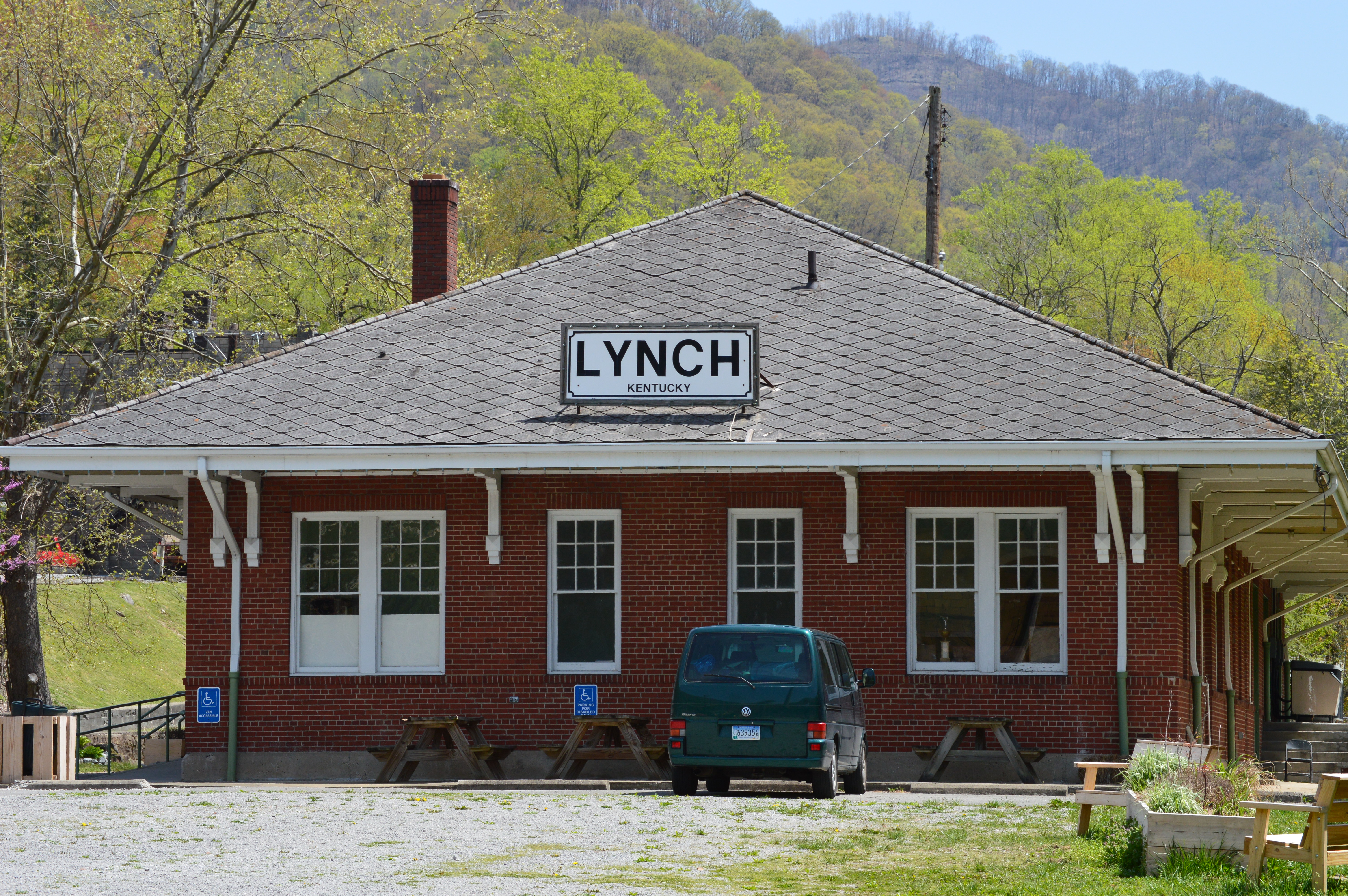
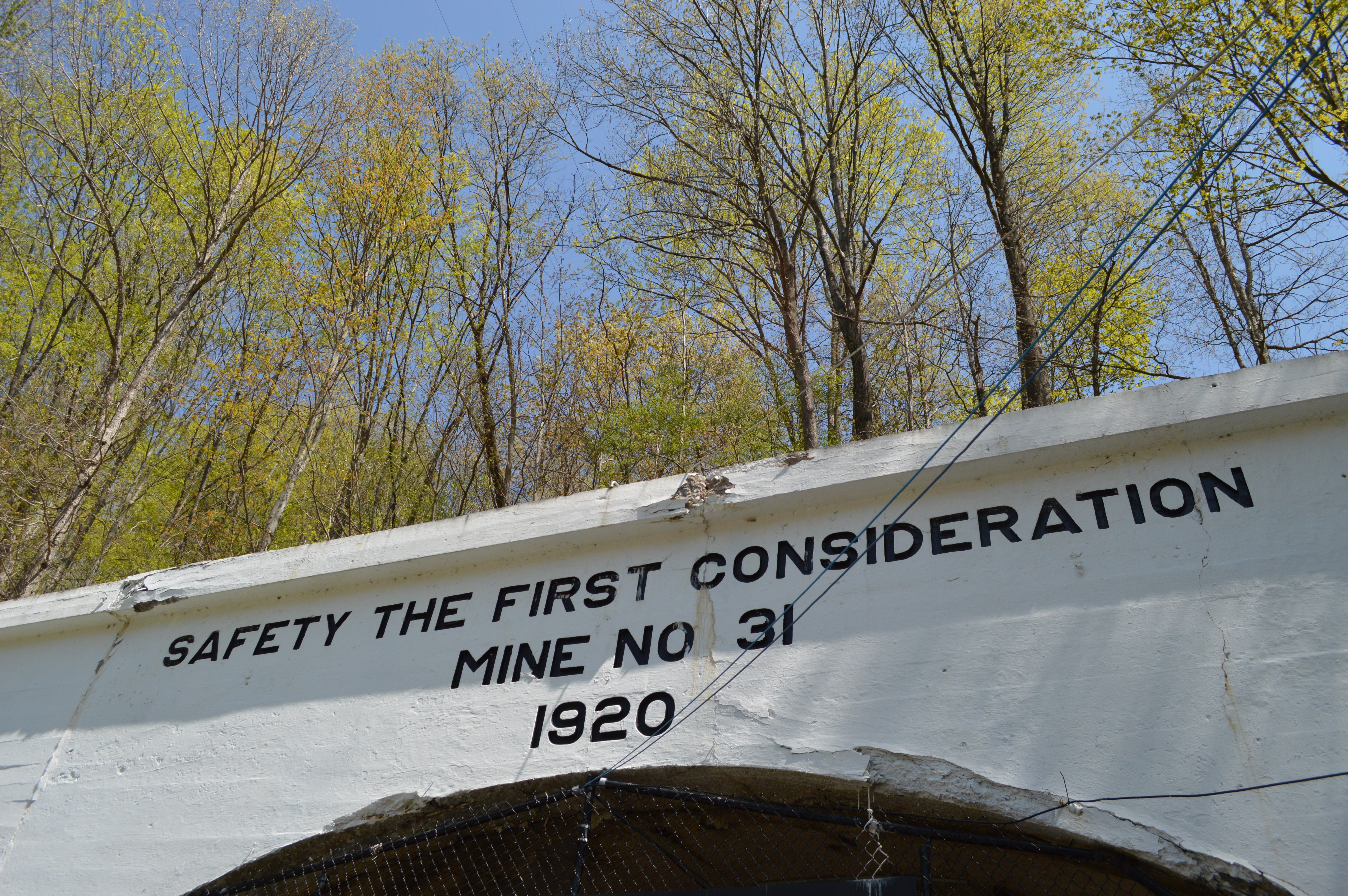
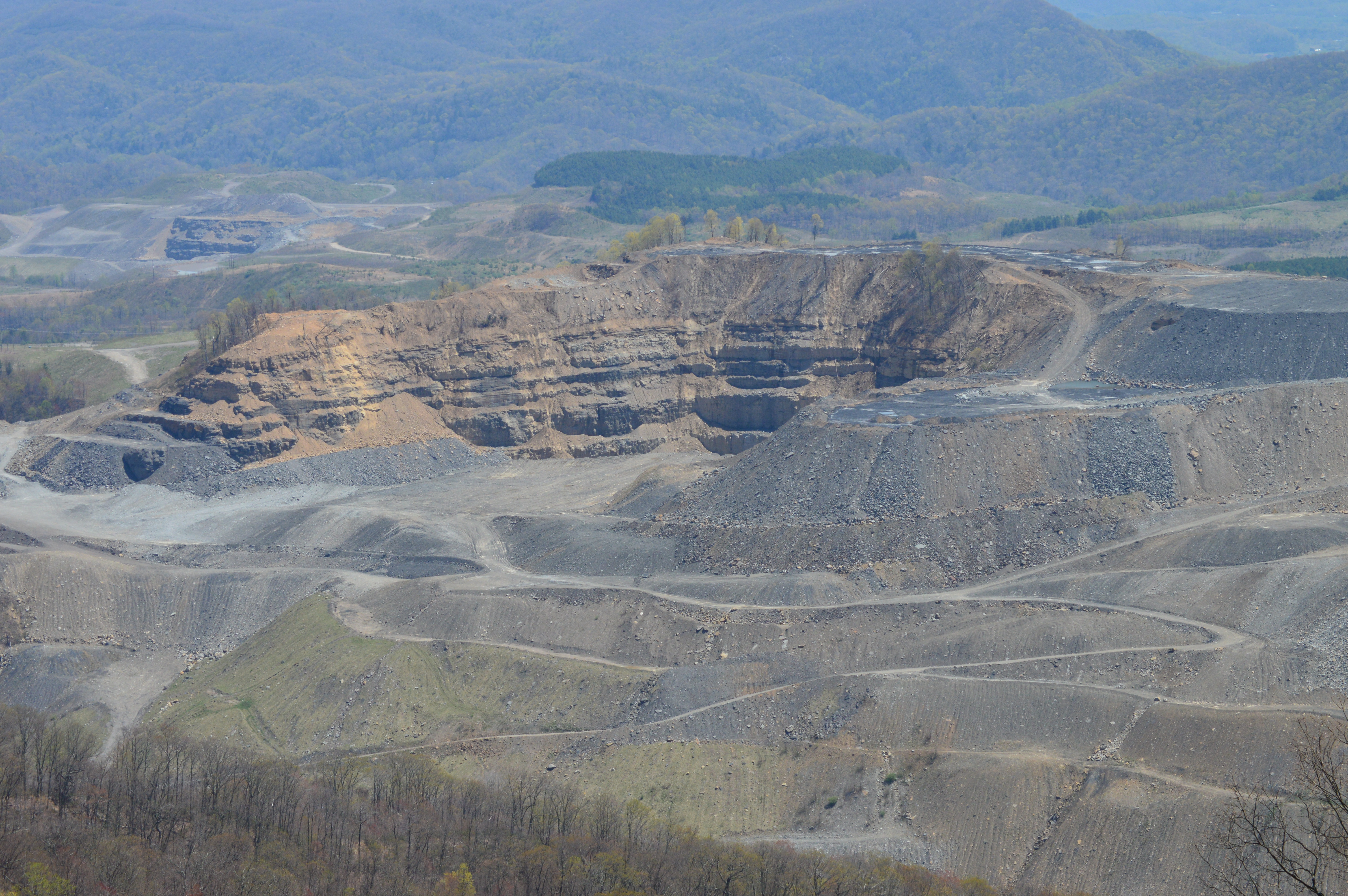
We spent our first full day in Kentucky in coal country.  Based on the recommendation of some friends in the know, we checked out a couple of coal camps (Benham and Lynch to be specific).  We also spent a good portion of the day driving some narrow, twisty, mountain roads to see amazing scenery, small towns, and evidence of coal mining operations.  Appalachia fascinates me.  Coal mining fascinates me.  This was easily one of my favorite days of the trip.  I also asked said friends in the know to direct us to evidence of mountaintop removal mining.  I had no idea what I was in for.  I expected to see this type of mining and be moved.  I did not realize how improperly named (or rather, nicknamed) this type of mining is.  It should really just be called mountain removal mining.  Mountaintop removal assumes that much of the mountain remains.  While this may happen in some cases, this certainly doesn’t happen in all cases.  I was blown away.  Thanks, Sarah and Tom for the great recommendations!

The Depot in Lynch, Kentucky

The Depot in Lynch, Kentucky

Portal 31 in Lynch, Kentucky

Portal 31 in Lynch, Kentucky

Coal

Coal

View into Virginia from Black Mountain, the highest point in Kentucky

View into Virginia from Black Mountain, the highest point in Kentucky

Closer view into Virginia from Black Mountain, the highest point in Kentucky

Closer view into Virginia from Black Mountain, the highest point in Kentucky

In our short time in the area, we began to gain a better appreciation of the social impacts and importance of coal mining to this region and the devastating environmental effects.  It made me think more about our role (because we all have a role) in this environmental destruction.  It also reinforced why local citizens are often such fierce proponents of coal – it is life here.  I came away from this day wanting to dive even deeper into the social and environmental history of coal mining in this region.  This is going on the top of my list of things to research and read about after our trip.

We spent the night at the nicest Red Roof Inn, probably in the history of man.  It was worth at least two or three times the $46 we paid for the night.  While we typically camp each night, we’ve been spending every fifth or sixth night in a motel.  Most have been around this same price point and nowhere (not even close) as nice as this motel.  And everyone we met who worked there were the most genuinely friendly and competent hotel clerks ever.  And thus continues our love affair with Kentucky.

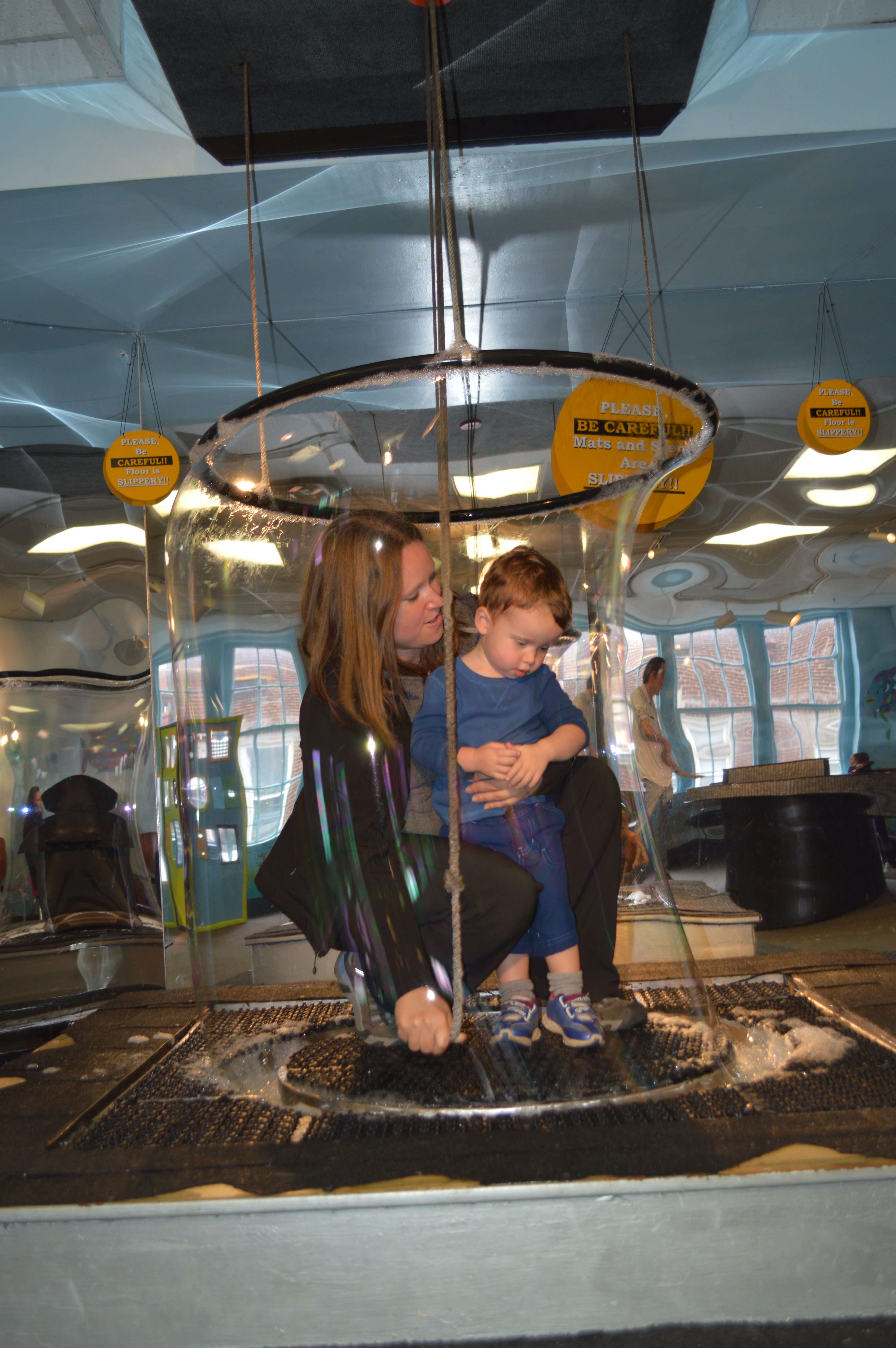
When we awoke, the rain was coming down hard.  We decided to drive up to Lexington and spend the day at the Explorium, the local children’s museum.   Even through the gray and rain, we fell in love again.  And Van had a blast at the museum.  Though the horse exhibits were the most fun for us, he loved the “lala boat” (water boat).

My first horse ride

My first horse ride

Nothing is better than playing in water

Nothing is better than playing in water

Trapped in a bubble!

Trapped in a bubble!

I particularly enjoyed the exhibit about homes around the world.  I would have loved playing in the various homes when I was a child.  But then, a seemingly out-of-place panel caught my eye.  It was a panel dedicated to explaining that not everyone has a home.  The portion below made me smile to myself.  It was the part of this exhibit that explained our housing situation, except not at all.  While we may be living in a vehicle, we are not homeless and would never consider ourselves as such.  But, living in a car with fewer necessities does help me to empathize a bit more than I did before our trip with our homeless brothers and sisters who have no choice but to live in a vehicle.

Exhibit in the Explorium of Lexington

Exhibit in the Explorium of Lexington

Continuing our theme of being impressed with all that exists in Kentucky, we made our way to a beautiful and incredibly well maintained campground in Taylorsville Lake State Park.  Well situated between Lexington and Louisville, this became our home base for the next six nights.

Our campsite in Taylorsville Lake State Park

Our campsite in Taylorsville Lake State Park