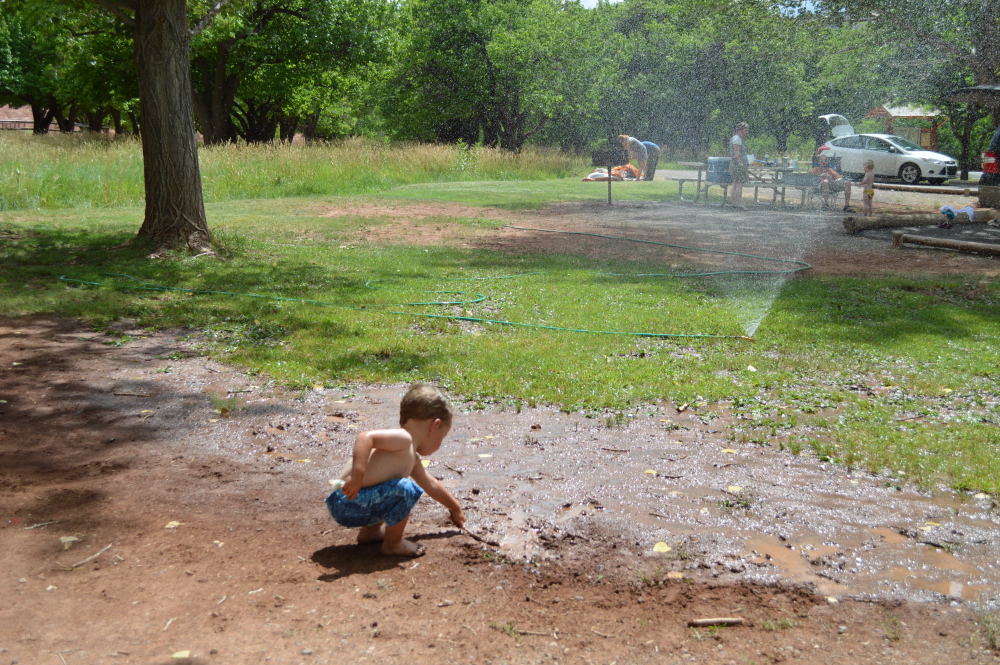
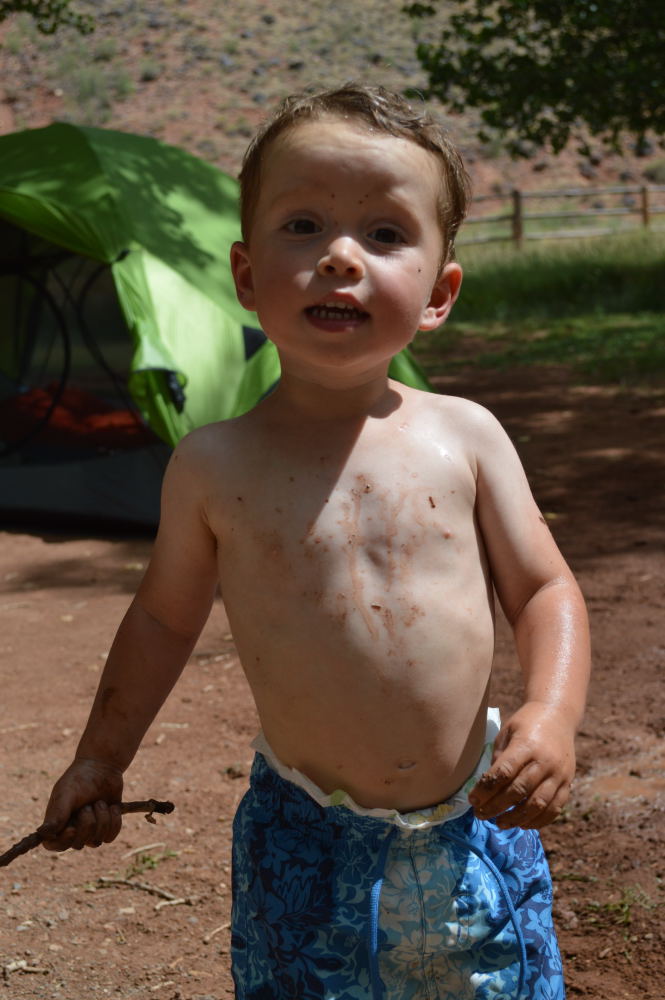
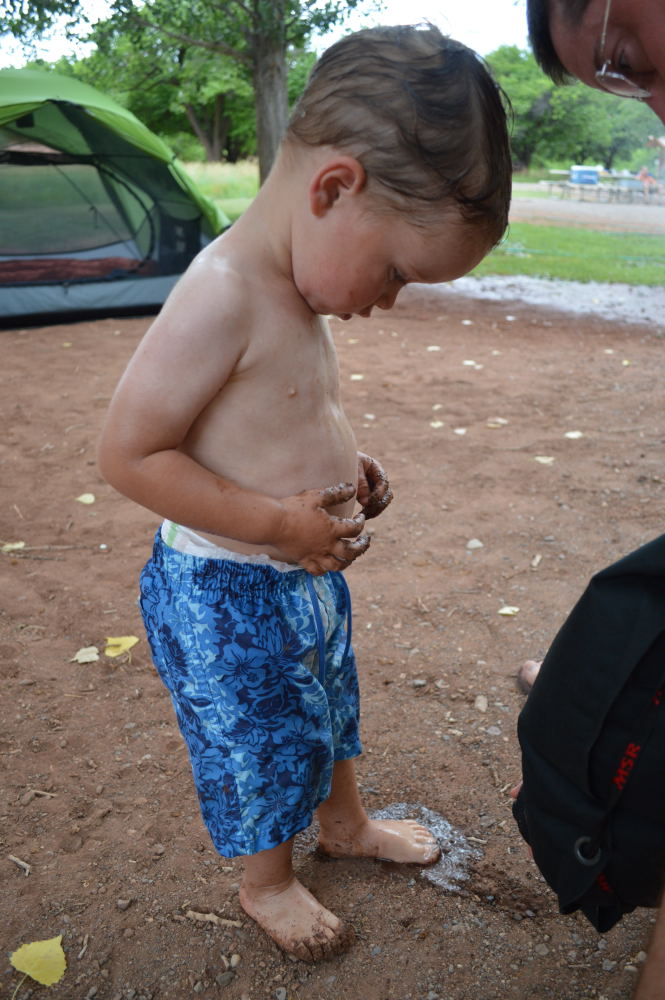
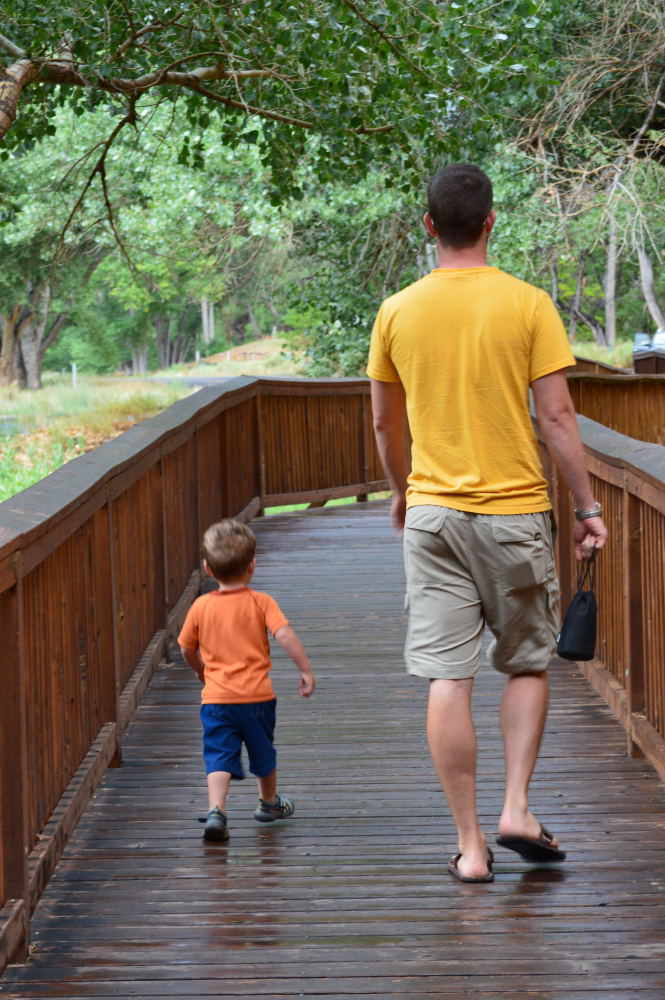
Flash floods in Capitol Reef National Park in south-central Utah closed down the main scenic road in the park and changed our plans to hike through slot canyons. Instead, we cooled off in the campground sprinkler and again in afternoon thunderstorms. Though we did check out some areas of the park, we were never able to visit the more well-known portions of the park since the road remained closed to allow crews to remove debris that was funneled through the canyons and deposited onto the road. No matter; we enjoyed the opportunity to relax after a week full of hiking in the hot sun in Mesa Verde, Canyonlands, and Arches.
Home » Posts tagged 'National Parks' (Page 3)
Tag Archives: National Parks
Heat, Sun, and Beautiful Rocks: Arches National Park
Arches was hot, beautiful and hot. We debated even heading to this area during July, but decided to give it a go, strategically choosing to camp at a higher elevation and therefore a lower (thank goodness) temperature. I would have loved to have spent more time in Arches, but one long day hiking under the blazing sun was enough for me. I was actually shocked we were able to fit so much exploration in to our long day in Arches, and my desperate cravings for damp shade during the several days after our visit just served to highlight that point.
Since we knew that the longest hike we’d be doing was to the famous Delicate Arch (seen a Utah license plate lately?), we zipped right to the trailhead to try to beat the mid-day heat. It was a beautiful, albeit crowded, hike, but the payoff at the end was well worth the crowds. The arch is stunning, and seeing a zillion and one photos of it before ever setting foot in the park did not diminish its beauty one bit. Standing (and then laying) under it was even cooler!
Just writing about Arches is making me feel hot, so I leave you with some photos from our day in the sun while I try to locate some ice water.
Images from our hike to Delicate Arch
Delicate Arch is one of many. Here are a few other images of our exploration in the park.
Beautiful Vistas in Arches National Park
Obnoxious Neighbors but Great Views: Canyonlands
Traveling can transport you, physically and mentally, but it can’t help you outrun unpleasant neighbors or bad weather. They’ll wind up following you almost anywhere. Late-night loud music, fresh dog poo just outside our tent, yelling children (and their parents), a screaming fight, and an ancient loud generator complete with spotlights and a surround sound movie experience at midnight. These are a few of the experiences we’ve been treated to over the past four and a half months while we’ve been camping. The vast majority of our neighbors have been fantastic, but we’ve had six that have left us thankful that we’re not their permanent neighbors. Unfortunately, we encountered two of these six neighbors during our visit to Canyonlands National Park. Putting aside the two nights in a row of camping next to or near families that do not communicate except by shouting, and doing so constantly, be it 10pm or 5am, we seriously enjoyed Canyonlands.
Our camping options in Canyonlands were limited, so we crossed our fingers and drove the forty miles from the nearest town to the twelve-spot campground hoping for a miracle. Two sites left! Hallelujah! This was easily one of the most beautiful places we’ve camped thus far. Sure there was absolutely no water (you have to pack it all in), but the views were incredible. It seemed like you could see forever in just about every direction from atop the mesa, and just a short walk down the road took us to one of the best views in the park, Green River Overlook. The only downside to our stay (aside from the less than neighborly neighbors) was the nightly ritual of counting seconds between lightning and thunder. The storms were beautiful to watch, but they were intense, and were frighteningly close at times. Although we should have been following the 30/30 rule (seek safe shelter – in our case, the car – when there are 30 seconds or less between lightning and the resulting thunder and stay in the shelter until 30 minutes elapse with no thunder ), we wound up following the 15/30 rule (don’t try this at home, kids). This kept us out of the car for 2 of the 3 nights, but we did spend several hours in the car during our second night of camping when the strikes were much too close to our campground.
Despite all my whining, Canyonlands wound up being one of our favorite places that we visited on this trip. Because it doesn’t have the name recognition that many of the other Utah parks have (Arches, Bryce, Zion, to name the big three), it doesn’t have the crowds. There are four sections to the park, two of which require a 4-wheel drive vehicle; however, we only visited one section of the park, the Island in the Sky District. We’re already talking about going back when Van is older and bringing a 4-wheel drive with us, not only so we can visit the other sections, but so that we can drive right down into the canyons and backpack and camp along the river. Talk about a great wilderness experience!
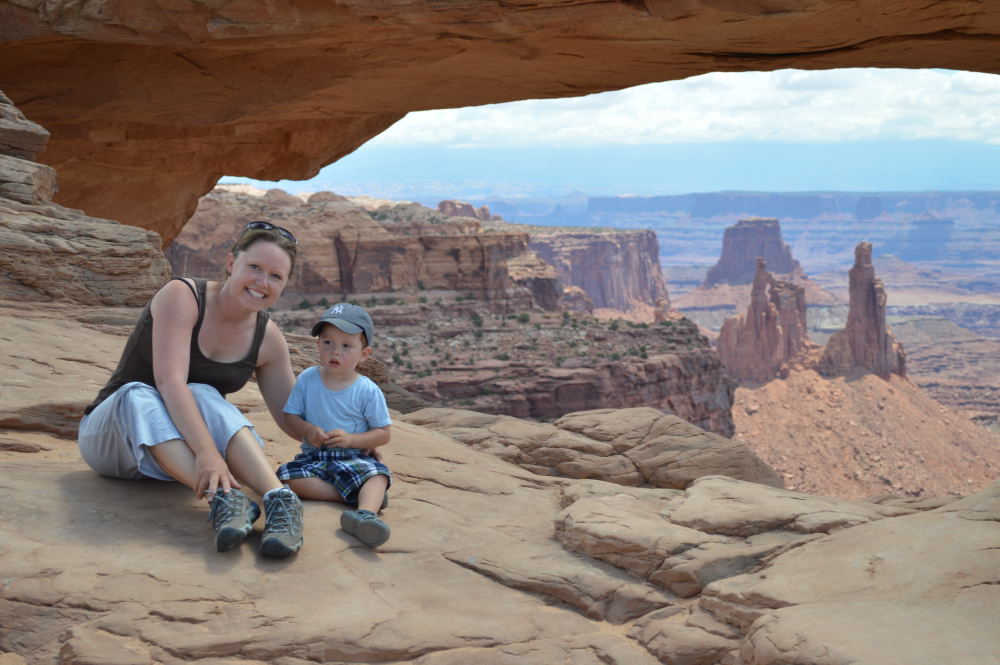
But, I digress. Even without the 4-wheel drive, we were able to get out and hike to some great spots in the park. We also dutifully pulled into each of the scenic lookout spots that we could, joining the other visitors (almost all European, many in their rented RVs with California or Nevada plates) to gasp at the incredible vistas full of far-off mesas, rock monuments, and cracks in the earth that were full of lush greenery and running water. It was in Canyonlands (and not nearby Arches) where we hiked to our first arch, Mesa Arch, and even climbed atop the somewhat narrow arch for the fun of it! Most amazingly, Van sat through an entire ranger program on the geology of the park. We often have to skip these because there’s no way he’ll sit through a whole program without howling at some point. But this one was outside, so we figured we could make a quick escape if necessary. No escape needed!
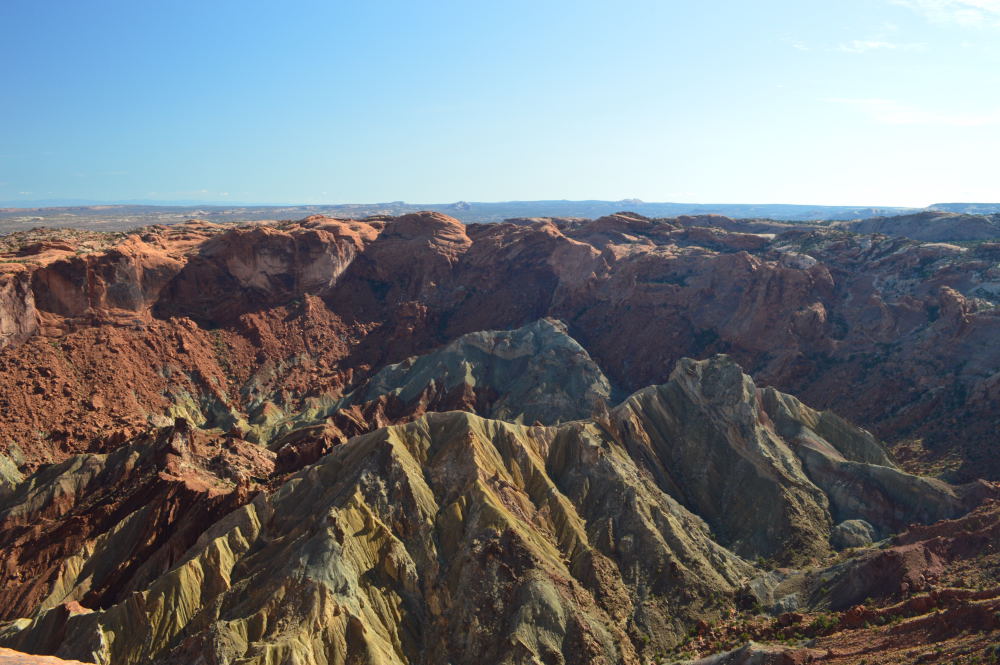
My favorite of our hikes was the Upheaval Dome hike. It was a short two-mile hike (roundtrip), mostly on slickrock, to the edge of the dome. While scientists don’t agree on how it was formed, they speculate it was either because of a meteorite or because of a salt dome, essentially a salt bubble caused by pressure over millions of years.
With more time and a four-wheel drive vehicle, we might still be in Canyonlands! If you’re ever in Southeastern Utah or planning a trip to Moab or Arches, you should definitely make time to visit this park.
Mesa Verde
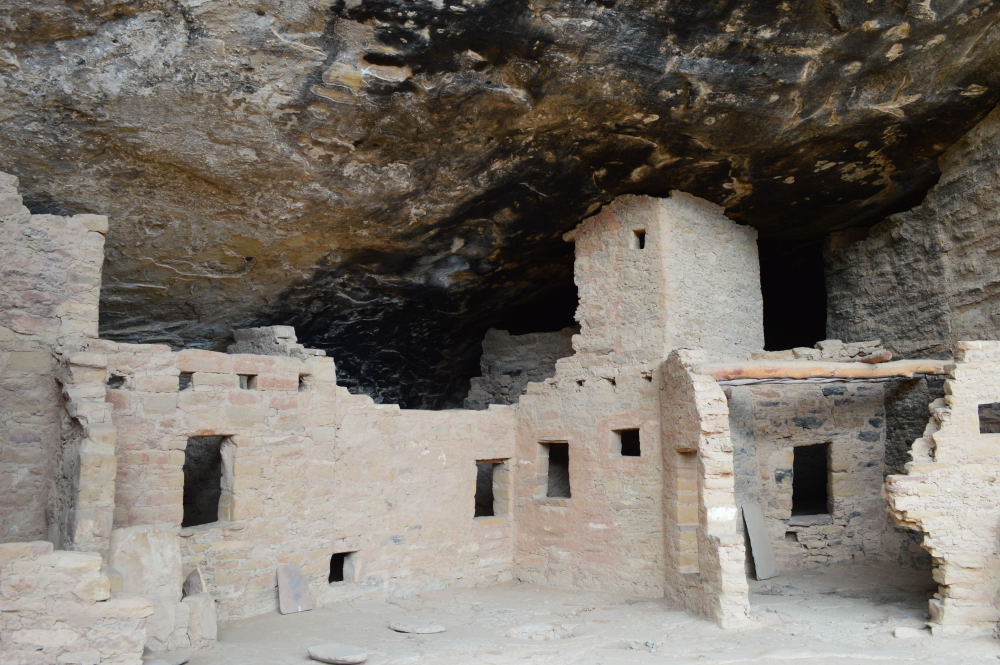
Ever since I was a young adult, I’ve wanted to visit ancient cliff dwellings in the southwest. I’ve seen pictures over the years, but I wanted to walk in and amongst the dwellings and to understand the scale of these homes perched high above the ground. Because we temporarily skipped visiting New Mexico due to the unforeseen demise of our not-so-trusty traveling companion, our first opportunity to visit these dwellings was at Mesa Verde National Park in southwestern Colorado. We decided to spring for two nights in their lodge, which turned out to be a great idea given the intense thunderstorms that struck in the evenings during our stay.
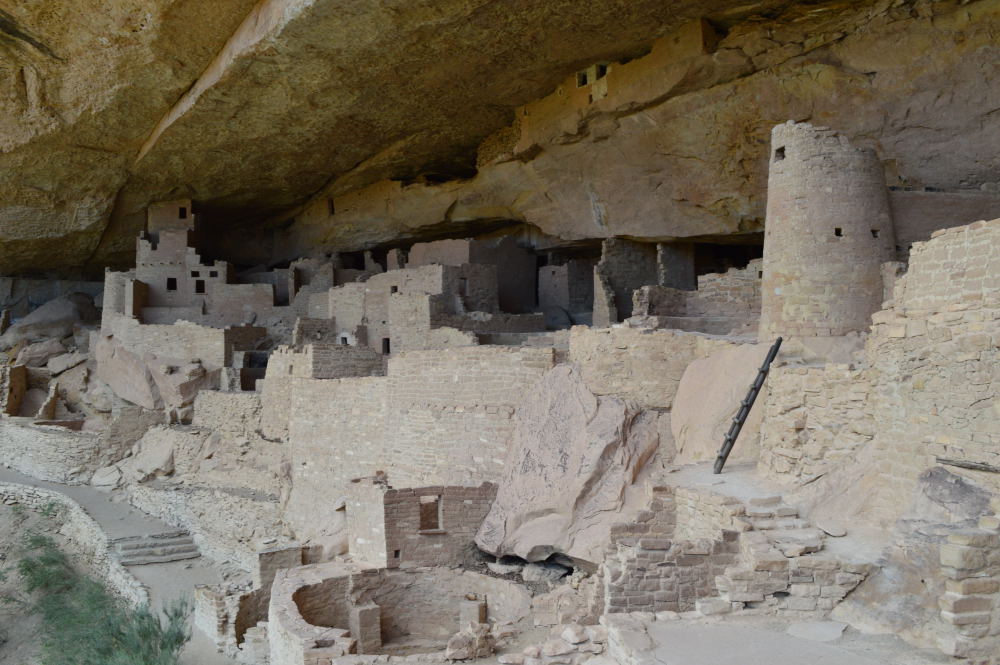
In order to visit several of the more popular dwellings, visitors need to attend a ranger-guided tour and must descend, and later ascend, several ladders. Since none of this sounded appealing with a two-year old, we took him to the more accessible dwellings and took turns taking a tour of Cliff Palace so we could each get up close and personal without worrying about our toddler underfoot. We weren’t sure how much there would be for Van to see, but there turned out to be so many places for him to explore with us that we shouldn’t have ever been concerned. And since it seems that most visitors stick to the guided tours, we had much of the park to ourselves. We visited at least ten sites with Van, and probably saw fewer than ten other visitors at all of those sites, combined. It was only when we went to see Cliff Palace that we were reminded that we were not lone travelers who just happened upon these sites during our wanderings.
The dwellings, built by the Ancestral Puebloans in the 1100s and 1200s, are built into cliff alcoves. The cliffs above serve as protection from the elements and the cliffs below serve as a foundation for their homes. These dwellings are essentially hanging on to the side of cliffs that are almost vertical. And this pre-dates baby-gates! The strength and ingenuity of the individuals that built these structures and called them home becomes even more impressive when you spend time climbing down to and walking around the structures.
While the cliff dwellings get all the fanfare, there are over 4,000 archaeological sites in the park, many of which are mesa top sites. Because these sites are less well-known, these were the sites we were able to enjoy in peace and quiet, giving us time to absorb the atmosphere and try to imagine a people much more skilled than ourselves living and working amongst the harsh elements with only sporadic access to everyday needs.


All in all, almost every aspect of our visit was fantastic – from the peacefulness, to the history lessons and unparalleled views. The only down note was the Navajo Tacos, which were both expensive and terrible. I love Navajo Tacos. Anytime I have the chance to order one, which isn’t nearly often enough, I do. These were probably the worst I’ve ever had, but I had to try – especially since we had a $50 gift card burning a hole in our pocket that was only usable at the Mesa Verde concessions (we received it when booking two nights in the lodge). We were much happier eating dinner the second night at the swanky (but no dress-code, thank goodness!) Metate Room.
We were originally planning to spend a third night in the park at their campground, but severe thunderstorms rolled in during the afternoon of our third day in the park, and we decided to ditch our idea of relaxing in the campground and doing laundry, and booked it all the way up to Canyonlands National Park in Utah, thus ending our two month stint in Colorado.
Where There’s Smoke…
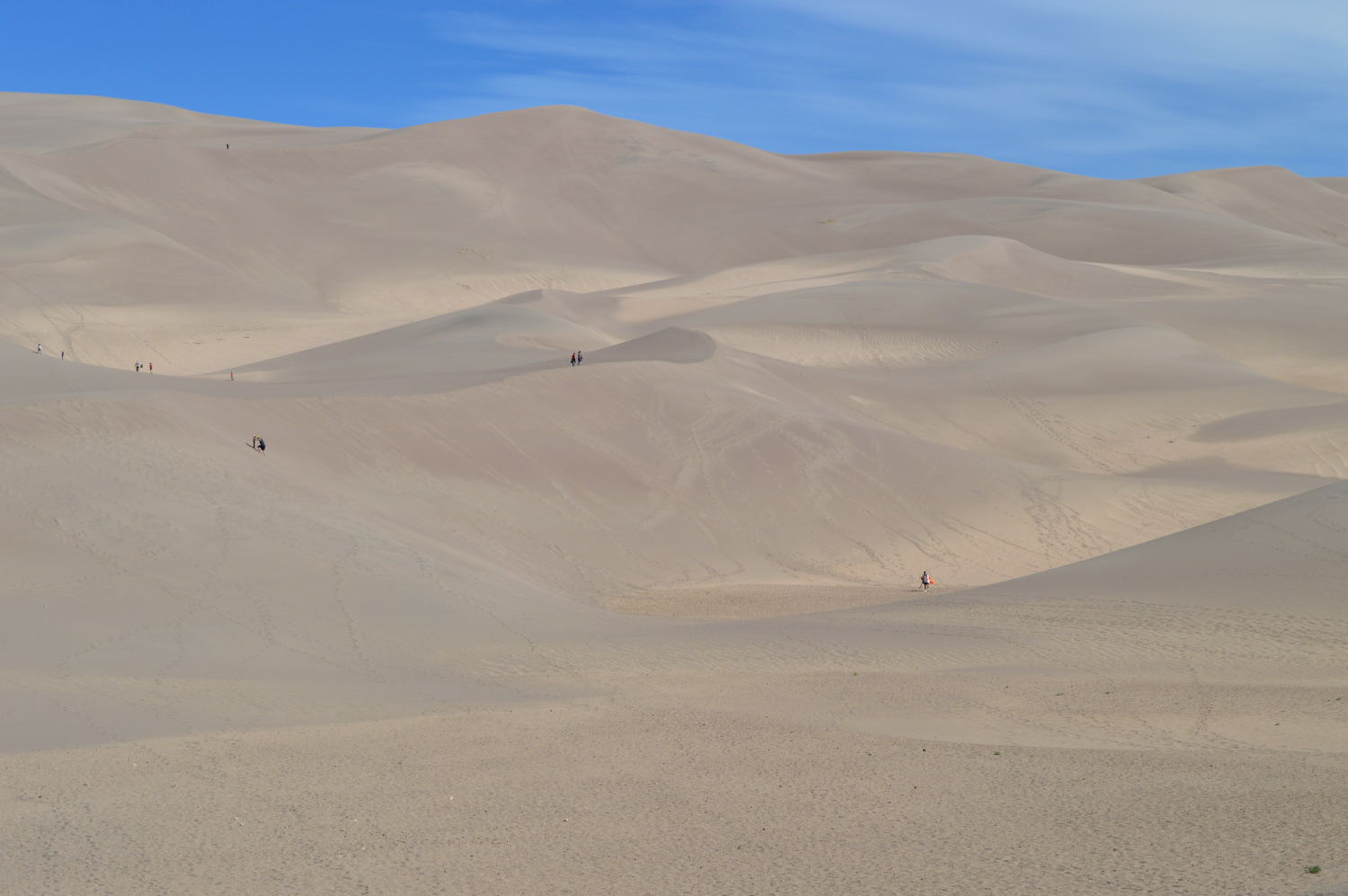
What began as a short camping trip to explore the Great Sand Dunes National Park and nearby Alamosa, quickly turned into a lesson on the impacts of wildfire. It goes without saying that wildfires have been a huge problem in the western United States yet again this year. After last year’s disastrous fire in Colorado Springs, another, even more destructive fire broke out, known as the Black Forest Fire. That fire, along with several others in the state, garnered a fair amount of attention on the local news. With this in the back of our minds, we set out to drive southwest to one of our nation’s newer national parks, Great Sand Dunes National Park. It is the home of the tallest dunes in North America and one of the strangest natural sites I’ve ever witnessed. The dunes seem to arise mysteriously out of the valley against a backdrop of the Sangre de Cristo mountains.
Since we didn’t have reservations (we never do), we opted to head straight to the park campground and claim a spot. After battling the wind to set up our tent, we decided to check out Alamosa that afternoon and then explore the sand dunes early in the morning when they wouldn’t have absorbed as much heat. As we were heading down the long straight road that would take us toward Alamosa, we drove right by a bush that was on fire. Just one bush, completely engulfed in flames. Given its proximity to the road, we concluded that it was likely the result of a careless and inconsiderate driver who threw a cigarette out of the window. Luckily we had cellphone reception and were able to speak with a 911 operator to let them know about the fire. As we continued on down the road, we eventually saw a water truck and then a fire truck coming towards us, about fifteen minutes after we made the call. They got there pretty quickly considering how far the burning bush was from a town. When we drove back by the spot to reach our campsite later in the day, we were completely shocked at how large of an area had burned in the short time between the single burning bush that we saw and the arrival of the water truck and firefighters. It just goes to show how quickly a wildfire can spread with the right weather conditions and plentiful fuel.
After our burning bush sighting, we had a relaxing afternoon in Alamosa playing on the playground and grabbing an early dinner at a local brew pub with, what seemed like, everyone else in town. But, the whole time we were there, we kept eyeing the smoke coming over the mountains from the southwest, surprised with how imposing it was. We didn’t realize that the largest wildfire in the state was burning right over the mountain range, the West Fork Complex Fire. We would be much more acquainted with the fire as the evening progressed. Just as the winds blew the sand over the San Luis Valley to a natural pocket in the Sangre de Cristo mountains to create the Sand Dunes, the winds blew the smoke from the West Fork Fire to the same pocket, right where we were camping. Breathing in fairly thick smoke all night did not make for a relaxing night, but with no alternatives, we toughed it out and i thought of all the folks who have to breathe in this smoke on a regular basis.
By the time we awoke, the smoke had begun to clear and we packed up our campsite, ready to explore the dunes. Alan and I had very different reactions to the dunes. He thought they were cool, but nothing worth going out-of-the-way for. I cried the first time I saw them up close. Yes, very different reactions.
We had a great morning walking across the sand to begin climbing up the closest dunes. Van and Alan loved running down the dunes and I gave sliding down on my butt a try.
After we were tired and ready to head on, we drove east, puzzling at the smoke coming from the southeast, an area that was perfectly clear when we had driven through it yesterday. Again, unbeknownst to us, a new wildfire had begun overnight, now known as the East Peak Fire. We passed a number of TV crews setting up to get shots of the smoke coming over the Spanish Peaks as we passed through La Veta and felt like we were in a game of pin the tail on the donkey. Blindfold us, spin us around, and whichever direction we walk in, there will be smoke.
As of July 4th, over two weeks after we visited the Sand Dunes and a month after it began, the West Fork Complex Fire has burned over 110,000 acres and is only 20% contained. Also as of July 4th, the East Peak Fire has burned over 13,500 acres and is 95% contained. These are only two of the many wildfires that have raged (and continue to rage) in the west this summer. Please keep the brave firefighters and local residents in your thoughts as they continue to live with the threats and discomfort of these destructive fires.